


 Shkruar nga Pamfleti
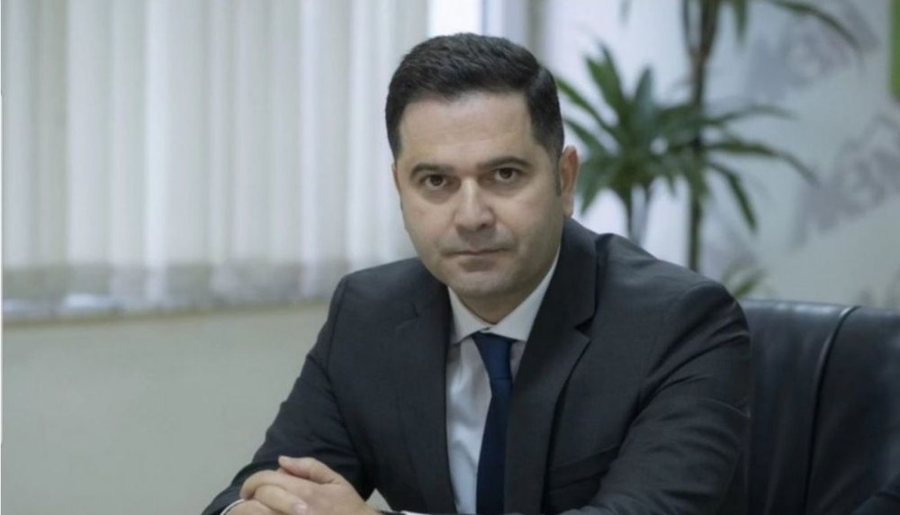
The Minister of Finance said that the acts are ready and suggestions from partners are being awaited, but official documents from the EU, the IMF and assessments on FATF standards show that Albania has been clearly warned against laws that condone informality and risk money laundering...
The government packaged it as "Fiscal Peace", but the essence remains the same, forgiveness for obligations, mitigation for violators and a crackdown on businesses that have paid regularly. While Petrit Malaj tries to present it as a matter of technical consultation, official documents show that international partners have opposed this logic for years as a risk to governance, fiscal equality and the fight against money laundering.
Edi Rama's government packaged it as "Fiscal Peace." But essentially it is the same logic that international partners have been opposing for years regarding Fiscal Amnesty: forgiveness for obligations, leniency for violators, and a wrong message for those who have enforced the law.
Petrit Malaj tried to soften the issue by saying that the bylaws have been completed and suggestions from international partners are being awaited before implementation can begin. But this explanation hides the essence of the problem. This is not simply a matter of technical suggestions. This is a matter of political and institutional opposition to a scheme that international partners have long seen as problematic.
The European Commission has explicitly said so in its 2022 Albania report. It wrote that the adoption of a law on fiscal and criminal amnesty, against the advice of the EU and MONEYVAL, could jeopardize Albania's progress in this area and in the fight against corruption. This is not an allusion. This is official Brussels language.
The following year, the European Commission went even further. In its 2023 report on Albania, it highlighted that the draft law on fiscal and criminal amnesty that Albania had submitted to the FATF in early 2022 “did not comply with FATF principles or best practices.” In the same report, Albania is urged to ensure that any future law of this kind is in line with the acquis and international standards.
So, the government is not facing a routine consultation process. The government is facing a red line that has long been set by international partners.
The International Monetary Fund has also taken a similar stance. In its 2022 assessment, the IMF warned against the proposed fiscal amnesty, due to the risks to governance and money laundering. Even earlier, the IMF had advised against fiscal amnesty and ad hoc tax cuts.
This is where Malaj's justification falls short. Because international partners are not simply discussing a technical guideline. They are opposing the philosophy of the law itself, whenever it favors fiscal offenders, violates equality before the state, and opens the risk of money laundering.
This is why “Fiscal Peace” is not seen as a neutral instrument. It is seen as a repackaged version of fiscal amnesty. The name has changed, but the suspicion remains the same: forgiveness of obligations, tolerance of informality, and unfair advantage for those who have not paid.
If a business has operated informally, hidden obligations or avoided the fiscal burden, and then the state offers it a facilitated exit, the damage is not only budgetary. The damage is moral, economic and institutional. Because the state punishes the correct and rewards the offender.
Precisely for this reason, Brussels and the IMF have not seen this issue as a fiscal technique, but as a problem of the rule of law, fair competition and the fight against money laundering. Albania has only emerged from the FATF grey list after a difficult process and the European Commission has clearly demanded that any new initiative with consequences for financial integrity be in line with FATF and MONEYVAL standards.
Therefore, the question is not whether Petrit Malaj is waiting for suggestions. The question is why he does not openly say that international partners have been opposing this logic for years and that the problem is not the delay in the bylaws, but the nature of the law itself. /Pamphlet





Lini një Përgjigje