


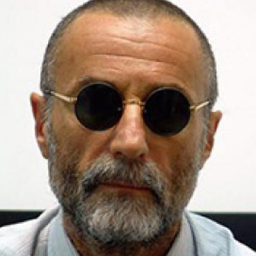
 Shkruar nga Yossi Melman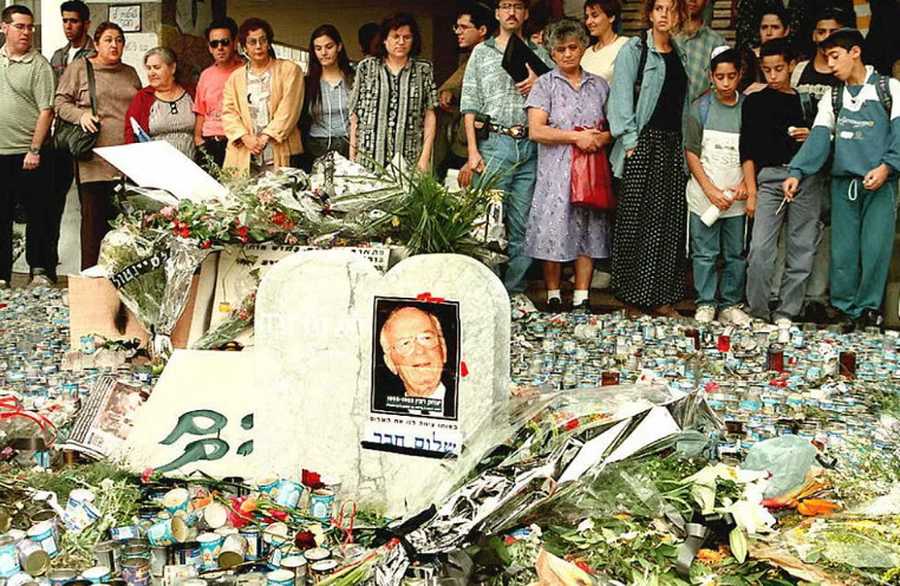
Fake news and conspiracy theories have penetrated from the fringes into the mainstream
Few political assassinations of a political leader have radically and dramatically changed the course of a nation. American democracy, for example, withstood the assassination of Abraham Lincoln in 1865, and black Americans continued to enjoy their hard-won freedom. Nearly a century later, the assassination of President John F. Kennedy did not halt the legislative process that secured civil rights for African Americans.
The most consequential political assassination in modern history was that of the Austro-Hungarian heir to the throne, Archduke Franz Ferdinand, in Sarajevo in June 1914. His death at the hands of Serbian nationalist revolutionaries served as the spark that ignited World War I.
The assassination of Prime Minister Yitzhak Rabin, 30 years ago, was one of those rare reality-changing events. In its wake, the Oslo Accords, the fragile process of peace and reconciliation with the Palestinians, which had already progressed slowly and cautiously, amid mutual suspicions, suffered a devastating blow.
The killer, Yigal Amir, a young Bar-Ilan University student and religious fanatic, continued the tradition of anarchist or nationalist extremists who succeeded in their radical mission to stop a political process.
Many aspects of the events leading up to the assassination and its aftermath resonate uncannily with current realities in Israel in 2025: the deep polarization of society, the rise of incitement, the weakness of the judicial system, the failures of the Shin Bet (Israel's internal security service), and the spread of conspiracy theories.
After the signing of the Oslo Accords in September 1993, right-wing circles, especially among Jewish settlers, launched a public campaign that became increasingly aggressive. What began as verbal incitement quickly escalated into physical violence and criminal acts.
Meanwhile, Hamas intensified its terrorist campaign, sending suicide bombers into Israeli streets, restaurants, buses, and shopping malls, killing hundreds of Israelis and wounding thousands more. Public confidence and hope for a diplomatic solution were deeply shaken. Rabin, however, remained steadfast in his determination to continue the Oslo process. "We will act for peace as if there were no terror, and we will fight terror as if there were no peace," he said repeatedly, a phrase that summed up his political and security doctrine.
As the Palestinian wave of terror grew, so did the fury and incitement of the Israeli far right. Rabin was labeled a 'traitor' and a 'murderer'.
Itamar Ben-Gvir, now Israel’s Minister of National Security, was then a young disciple of the extremist rabbi Meir Kahane, who preached Jewish supremacy. Ben-Gvir, infamously, tore the Cadillac emblem off Rabin’s car and declared to television cameras: “We hit the symbol and we will hit it too.” In some demonstrations, protesters came very close to physically attacking Rabin.
Leading that wave of incitement were senior opposition figures from the Likud party, led by Benjamin Netanyahu. Netanyahu was among the most prominent voices fanning the flames. He marched at the head of a demonstration where protesters carried a coffin bearing Rabin's name.
At a large rally in Jerusalem's Zion Square a few weeks before the assassination, Likud leaders stood on a balcony, including Netanyahu, who gave a fiery speech; Ariel Sharon and others. When posters depicting Rabin in an SS uniform began circulating in the crowd, several Likud leaders, including future Prime Minister Ehud Olmert, realized that the rally was getting out of hand and left the scene. Netanyahu stayed.
After the assassination, Ami Ayalon was appointed head of the Shin Bet, replacing the failed Carmi Gillon. Ayalon told me bluntly last week that the politicians on the balcony may not have intended Rabin’s death, but their presence, without condemning the images and chants of the rally, gave legitimacy to the extremists. “It’s always the minority that acts,” he observed.
The justice system also failed to act. Although 340 cases of incitement and violence were opened, prosecutors and judges dragged their feet, even after Rabin himself appealed to Supreme Court President Aharon Barak to intervene. “Our approach,” admitted Attorney General Michael Ben-Yair at the time, “was to show tolerance for freedom of speech and the right to protest. In retrospect, that was a mistake.”
Immediately after the assassination, right-wing activists, including Netanyahu, spread absurd conspiracy theories, claiming that the Shin Bet, Shimon Peres (who temporarily replaced Rabin as prime minister) or even the CIA had orchestrated the assassination, all in an attempt to deflect blame from themselves.
A few months after the assassination, Israel held elections, which resulted in Peres' defeat and Netanyahu's victory. Since 1996, with some interruptions, Netanyahu has served as prime minister for 18 years.
In the years that followed, Israel was profoundly transformed. A direct line connects those days to what is unfolding in the country today, especially since the events of October 7, 2023, in Gaza. The same vicious incitement by Netanyahu and the right against their political opponents has only intensified.
Fake news and conspiracy theories have seeped from the fringes into the mainstream. Netanyahu’s avoidance of responsibility for the sudden and brutal Hamas attack on October 7, and his refusal to establish a state investigation commission, reflect the same patterns of behavior that emerged three decades ago.
There is no doubt that since Rabin's assassination, the right has worked tirelessly to erase his memory and eradicate any trace of the peace process and hope he once represented.
Instead of commemoration, the right has chosen to sanctify forgetting.
In a sad way, the seeds of this disaster were sown then, at the time of the murder, and today, those seeds have grown into giant trees. /Adapted from The Spectator/





Lini një Përgjigje