


 Shkruar nga Pamfleti
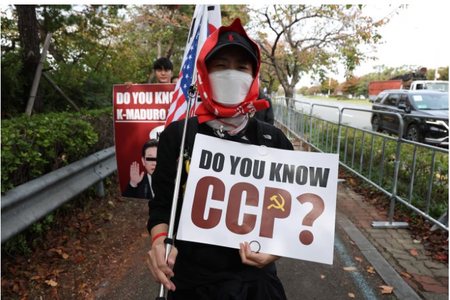
Maduro himself could also be targeted, with a Republican senator from Florida urging him in recent days to “escape to China or Russia as soon as possible.” A $50 million bounty has been placed on the Venezuelan president’s head, the highest ever offered by the United States for a wanted criminal.
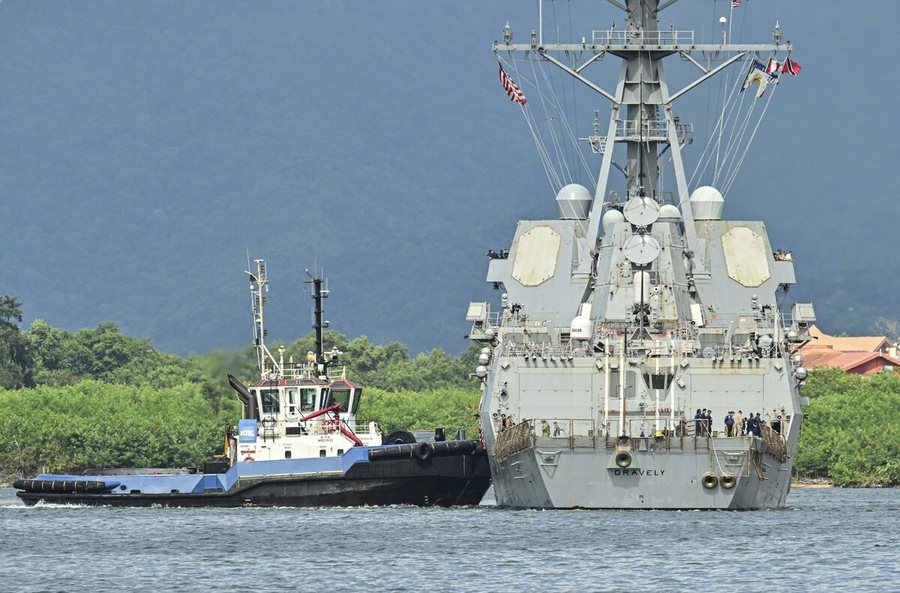
Air strikes on Venezuela are inevitable, even though Donald Trump denied them yesterday.
“It is a matter of days, maybe even hours,” according to American media. “The Trump administration has made the decision to strike military installations inside Venezuela and the attacks could happen at any moment,” writes the Miami Herald, citing anonymous sources “informed about the developments.” The campaign against the Soles cartel, but also against the militarized regime of Nicolás Maduro, would thus enter phase II, as the American president himself had warned.
In what now appears to be a desperate attempt to find international support from increasingly cold allies, Venezuelan leader Nicolás Maduro sent a letter to Vladimir Putin yesterday asking for help. According to Venezuelan sources contacted by the Washington Post, Caracas has also reached out to China and Iran, asking for equipment and military assistance to bolster national defense.
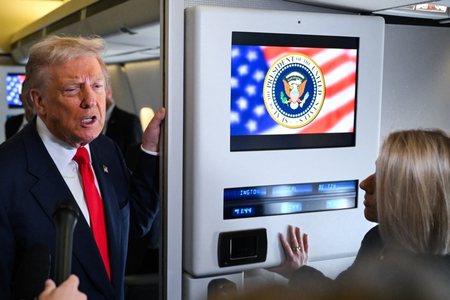
Responding to a question from reporters aboard Air Force One, Trump said yesterday that he was not currently considering attacks on Venezuela, although he had said last week that he was ready to order ground strikes. Military analysts confirm that such a large naval deployment in the Caribbean cannot be limited to hitting suspected drug trafficking boats at sea, although the most plausible hypothesis is that attacks on facilities inside Venezuela will only begin after the arrival, off the coast of the South American country, of the giant aircraft carrier USS Gerald Ford, the US Navy's "deadliest ship", expected to arrive next week.
Even the Wall Street Journal already considers it certain to attack installations used by drug traffickers, which according to Washington are under the supervision of Maduro's paramilitary regime. The Soles cartel exports about 500 tons of cocaine per year to Europe and the United States and, according to American investigators, is led by Venezuela's interior minister, Diosdado Cabello, long considered the "regime's eagle" and even Maduro's "puppet master".
Maduro himself could also be targeted, with a Republican senator from Florida urging him in recent days to “escape to China or Russia as soon as possible.” A $50 million bounty has been placed on the Venezuelan president’s head, the highest ever offered by the United States for a wanted criminal. A $25 million bounty has been placed on Cabello and the defense minister.
“Maduro will find himself trapped and may soon find that he cannot leave the country, even if he wants to,” the source said. “What is worse for him is that he now has more than one general ready to capture and hand him over, fully aware that it is one thing to talk about death and another to see it coming.”
One of Trump's first actions after returning to the White House in January 2025 was to urge the State Department to declare several drug cartels as terrorist and transnational criminal organizations, including the Venezuelan Tren de Aragua and then the Soles Cartel.
In August, the United States began a large military deployment in the southern Caribbean Sea, near northern Venezuela, creating a joint task force that, with the arrival of the USS Ford, will consist of 14 warships, the largest military deployment in international waters since the Gulf War.
An “Armada” that includes up to 10,000 soldiers and military personnel. In addition, the United States could use a significant number of fighter jets and strategic bombers stationed at nearby American bases. In recent weeks, the US has been attacking and sinking ships in international waters – both in the Caribbean Sea and the Pacific Ocean – accusing them of transporting cocaine. The UN today reiterated that these attacks are “unacceptable.”/ Corriere della Sera


Lini një Përgjigje