


 Shkruar nga Andrea Muratore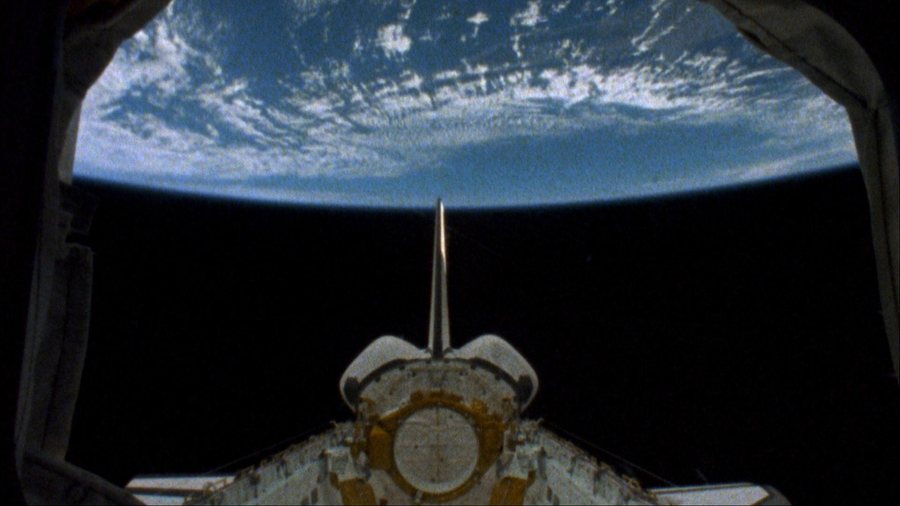
However, a trend already known in the Trump era is gaining strength: the use of mass declassifications as a political instrument to create expectations and present themselves as guarantors of a new transparency in the face of the abuses, conspiracies, and silences of previous American administrations.
The Pentagon has begun releasing the first batch of classified files on Unidentified Aerial Phenomena (UAP), or UFOs (unidentified flying objects). The latest move by the Donald Trump administration has sparked controversy.
The American UFO community has long been waiting for what many consider a watershed moment for the still-unknown phenomena. Trump and Pentagon chief Pete Hegseth have supported the “truth operation,” suggesting that the official versions released so far contain gaps, excessive silences, and mysterious elements. But is that really the case?
The 162 files released so far reveal very few new elements and, in fact, do not provide clear answers to the question that has long fueled debate: whether American authorities have hidden evidence of contacts between humans and extraterrestrial entities.
However, a trend already known in the Trump era is gaining strength: the use of mass declassifications as a political instrument to create expectations and present themselves as guarantors of a new transparency in the face of the abuses, conspiracies, and silences of previous American administrations.
This mode of communication aims to restore the narrative of the “Washington swamp”, creating a contrast between a current power that is presented as strong and transparent and a past political class depicted as silent and compromised. A similar approach was used with the John Fitzgerald Kennedy files and during the 2024 election campaign with the slogan “Release the Files!” regarding the Jeffrey Epstein case.
The pattern is now clear: the politics of debate and ideas are being replaced by the search for the sensational gesture, the decisive document and the potentially revolutionary secret. What was Epstein hiding? Who really killed Kennedy? Are UFOs evidence of alien phenomena visiting Earth and about which the US government knows more than it publicly admits? These questions are constantly used to divert attention from more concrete topics such as inflation, international conflicts and geopolitical crises.
This mechanism creates a continuous cycle of expectations: citizens are constantly promised that hidden truths will be revealed and justice will be done. Public attention is focused on mysteries rather than concrete problems, and long-awaited discoveries rarely bring definitive answers. Archives have historical value, but they are not mysterious repositories filled with elusive secrets. Anyone who archives a document does so with the knowledge that it may be examined and published in the future.
Those who have seriously studied the UAP/UFO phenomenon have expressed skepticism towards this publication.
"There is nothing surprising in their publication. And without analysis or context, this will only fuel further speculation, conspiracy theories, and pseudoscience," Sean Kirkpatrick, the first director of the All Domain Anomaly Resolution Office (AARO), a Pentagon body that studies unknown aerial phenomena, told Scientific American.
According to Kirkpatrick, the documents are expected to fuel more speculation, while the published materials are dominated by videos taken out of context and a lack of substantial new information.
The surge in interest in UFOs has come after the pressure of theories spread by anonymous sources on social networks, which have fueled suspicions for decades of a deliberate cover-up of contacts with non-human intelligence and crashed space vehicles. But, according to the analysis of “Spectator”, the end result has been disappointing. The real message is related to American democracy and the relationship between power and public opinion: relying on the opening of archives to uncover alleged truths does not show strong faith in the institutions and mechanisms of power. On the contrary, it could further deepen polarization in an already divided America.
And as the JFK, Epstein and UFO cases consume the public debate, it seems that the public is also showing fatigue towards these "discoveries" proclaimed as decisive. / Adapted from "Pamphlet", from "Inside Over"






Lini një Përgjigje