


 Shkruar nga Mario Platero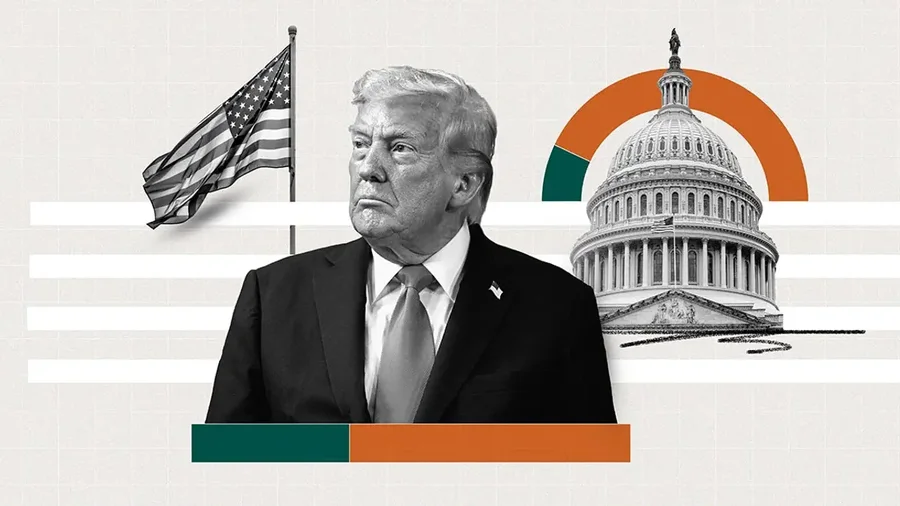
Foreign policy activism is not bearing fruit and approval ratings are at an all-time low. Ahead of the midterm elections, the president is reviving "Maga"...
Less than a year before the US midterm elections, the domestic front has returned to Donald Trump's harsher and more maximalist agenda. The president has realized that his recent foreign policy misadventures, some successful, others less so, such as the war in Ukraine, have been of little use in terms of consensus building. So he took advantage of the attack on two National Guard members in Washington (the woman, a 20-year-old, later died) by an Afghan political refugee to announce tough new domestic measures: 500 more National Guard troops in the capital, a permanent freeze on immigration "from the Third World" and Afghanistan, the possible revocation of citizenship for "naturalized immigrants who disturb internal peace," the withdrawal of federal benefits for non-citizens, and the deportation of aliens "incompatible with Western civilization."
On Thursday, he began a review of permanent residency permits for immigrants from 19 countries. Trump wants to revive a MAGA party that is partly hostile to him for the first time, mobilizing a wavering Christian base, an effort that became apparent after the assassination of Charlie Kirk in early September. The goal? To retain control of both houses of Congress in the midterm elections on November 3, 2026. Will he succeed? Judging by the atmosphere in the country today, the answer is no. Of course, much will depend on the Democratic Party: will centrist candidates like Abigail Spanberger or Mikey Sherrill, who won the governorships of Virginia and New Jersey, or “socialists” like Mamdami in New York win? To better understand this, we need to take a step back and return to the foreign policy digressions I mentioned above.
We saw that targeted military action abroad can distract attention from domestic political problems, as in “Wag the Dog,” a brilliant 1998 satirical film starring Robert de Niro and Dustin Hoffman, set in the midst of the Bill Clinton/Lewinski scandal: a president-elect finds himself in trouble over alleged advances toward a minor, and a spin doctor invents a war in Albania to distract the media.
Then everything happens, but the president is re-elected. The parallel with Donald Trump is very easy. This president has always tried to distract public opinion.
"We follow one story and he's already outpaced us with two more stories: it's an obsessive and exhausting cycle," the editor of a major American newspaper told me months ago.
It worked for the first 8 months of the presidency, but then it stopped working: from a 52% approval rating last February at the beginning of Trump's presidency, the rating gradually began to fall to an average of 42-40%. This is also why Trump is taking decisive action in foreign policy. On September 29, he announced a ceasefire plan between Israel and Gaza, which was ratified by the UN Security Council on October 17.
Trump enjoys international admiration; he is no longer the improviser who simply destroys the multilateral architecture perfected over eighty years by every American administration, but a pragmatist who perhaps intervenes with a more muscular, unusual, and personal approach. Again in late September, he promises $20 billion to Javier Milley, the Argentine president, if his party wins the midterm elections. Against all odds, Milley wins, and so does Trump. On September 2, he attacks the first Venezuelan drug-trafficking ships. Rights groups protest. And he sends the aircraft carrier Ford to the Caribbean in mid-November.
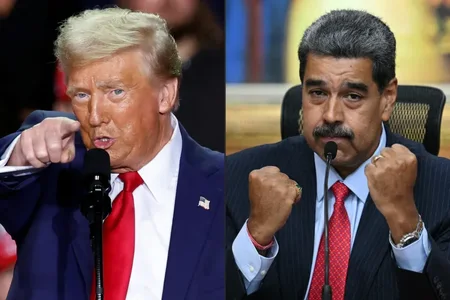
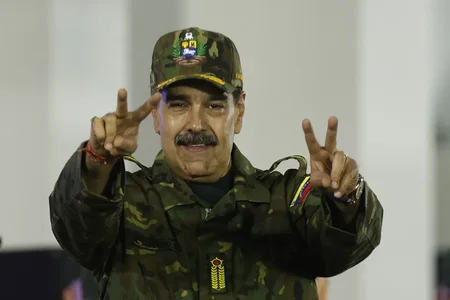
Will he talk to Maduro? Maybe. Meanwhile, two days earlier, on November 28, he announced that there would be ground attacks. His plan is clear: to destabilize the regime in Caracas and install the legitimate winner of the elections, Maria Corina Machado, who was recently awarded the Nobel Peace Prize. In South America, Trump, with Secretary of State Marco Rubio, wants to contain aggressive Chinese and Russian expansionism, including economic expansion. Venezuela has more significant oil reserves than Saudi Arabia. Trump’s international image, with the current exception of Ukraine, where he remains subservient to Putin, is changing.
Walter Russell Mead, one of the most authoritative observers of American foreign policy, writes: "anyone who thinks Trump is restrictive or isolationist should listen to him. This president is not withdrawing from the world. He wants to reshape it."
The problem is that foreign policy is of little use. While he tries to boost his polls with objective successes abroad, Trump is racking up bitter losses and disappointments at home.
His candidates in Virginia and New Jersey are losing badly; he is causing the longest government shutdown in American history, a backlash from public opinion; a judge dismisses the indictment of two of his political enemies: former FBI Director James Comey and New York City Attorney Laetitia James.
The most serious humiliation: Congress approved, by a vote of 400-1 in the House of Representatives and a unanimous vote in the Senate, the release of documents containing potentially embarrassing sexual disclosures related to the Jeffrey Epstein scandal, held at the Justice Department.
Finally, he is failing to keep his most solemn promise: to revive the economy and improve wages and living standards for American workers. Add to this various incidents, such as Robert Kennedy Jr.'s cancellation of vaccines, and Donald Trump is, for the first time, clearly and consistently losing his mask of invincibility and finding himself at the worst moment in his political history: the latest Gallup poll, released on Friday, shows an approval rating of 36%, the lowest for any president since Reagan over the same period.
Hence the return to an unwavering domestic maximalism. But perhaps Americans are starting to have enough of that too. /Adapted from Corriere/



Lini një Përgjigje