


 Shkruar nga Pamfleti
The Iranian crisis will not be solved by bombing. Confronting the regime requires long-term strategies, support for civil society, and diplomatic pressure, if a better future for the Iranian people is truly desired...
It is impossible to know whether US President Donald Trump will carry out his threats to strike Iran, how the regime might retaliate, or what the long-term consequences will be.
What is certain, however, is that neutralizing the threat posed by Iran and fostering a better future for its people will require more than bombs and missiles. As the potential talks are fraught with uncertainty, concerns are growing about a US military strike.
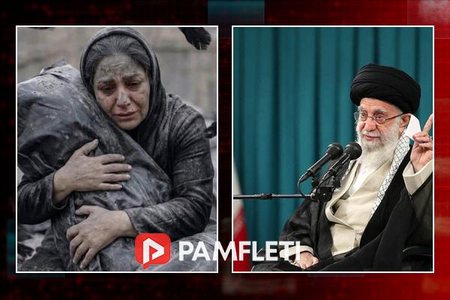
Early last month, President Trump warned the Iranian government not to crack down on protesters who filled the streets of Tehran and other cities. But then failed to respond when security forces massacred thousands of them.
While a carrier-based strike group is already in the region, along with other forces to protect US bases and allies against Iranian missiles, the options available to the White House chief have increased.
However, the purpose of any such action remains unclear. Is it aimed at overthrowing the current Iranian regime? Degrading what remains of the nuclear program and missile production capacity?
Punishing the Islamic Revolutionary Guard Corps and its street paramilitaries, who led the recent crackdown? Or simply to prove that the United States' threats are not empty?
While Trump has said he is willing to negotiate, it is not yet clear what concessions might satisfy him. On the other hand, the possible outcomes of military strikes are also uncertain.
The assassination of Supreme Leader Ayatollah Ali Khamenei could unify the regime rather than topple it. Meanwhile, the destruction of missile factories and air defense systems would help American allies in the region more than the Iranian protesters.
A sustained air campaign would be needed to shake the foundations of the Iranian government. But that would risk triggering retaliatory attacks on Israel and commercial shipping in the Persian Gulf.
If the attacks were to destabilize the regime, chaos could erupt in a country of over 90 million people. At the same time, the US would be reckless if it were to accept limited concessions just to save face and then withdraw. While Iranian protesters may be scared and saddened by last month’s bloodshed, they have not calmed down. The regime cannot save the economy under continued sanctions, nor will it ease the hated social restrictions under clerical rule.
The accumulated anger is sure to erupt again. Meanwhile, an unstable government may become more, not less, aggressive in curbing the rebellion of young radicals.
For all these reasons, as the White House tries to clarify its immediate objectives, it must think beyond the coming weeks. Opposition to the regime is broad, but diverse and without leadership.
Real change will remain elusive until cracks appear within the current power structure. The United States and its allies must do what they can to foster these divisions.
Sanctions against officials who led the crackdown on protests, as well as the European Union's decision to declare the Islamic Revolutionary Guard Corps a terrorist organization, are positive steps.
Western countries should work harder to shame Iran internationally, expelling diplomats and identifying the officers responsible for the killings. Non-governmental organizations that are working to confirm the death toll and expose the regime's crimes deserve support.
Meanwhile, the US should offer incentives, including the possibility of sanctions relief, to all those willing to break away from the regime. Civil society figures have united around the demand for a new constitutional assembly, so that Iranians themselves can decide what form of government they want. The US should support their efforts. / Adapted from Bloomberg Pamphlet






Lini një Përgjigje