


 Shkruar nga Pamfleti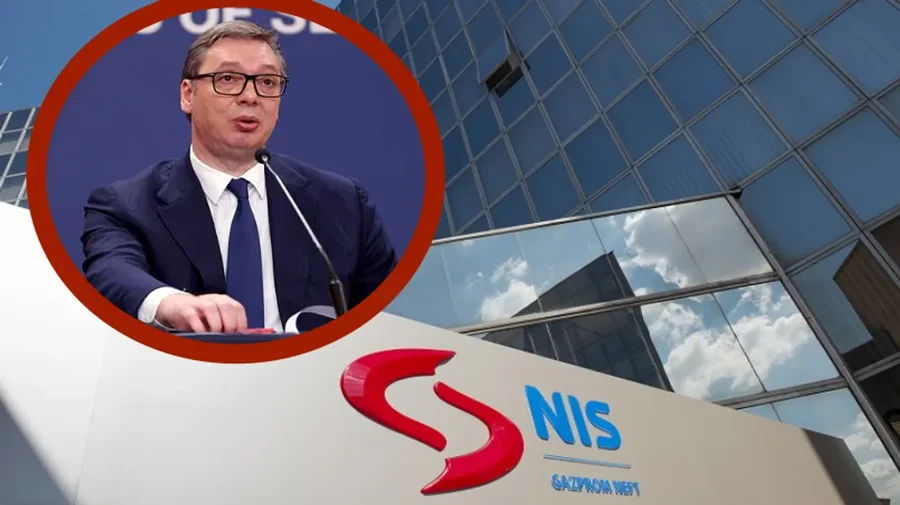
Serbian President Aleksandar Vučić said that as of Tuesday, the Oil Industry of Serbia (NIS) refinery in Pancevo will no longer function and that Serbia will have to find different ways to manage the situation.
Vučić stated that citizens should be calm, because the state will have enough solutions and money.
He warned that today he will try to hold additional talks with the Americans, but according to him, he does not believe they will change their decision.
Vučić added that he does not expect to receive a license from the US and that the refinery should be closed on Tuesday. He also said that there is an important meeting tomorrow in which these problems should be addressed and that Serbia faces "a difficult battle."
Vučić further said that he "does not understand the logic and tactics" of the US regarding NIS, nor why this company's work permit is not being extended, although the Serbian state has given guarantees that by the deadline set by the US, the ownership of that company, which is under US sanctions due to Russian ownership, will be changed.
Serbia had previously asked the United States to approve the operating license for NIS, while negotiations are underway to change ownership of this company, which is under US sanctions.
He stressed that he has informed the US that they respect their sanctions and that they have understood that it is necessary to change the ownership of NIS, and that this will happen within 50 days and the Serbian state provides guarantees that this will happen after the expiration of that deadline.
Vučić said that the US told him that they had warned him about the sanctions eight or nine months ago.
The US sanctions on NIS took effect on October 9 and are part of an effort by the US administration to prevent Russia from using energy revenues to finance the war in Ukraine. The sanctions have previously been extended eight times.
Vučić stressed that Serbia is not the main owner of the company and that it cannot decide on behalf of the Russians what to do with it.
He recalled that Serbia only had the right of first refusal to buy as a minority shareholder of NIS and that it has given up this right to leave the Russians the opportunity to do "as they wish", because this is "just" when someone has to sell under pressure and sanctions have been imposed from abroad.
NIS is mainly owned by Russian companies, while Serbia has 29.87 percent of the shares, and the rest is in the hands of smaller shareholders.
Vucic said he is almost certain that US President Donald Trump does not know the details, but that many senior officials in the State Department do and that this is clearly the policy they support.
The Serbian leader said he had tried and was sure that the Americans would make a positive decision after Thanksgiving, which was on Thursday, but that did not happen, and now he no longer expects that.
"Now we have to prepare and do our job, to secure the country. Here everyone will pull us in and demand that we be in their camp, no one will allow us to be neutral and mind our own business," declared the Serbian president.
Vučić added that the Russians "are not in much of a hurry because for them the most important thing is that their ownership lasts as long as possible" and that Serbia is in a very difficult situation, but that it will solve the problem.
He also mentioned that Serbia has a gas agreement with Russia until January 1 and that he will try to discuss its extension once again with the Russians, "and if that doesn't happen, we will go to others."
"We will fight and try to maintain friendly relations where possible, and where possible, partnership relations ," he stressed.
For decades, Serbia has depended on Russian gas, from which it provides more than 80 percent of its energy needs, but the country does not have a long-term contract with Russia for gas supplies. / REL




Lini një Përgjigje