


 Shkruar nga Pamfleti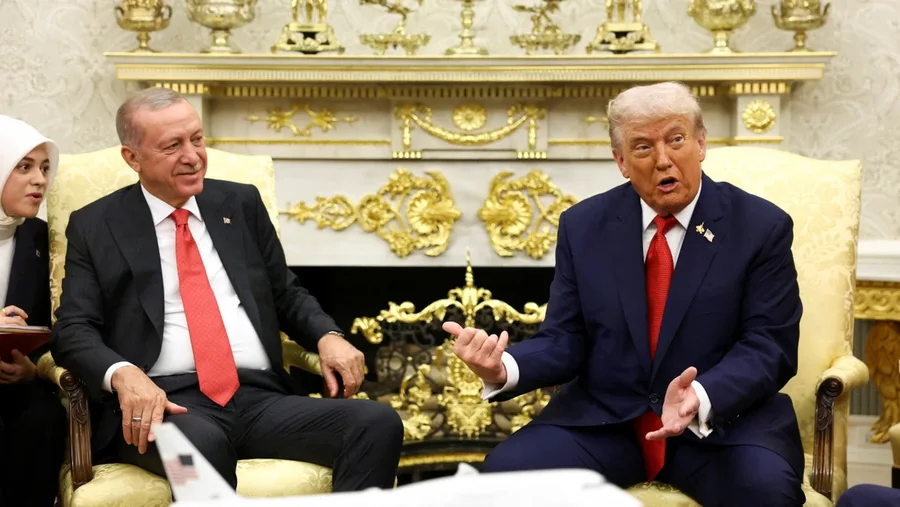
What are the issues that unite Trump and Erdogan and why is the US administration not concerned about human rights violations in Turkey?
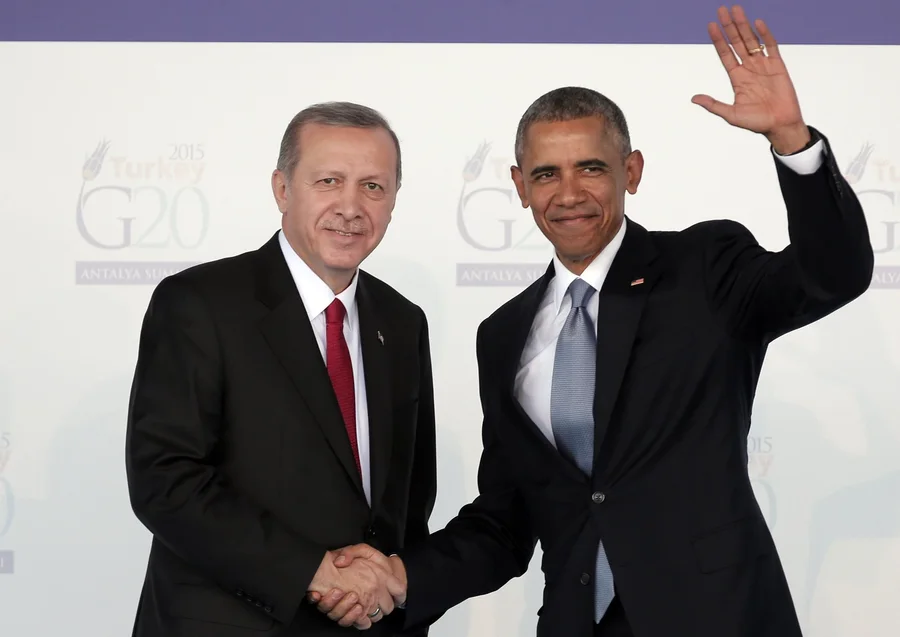
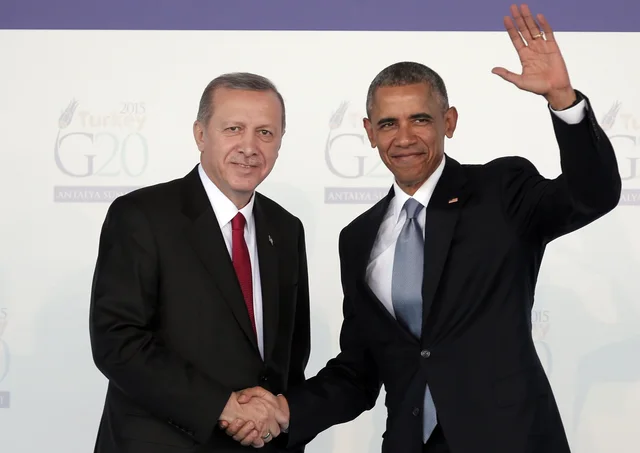
Relations between Turkey and the United States are at a much better stage than in recent years. This is mainly due to the personal relationship between US President Donald Trump and Turkish President Recep Tayyip Erdogan, who share a pragmatic foreign policy style and cooperate on several key regional issues, according to an analysis by the Frankfurter Allgemeine Zeitung (FAZ).
Trump is visiting Turkey for the NATO summit, marking the first visit by a US president to the country in 11 years. He has made it clear that his presence is also related to the fact that the summit is being hosted by Erdoğan, with whom he maintains a good personal relationship.
A significant development was the decision by the US Department of Justice to close legal proceedings against the Turkish state-owned bank Halkbank, accused for years of violating sanctions on Iran. The US government argued that Turkey had helped free Israeli hostages held by Hamas, presenting this as an example of the transactional diplomacy that characterizes relations between the two leaders. The US also approved the export of General Electric's F110 engines for the Turkish Kaan fighter jet, a decision seen as a step towards normalizing defense cooperation.
Strained relationships in the past
The article recalls that relations between the two countries have also gone through periods of crisis. After the attempted coup in Turkey in 2016, Erdoğan blamed the preacher Fethullah Gülen, who lived in the United States, and requested his extradition. Washington rejected the request, while Ankara accused the West of supporting the putschists.
Tensions also escalated with the arrest of American pastor Andrew Brunson. In response, the Trump administration imposed sanctions and tariffs on Turkey, which significantly devalued the Turkish lira.
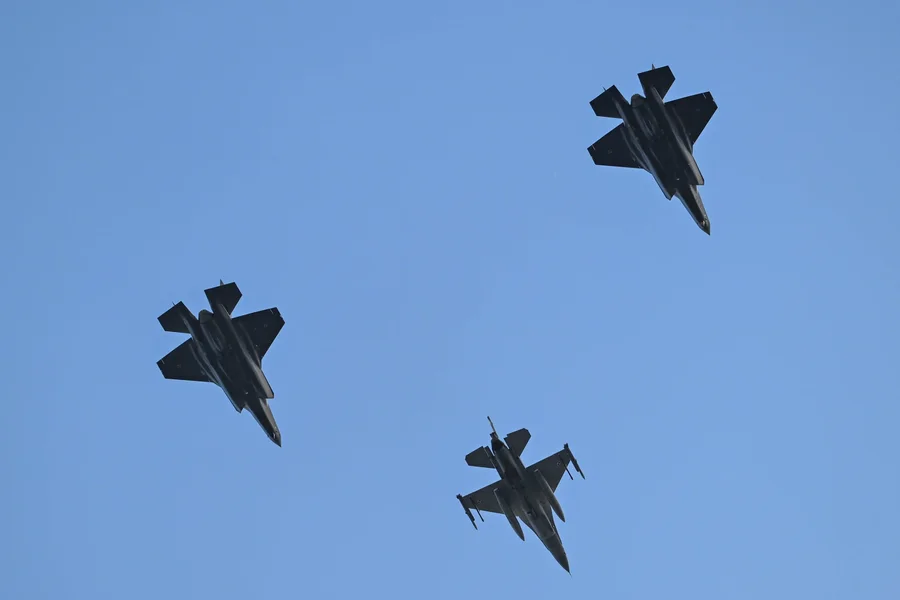
Another major dispute was Turkey's purchase of the Russian S-400 air defense system. For this reason, the US excluded Turkey from the F-35 aircraft program and imposed sanctions on the Turkish defense industry. According to the analysis, this issue still remains unresolved.
FAZ believes that developments in Syria have brought the interests of the two countries closer together. In the past, the US supported the Syrian Democratic Forces (SDF), while Turkey considered them linked to the PKK and fought them.
After the overthrow of Bashar al-Assad in late 2024 and the withdrawal of US forces, the situation changed. The US supports the new Syrian authorities and, according to the newspaper, has given Turkey a greater role in developments in Syria.
Trump has publicly expressed appreciation for Ankara's influence on Syrian political changes. During a meeting at the White House, he declared that Erdoğan "has taken Syria under control," while also making a wry comment that his counterpart "knows rigged elections better than anyone."
Russia, Iran and Gaza
According to the article, Erdogan and Trump have similar pragmatic approaches to Russia. Turkey continues to maintain economic relations with Moscow, although it does not always follow American demands to limit cooperation. The analysis also mentions that during the recent conflict between Israel and Iran, Erdogan convinced Trump not to support an Israeli plan to arm Kurdish-Iranian groups.
On the Gaza issue, the Trump administration sees Turkey as a useful mediator because of Ankara's contacts with Hamas. This is a marked shift from the Joe Biden administration, which saw these ties as a source of concern.
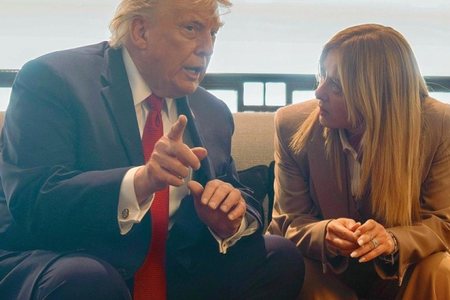
The article notes that the Trump administration has avoided public criticism of Turkey on issues of democracy and human rights. Unlike the Biden administration, which criticized the arrests of opposition and civil society figures, the current administration did not respond to the arrest of Istanbul Mayor Ekrem İmamoğlu.
The US ambassador to Turkey, Tom Barrack, was quoted as saying that Trump had asked him to provide Erdoğan with "legitimacy", considering this a priority in bilateral relations.
FAZ emphasizes that the interests of the two countries also coincide in the South Caucasus. The project for a transport corridor in southern Armenia, supported by Trump and promoted by Turkey as the "Middle Corridor", aims to strengthen trade ties between Asia and Europe while increasing Turkey's strategic importance.
Although political relations have improved, Turkish citizens' perception of the US remains largely negative. According to a Pew Research Institute survey, only 18% of Turks have a positive attitude towards the United States, while the majority continue to criticize American policy in the Middle East, support for Israel and the historical role of the CIA in Turkey. On the other hand, NATO enjoys higher support in Turkey than the US, with around 42% of citizens expressing a positive attitude towards the alliance. /Adapted from Pamphlet by FAZ/




Lini një Përgjigje