


 Shkruar nga Mark Galeotti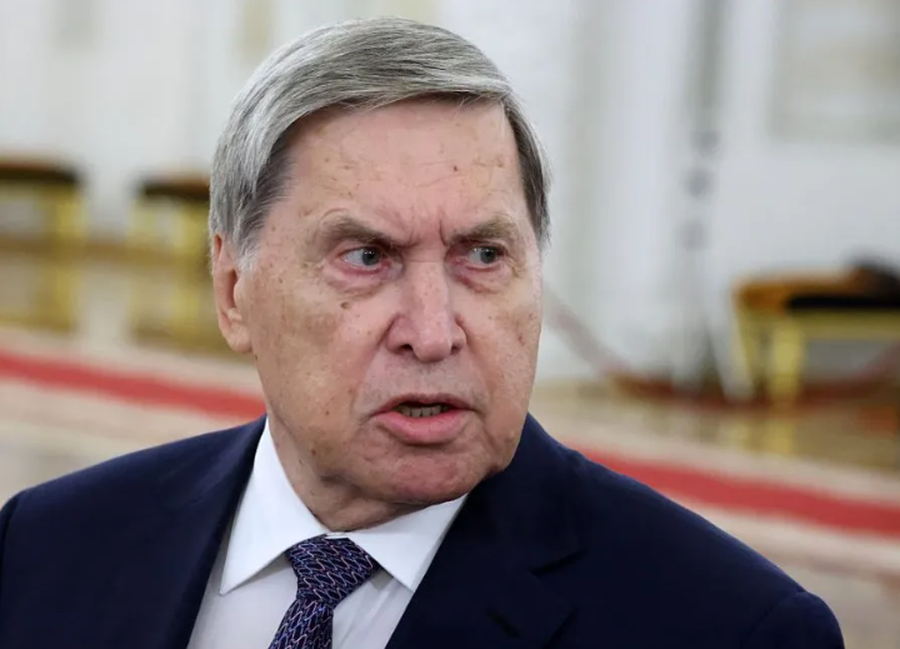
The 78-year-old Ushakov is another veteran of the Foreign Ministry: after a year as deputy foreign minister under Boris Yeltsin in the late 1990s, he then spent a decade as ambassador to Washington, before becoming deputy head of the presidential administration and then presidential assistant for foreign policy in 2012.
As Moscow and Washington prepare for talks on the latest version of Trump's peace plan next week, leaked recordings of a conversation with Steve Witkoff have cast the spotlight on Yuri Ushakov.
It appears that he, not Foreign Minister Sergei Lavrov, is the prime mover behind Russia's negotiating position.
Lavrov's stature, once a legend in the diplomatic community, has steadily diminished since 2014, when he was not even consulted before Putin decided to annex Crimea. Every year since then, the now 75-year-old minister has asked Putin to allow him to retire, and every year he has been denied.
Instead, he remains confined to a role that increasingly means the helpless repetition of commonplace talking points to audiences that often and openly distrust him. Even the core security cooperation relationships with China, North Korea, India, and Iran are handled these days by Sergei Shoigu, the former defense minister and now secretary of the Security Council, who is now sometimes called “Russia’s next foreign minister.”
This helps to put into context the heated narrative that Lavrov, who disappeared from the public eye for two weeks, was being punished for falling out of favor after a proposed Putin-Trump summit in Budapest was canceled last month. The claim was that this was because Lavrov was too intransigent when speaking to his American counterpart, Marco Rubio.
However, Lavrov does not work independently these days. The increasingly sullen minister simply says the words he is given and, significantly, is now back in circulation. Asked about the allegations during a state visit to Kyrgyzstan, Putin said: “He reported to me, told me what he would do and when. That is exactly what he is doing.”
Most likely, Lavrov was simply ill. With power increasingly in the hands of 70-year-olds, the Kremlin seems to be trying to suppress news of any incapacity, presumably to avoid drawing attention to the possible fate of the 73-year-old president (who, according to grim rumors to the contrary, appears to still be in good health).
However, Lavrov's position is arguably irrelevant and certainly had no effect on Russia's negotiating position. This reflects Ushakov's rise both in the process and in helping to shape Putin's own ideas, with once-influential figures like Lavrov and former Security Council secretary Nikolai Patrushev being marginalized.
The 78-year-old Ushakov is another veteran of the Foreign Ministry: after a year as deputy foreign minister under Boris Yeltsin in the late 1990s, he then spent a decade as ambassador to Washington, before becoming deputy head of the presidential administration and then presidential assistant for foreign policy in 2012.
The position of presidential aide in the Russian system is ambiguous. It may be little more than an honorary post, but if Putin chooses, it could also be one of his right-hand men and his right-hand men, and Ushakov is definitely of the latter type.
For a long time, he has been a sort of participant in high-level meetings between Putin and American presidents, a silent figure in the background, sometimes meeting with the media afterwards to give the Kremlin color. Yet while he may lack Lavrov’s fierce charisma, Ushakov has proven to be more than just a survivor: his trajectory from de-escalation advocate to hawk has reflected and influenced Putin.
As ambassador, he was keen to promote Russian-American business ties, and this continues in a twisted form in his support for the work being done by Kirill Dmitriev, CEO of the Russian Direct Investment Fund and a de facto Russian emissary in Donald Trump’s court, to try to entice a commercially minded White House with dreams of lucrative deals. However, after returning to Moscow, he became increasingly skeptical of US and, especially, European intentions. Between 1986 and 1992 he was minister-counselor at the Soviet and then Russian embassy in Denmark. A fellow diplomat at the time, who has maintained occasional contact with him since, noted that “he did not just change to reflect Putin’s views, but he really began to feel, especially after the Revolution of Dignity [in Ukraine], that the West had turned against Russia.”
He hardly needed guidance from Witkoff on how to handle Trump, being a man experienced in America, although it could be argued that simply letting him feel like he could teach the wily Russian might have been intended precisely to lure the amateur diplomat in. His approach tends to be less confrontational than Lavrov's, but no less ruthless.
Despite all this, Ushakov is a pragmatist. While there are some in Putin’s circle who take a more ideological (or downright greedy) position, urging him to do no more than persuade the Americans while in reality planning to impose Russia’s terms on Ukraine by force, Ushakov (and Shoigu) seem to be in the camp that supports at least considering the possibility of reaching an agreement that allows him to declare a triumph. As one British diplomat put it, “Ushakov does not seem committed to a deal at any price, but he is not completely against it either. To be honest, that is the best we can hope for in the current situation.” /Adapted from The Spectator/



Lini një Përgjigje