


 Shkruar nga Pamfleti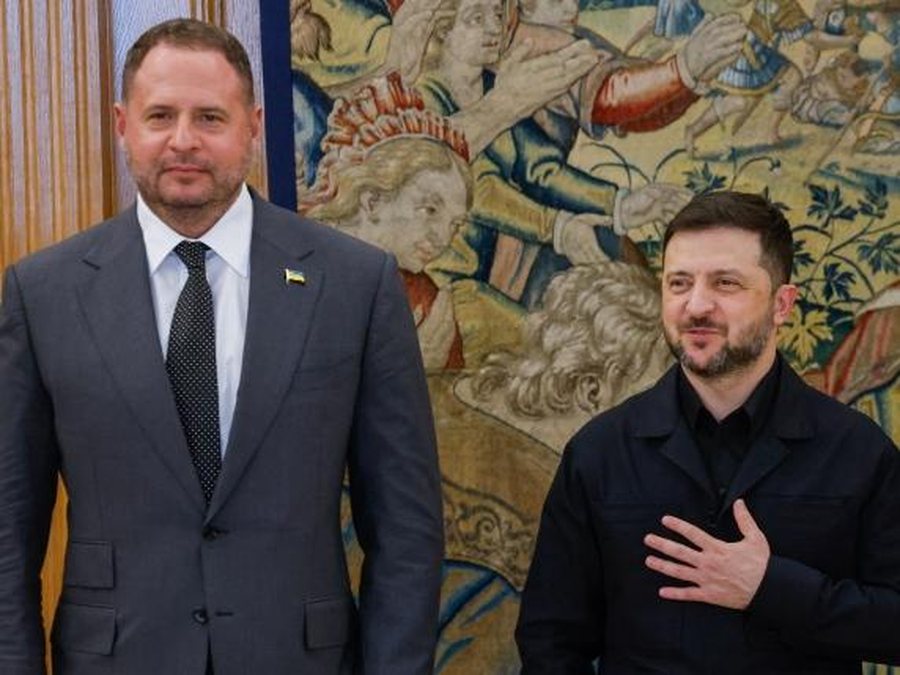
Full details of the corruption scheme and who Andrii Yermak is, Zelensky's right-hand man
Ukraine is engulfed in a deep political crisis after the outbreak of a major corruption scandal that has rocked the government of Volodymyr Zelenskyy and led to the resignation of the presidential chief of staff, Andrii Yermak.
The investigation, codenamed “Mida,” is being led by the National Anti-Corruption Bureau and the Special Prosecutor’s Office and focuses on businessman Timur Mindich, a figure known for his early ties to Zelensky, when the current president was still an actor and television producer. Mindich is suspected of running a bribery scheme worth more than £75 million, linked to contracts for the state-owned nuclear power plant.
According to investigators, around 15% of the value of contracts has been embezzled for years, staggering figures that have exposed deep corruption at the highest levels of the Ukrainian administration.
The revelation of the affair has led to a serious political blow: the ministers of Justice and Energy resigned and were dismissed from parliament, although they denied any wrongdoing. Seven people have been charged, while two of them are still at large. Investigators have also released wiretaps in which the suspects refer to a figure nicknamed “Ali Baba”, who they say is a very powerful figure within the presidency. Andrii Yermaku’s name is included here, although he has not been formally accused of any wrongdoing.
On the morning when Nabu and Sapo agents arrived at his home on a central Kiev street for a thorough search, Yermak said he was prepared to cooperate, but he himself did not receive a clear explanation of what was required. However, the search of his apartment, at such a critical moment, was seen as the latest sign of his political weakening.
Yermak, often called Ukraine's "gray cardinal" by the media, was the most powerful man in Kiev after Zelenskyy. With a career that began outside politics, first as a lawyer and then as a film producer, he became Zelenskyy's close advisor in 2019 and quickly rose to the position of chief of staff, taking control of diplomatic channels, security issues, and domestic war strategy.
In many cases, he was seen as the president's real representative at the international negotiating table and the man who set the pace of communications between Kiev and its Western allies. During the war, he was always at Zelensky's side, even in the famous video of the first night of the Russian invasion, where the president declared that "we are all here."
However, as the corruption scandal deepened, Yermak’s position weakened by the day. Two of his deputies had already been dismissed over allegations of financial misconduct, and a third was under investigation for bribery. Brussels and Washington, concerned that the affair was damaging Ukraine’s credibility at a time when the country is seeking to strengthen relations with the EU and maintain American support, pressed for a thorough purge of institutions. Ukrainian lawmakers had long argued that Yermak had become “too burdensome for the government” and that his presence was negatively affecting peace negotiations. Public opinion polls showed that around 70% of citizens wanted him to leave.
In the end, Zelensky was forced to accept his resignation, publicly thanking Yermaku for his work and emphasizing that he had always defended the state's position. But his resignation came at the most inopportune moment: Ukraine is entering the most delicate phase of talks with the United States, while Russia is trying to exploit Kiev's internal weakness. Now Zelensky must find a new replacement, while in the meantime the main roles in the negotiations are being held by a group of high-ranking officials, including Rustem Umerov, recently appointed head of the Ukrainian delegation.
The combination of a corruption scandal and the departure of the president's closest aide has created the most dangerous power vacuum since the start of the war. But some analysts see it as a chance for Ukraine to show its Western partners that it is ready to clean up corruption at the highest levels and meet the standards demanded by the EU. For Zelensky, the main challenge now is maintaining internal unity: he warned that disunity at this point could have serious consequences for the country's future and for the outcome of the war itself.
In this uncertain climate, the scandal that began with energy contracts has turned into an issue that directly affects the president's right wing, calling into question the stability of the government and Ukraine's readiness to withstand internal and external pressures. Any future decision will be carefully weighed by Western allies, who see this issue as a test of Kiev's determination for reform at a historic moment. / Prepared by "Pamphlet"


Lini një Përgjigje