


 Shkruar nga Pamfleti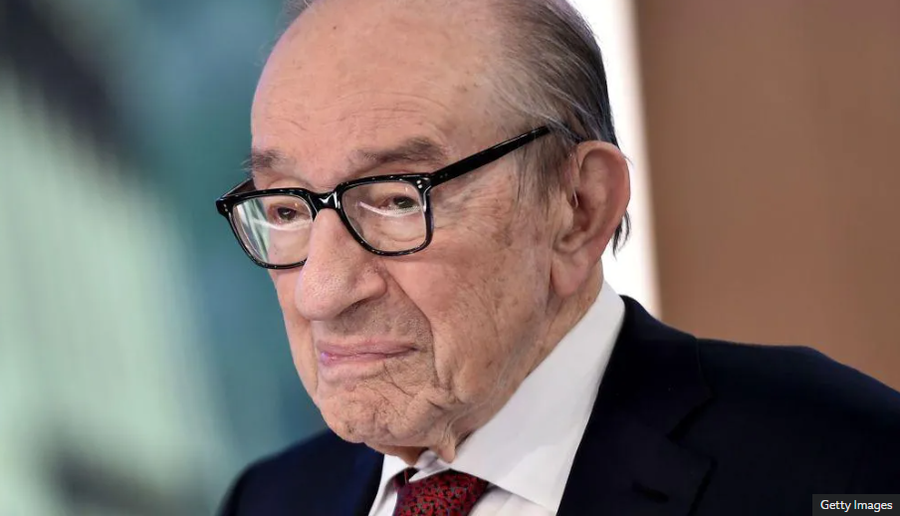
For nearly two decades, Greenspan held one of the most important positions in the American institutional system. As chairman of the Federal Reserve from 1987 to 2006, he was responsible for maintaining the nation's monetary and financial stability.
Alan Greenspan, the former chairman of the United States Federal Reserve and one of the most influential figures in modern American economic history, has died at the age of 100. The news was announced by his wife, NBC News journalist Andrea Mitchell, who reported that he died as a result of complications related to Parkinson's disease.
In her statement, Mitchell described Greenspan as an extraordinary figure who shaped the American economy for decades, serving under presidents of both major political parties. She also noted that he was willing to admit his mistakes, even when they linked his name to important economic developments.
For nearly two decades, Greenspan held one of the most important positions in the American institutional system. As chairman of the Federal Reserve from 1987 to 2006, he was responsible for maintaining the country's monetary and financial stability. Many analysts considered this position to be second only to the presidency of the United States. During his tenure, the American economy experienced one of the longest periods of sustained economic growth in modern history.
Greenspan earned a reputation as an almost undisputed authority on financial markets. He rarely gave interviews and avoided public appearances, but his every statement was carefully analyzed by investors, banks, and the financial media. In his office was a sign that read, “Money Starts Here,” a symbol of the enormous influence that Federal Reserve policy had on the global economy.
However, not everyone saw his legacy positively. Critics argued that his low-interest-rate policies and support for easy lending contributed to the tech bubble of the late 1990s and later the subprime mortgage crisis, which culminated in the 2008 global financial crisis.
Alan Greenspan was born on March 6, 1926, in New York City. Raised by his mother alone, he showed a special talent for music from an early age. He studied clarinet at the prestigious Juilliard School and played with famous jazz musicians, including Stan Getz. He later joined Henry Jerome's band, with which he toured the United States. His experience in the entertainment industry gave him a practical understanding of how American businesses and the economy worked.
Unlike many of his fellow musicians, Greenspan showed a keen interest in economics and finance. At the age of 19, he enrolled at New York University to study economics. It was during this period that he developed his free-market beliefs, which would accompany him throughout his career. He later worked as an economic consultant and held senior positions in the private sector, including at J.P. Morgan.
A significant influence on his intellectual formation was the writer and philosopher Ayn Rand, whom he met in 1952. Greenspan embraced her ideas about the limited role of the state and the importance of individual interest in the functioning of the economy. In a 1966 article, he sharply criticized the welfare state, arguing that it transferred wealth from productive individuals to other parts of society.
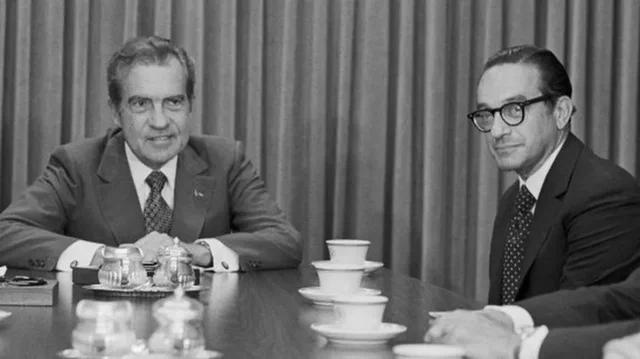
His political career began to take shape when he successfully predicted the recession during the Eisenhower administration. This paved the way for him to become an economic advisor to Richard Nixon during the 1968 presidential campaign. Later, Greenspan headed the White House Council of Economic Advisers. Although he would later express reservations about Nixon's character, his professional skills earned the respect of subsequent administrations.
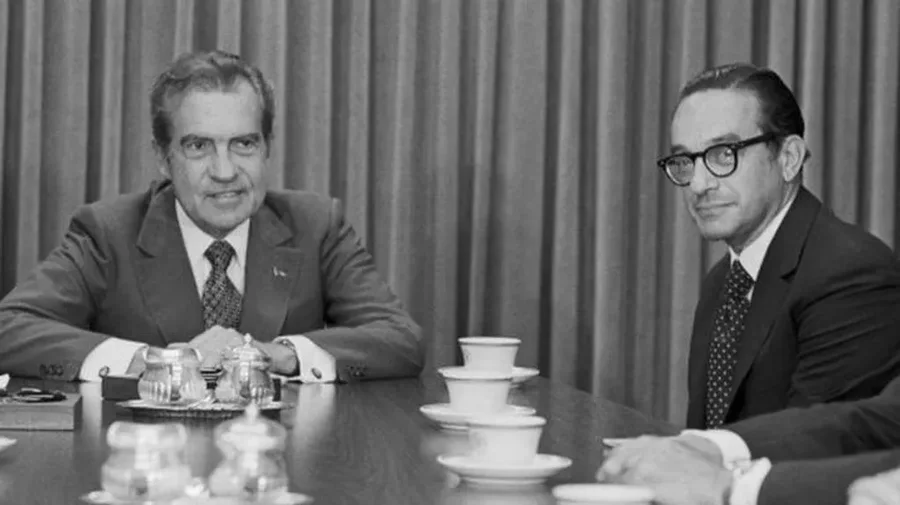
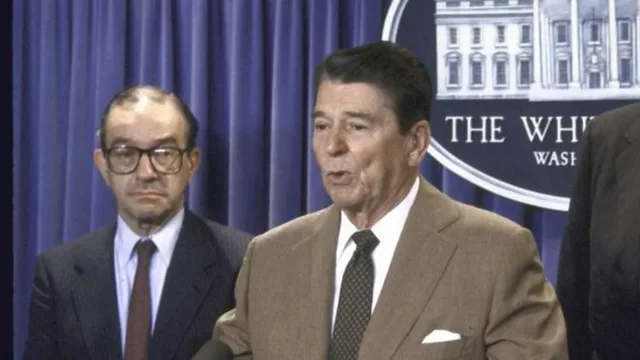
President Gerald Ford kept him in office, while Ronald Reagan entrusted him with the leadership of the commission that examined the reform of the American pension system. In August 1987, Reagan appointed him chairman of the Federal Reserve, placing him at the center of American economic decision-making.
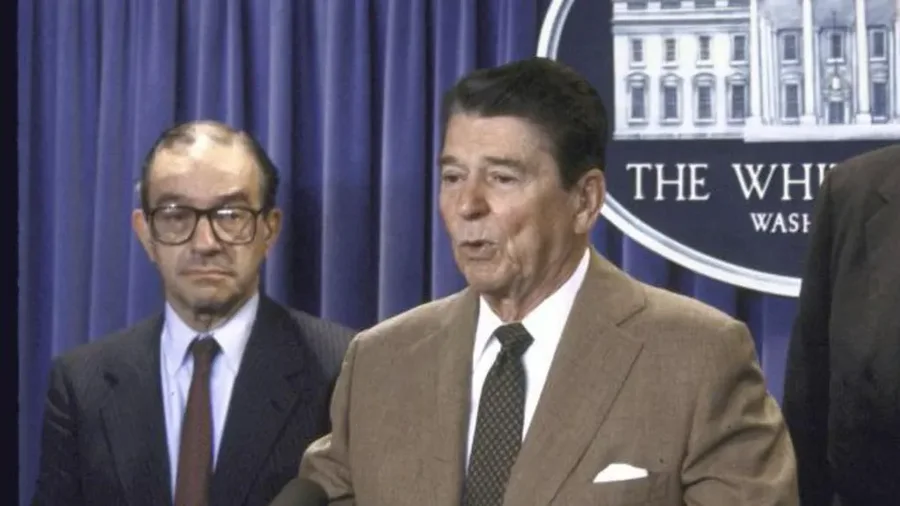
Just weeks after taking office, Greenspan faced the dramatic stock market crash of October 1987. His quick response and public assurances of the stability of the financial system calmed markets and strengthened his reputation. This approach became a hallmark of his tenure: rapid monetary intervention and provision of liquidity whenever the economy faced shocks.
During his tenure, the United States experienced a series of crises, including the Savings and Loan Crisis, the First Gulf War, the Mexican Financial Crisis, and later the aftermath of international crises that affected global markets. In each case, the Federal Reserve used interest rate cuts and other accommodative policies to support economic activity.
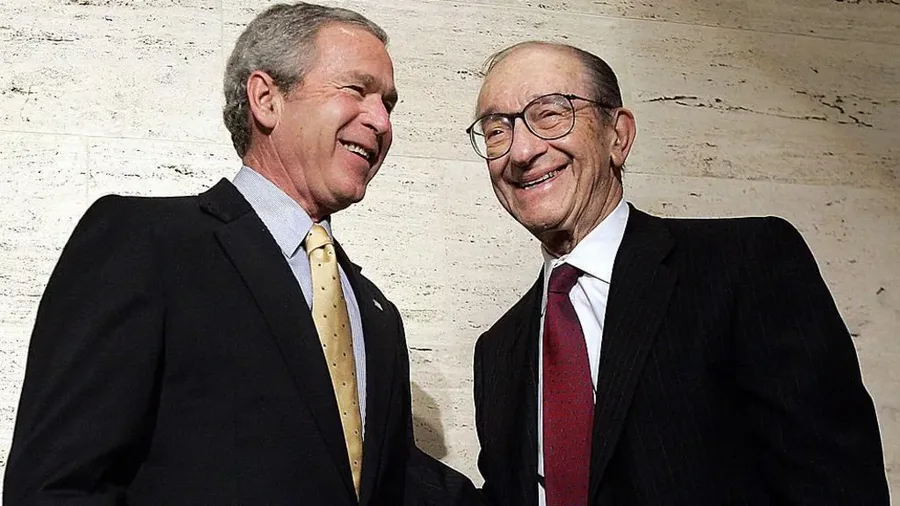
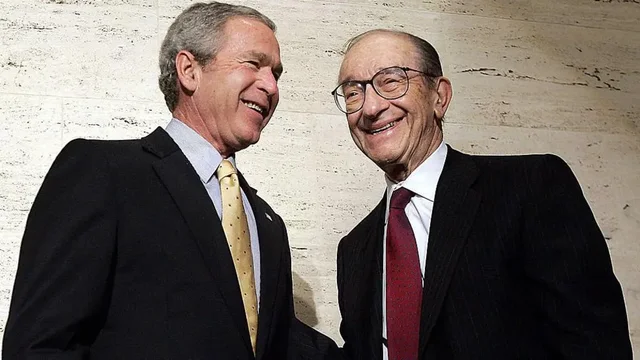
George HW Bush reappointed him as head of the central bank, although the Republican president later expressed dissatisfaction with the slow pace of economic recovery. Bill Clinton, despite ideological differences, also decided to keep him in office. During the 1990s, the American economy experienced a period of strong growth, with controlled inflation and falling unemployment. Greenspan himself later praised Clinton for his focus on long-term economic growth.
Në jetën private, Greenspan ishte një tenist i apasionuar. Martesa e tij e parë zgjati pak kohë, ndërsa më pas pati një lidhje me prezantuesen e njohur televizive Barbara Walters. Në vitin 1997 ai u martua me Andrea Mitchell. Po atë vit, ai u përball me krizën financiare aziatike, duke ulur normat e interesit dhe duke kontribuar në stabilizimin e ekonomisë globale.
Në fund të viteve 1990, tregjet financiare u përfshinë nga entuziazmi rreth kompanive të teknologjisë. Greenspan paralajmëroi për atë që e quajti “gëzim i paarsyeshëm”, por kritikët argumentuan se nuk ndërmori masa të mjaftueshme për të frenuar spekulimet. Pas shpërthimit të flluskës, Rezerva Federale uli sërish normat e interesit për të mbështetur ekonominë. Ekonomisti fitues i Çmimit Nobel, Paul Krugman, ishte ndër kritikët më të zëshëm të kësaj qasjeje.
Pas sulmeve terroriste të 11 shtatorit 2001, Greenspan ndërhyri përsëri duke ulur normat e interesit për të shmangur një ngadalësim të thellë ekonomik. Ai gjithashtu mbështeti politikat që synonin stabilizimin e tregjeve të energjisë në një periudhë pasigurie gjeopolitike.
Në vitin 2006 ai u largua nga drejtimi i Rezervës Federale pas pesë mandateve të njëpasnjëshme, një rekord në historinë e institucionit. Vetëm një vit më vonë, tregu amerikan i banesave filloi të shembej, duke çuar në krizën financiare globale të vitit 2008. Shumë kritikë e lidhën krizën me politikat monetare të ndjekura gjatë mandatit të tij dhe me kundërshtimin e tij ndaj rregullimit më të fortë të sektorit bankar.
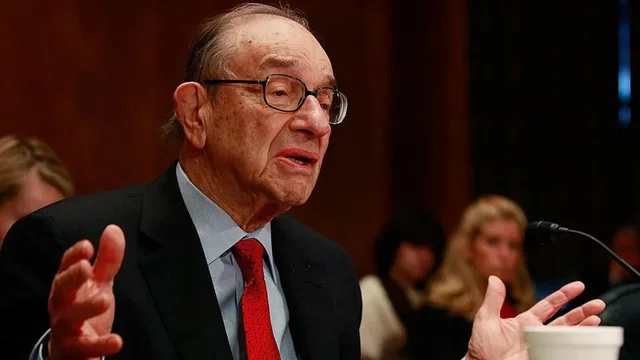
Në tetor 2008, gjatë një dëshmie para Kongresit amerikan, Greenspan pranoi publikisht se kishte nënvlerësuar rreziqet e sistemit financiar. Ai deklaroi se kishte besuar se institucionet financiare do të vepronin në interesin e tyre afatgjatë dhe se mekanizmat e vetërregullimit do të funksiononin. Kriza, sipas tij, tregoi se kjo bindje kishte mangësi serioze.
“Kam gjetur një të metë. Nuk e di sa e rëndësishme apo sa e përhershme është, por ky fakt më shqetëson shumë”, deklaroi ai në atë kohë.
Pavarësisht debateve mbi trashëgiminë e tij, Alan Greenspan mbetet një nga figurat më të rëndësishme në historinë ekonomike amerikane. Ai mori Medaljen Presidenciale të Lirisë dhe u nderua me titull kalorësiak nga Mbretëresha Elizabeth II. Edhe pas largimit nga detyra, ai vazhdoi të ishte një komentator dhe këshilltar i kërkuar për çështjet ekonomike.
Në vitet e fundit të jetës, Greenspan kritikoi disa politika ekonomike të administratave të ndryshme amerikane, kundërshtoi Brexit-in dhe paralajmëroi për rreziqet që lidhen me ritmin e ndryshimeve të normave të interesit. Ai festoi 100-vjetorin në mars të vitit 2026.
Alan Greenspan will be remembered as the man who shaped American monetary policy more than anyone else during the late 20th and early 21st centuries. To his supporters, he was a guarantor of economic stability and the architect of a long period of prosperity. To his critics, his free-market philosophy and opposition to financial regulation contributed to creating the conditions that led to the greatest crises of modern times.




Lini një Përgjigje