


 Shkruar nga Pamfleti
Berlin plans to invest 166 billion euros by 2029 to improve its infrastructure, of which more than 100 billion euros will go to the rail network. Priority is being given to “dual-use” infrastructure, that is, civilian facilities that can also serve military needs.
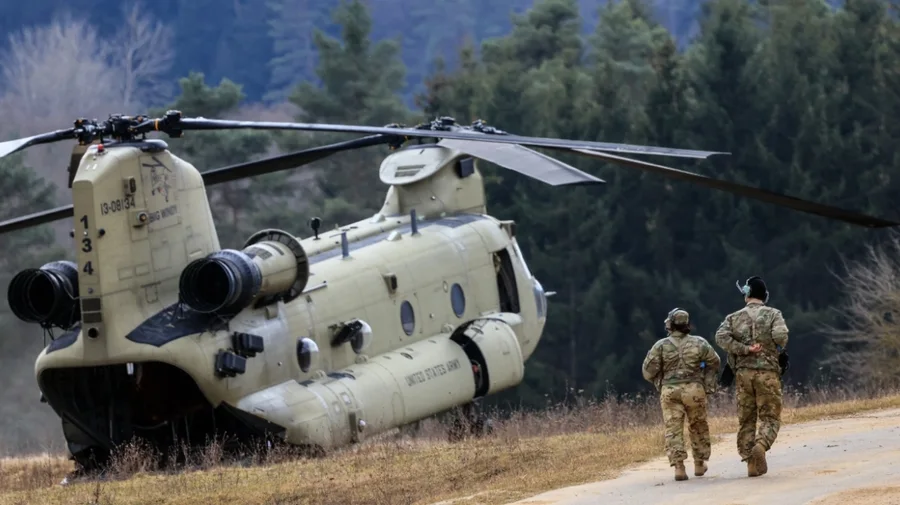
Germany is working on and has already begun implementing a top-secret 1,200-page operational plan known as the “Operational Plan Germany” (OPLAN DEU), which outlines how the country would act as a central hub in the event of a military conflict with Russia.
The plan foresees, among other things, the movement of up to 800,000 soldiers from Germany, the United States and other NATO countries to the Alliance's eastern borders.
According to the Wall Street Journal, about two and a half years ago, a dozen senior German officers gathered at a military compound in Berlin to begin drafting the plan, a process that took place secretly inside the Julius Leber barracks. Today, those same officers are racing to implement it.
Troop transfer, infrastructure and the return to the logic of the "Cold War"
OPLAN DEU details how large military forces will move via ports, rivers, railways and roads, and how they will be protected and supplied along the way. The plan is based on a "whole of society" approach, meaning the full participation of state and non-state actors.
Germany is thus returning to a Cold War-era mentality - but one that has adapted to new threats such as drones, cyberattacks, the possibility of sabotage and the vulnerabilities of modern German infrastructure.
German officials estimate that Russia could be “ready and willing” to attack a NATO country in 2029. However, a series of incidents in Europe involving espionage, sabotage attempts and airspace violations that Western intelligence agencies attribute to Moscow point to the possibility of a more immediate danger.
Analysts also believe that a possible ceasefire in Ukraine, which the US is currently seeking, could allow Russia to reallocate resources and accelerate its preparations against NATO countries.
"The aim is to prevent war by making it clear that anyone who attacks us will not succeed," said one of the original drafters of the plan, a senior German officer.
Investments of 166 billion euros in infrastructure, Germany's role as a transit hub is essential
Berlin plans to invest 166 billion euros by 2029 to improve its infrastructure, of which more than 100 billion euros will go to the rail network. Priority is being given to “dual-use” infrastructure, that is, civilian facilities that can also serve military needs.
In a potential conflict, Germany would not be a frontline country, but the main "platform" through which Allied forces would move towards Eastern Europe.
Legal loopholes, sabotage and cyberattacks
The plan's drafters identified significant peacetime problems: an inadequate legal framework to combat sabotage, restrictions on troop movement, and a significant backlog in critical infrastructure. Recent readiness tests have shown that further coordination is needed to fully align the plan with reality.
Silent preparation and the political framework
While the Merz government has announced a €500 billion defense spending program and the return of military conscription, the German military is working in parallel behind the scenes, already training hospitals, police and civil protection services, and agreeing routes for military convoys.
The Chancellor recently emphasized that "we are not at war, but we no longer live in peacetime," describing the new period of heightened vigilance.







Lini një Përgjigje