


 Shkruar nga Pamfleti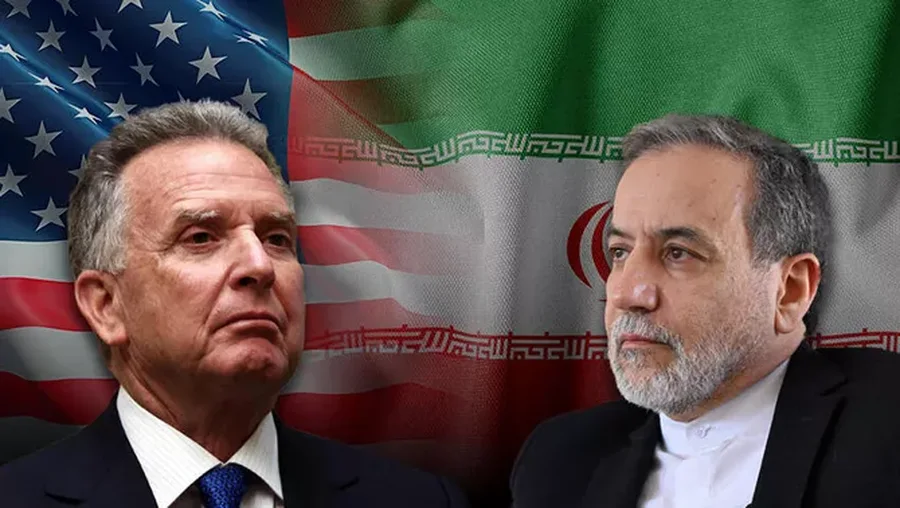
Senior US and Iranian officials are holding direct talks in Oman today, amid a tense phase in bilateral relations where the risk of military escalation remains present. The meeting is considered an important diplomatic step between the two countries, which have not had formal relations for years.
The talks come as Washington has beefed up its military presence in the Middle East, a move that Washington has justified with concerns about regional security and stability, following the violent suppression of nationwide protests in Iran last month. International human rights organizations report that thousands of people have been killed during these protests, while Iranian authorities have denied the figures and blamed external actors for the unrest.
The meeting in Oman comes as regional mediators seek to defuse tensions and avoid a direct military confrontation. The sides have divergent views on the content of the dialogue, but have signaled that any positive outcome could pave the way for further negotiations.
The United States wants Iran to halt its nuclear program, reduce its stockpile of enriched uranium and accept a broader international inspection regime. Washington also wants Iran's ballistic missile program and Tehran's role in regional conflicts to be brought to the table. Iranian authorities have said they agree to discuss only the nuclear issue and consider the missile program a matter of national security.
In recent weeks, US President Donald Trump has warned that the United States will not rule out military action if a deal is not reached. The US has deployed thousands of additional troops and naval forces to the region, including an aircraft carrier, warships and fighter jets, significantly increasing its military presence in the Persian Gulf.
Iran has vowed to respond to any attack, signaling it will strike US targets in the Middle East and Israel. Iranian officials have stressed that any escalation would have far-reaching consequences for regional security.
The Iranian delegation to the talks is led by Foreign Minister Abbas Araghchi, while the United States is represented by special envoy Steve Witkoff and Jared Kushner. This is the first direct contact between officials from the two countries since the military clash between Israel and Iran in June last year, when the US struck three key Iranian nuclear facilities. Tehran has said that it has stopped uranium enrichment activity after these attacks, a claim that remains unconfirmed by international agencies.
The talks were initially planned to be held in Istanbul, with the involvement of Egypt, Turkey, and Qatar, but Iran requested at the last moment that they be moved to Oman and held only between the two delegations, without a direct mediator.
For Iranian leaders, facing strong domestic pressure and ongoing economic sanctions, the meeting in Oman constitutes a crucial test to avoid a US military intervention, at a time when the country's political and economic stability remains fragile.



Lini një Përgjigje