


 Shkruar nga Pamfleti
Tensions are rising between the Trump administration and European governments over the regulation of digital platforms.
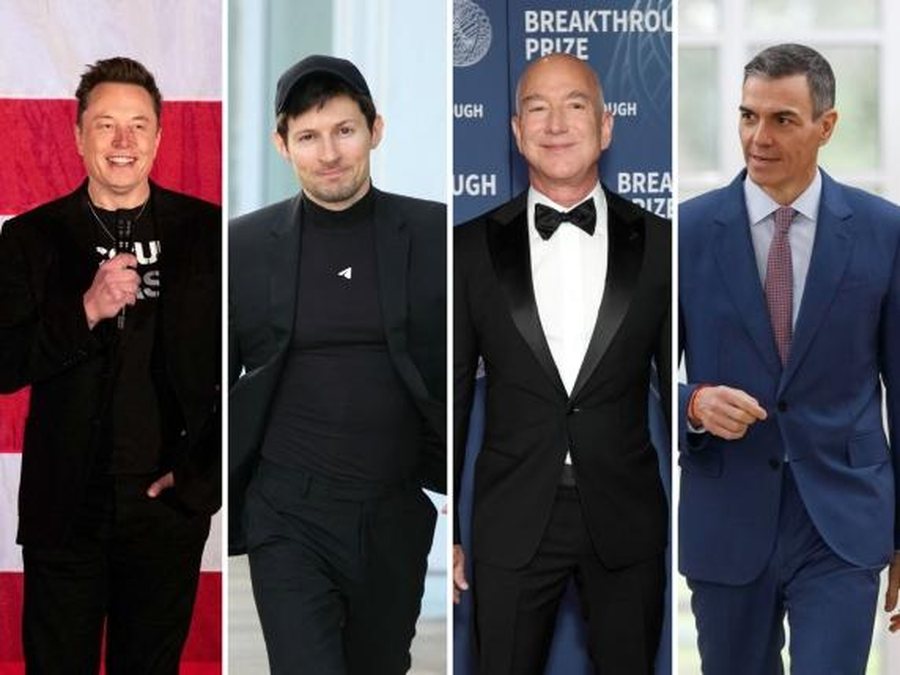
A new "cold war" is taking shape between the United States and Europe, no longer over territory or weapons, but over social networks, artificial intelligence and their impact on public health, technology and electoral processes.
While Greenland temporarily appeared as a pressing topic on the international agenda and then disappeared, tensions between Donald Trump's administration and major European governments remain strong.
According to Spanish Prime Minister Pedro Sánchez, the main issue is the clash over the model of technological development: the combined use of social networks and artificial intelligence to influence millions of users, including minors, and to maximize the profits of platforms in the European Union. Speaking at the World Governments Summit in Dubai, Sánchez asked whether Europe should accept “a technology that normalizes and amplifies fraud, that turns privacy into a raw material for exploitation,” or “a society where a techno-oligarch can hack into the phones of millions of citizens to spread lies.” He stressed that the answer must be “a clear no,” adding that European democracy will not back down.
His statements directly relate to two key figures in the sector: Elon Musk and Pavel Durov. A few days earlier, Musk had attacked Sánchez on the X platform, which he owns, calling him a “tyrant” and a “traitor to the people” for the Spanish government’s decision to regularize the status of about half a million immigrants. Sánchez also defended this choice in an editorial published in the “New York Times”. In parallel, Pavel Durov, the founder of Telegram, used his platform to strongly oppose the Spanish bill that aims to limit the use of social networks by minors.
The Madrid bill is similar to other initiatives in Europe, including the UK and France. It provides for a ban on access to social networks for minors under 16, strict age verification, criminal liability for platform managers in case of failure to remove illegal or harmful content, as well as sanctions for manipulating algorithms with the aim of amplifying disinformation or extremism for profit. At the same time, European governments criticize the fact that big tech companies pay minimal taxes in Europe, mainly through tax structures concentrated in Ireland.
After the speech in Dubai, Musk and Durov intensified their attacks on Sánchez. Durov spoke of "excessive censorship" and the risk of "total control," while Musk called the Spanish prime minister a "totalitarian fascist," using abusive language on social media.
However, the clash is not limited to Spain. In addition to France and the UK, Denmark, Norway, Greece and Slovenia are also considering measures to restrict minors' access to digital platforms. In Italy, a similar bill with bipartisan support was blocked in the Council of Ministers in October, without clear public explanations.
At the European level, Germany is considering whether companies like Amazon and Netflix should be forced to reinvest some of their revenues in the German market. Meanwhile, France and Britain have intervened in X’s artificial intelligence model “Grok” after cases of abuse and content that relativized Nazi crimes. The Paris prosecutor’s office has carried out inspections at the platform’s French headquarters and summoned its executives for clarification.
In Washington, the Republican majority in Congress has reacted by defending Big Tech. The House Judiciary Committee accuses European governments of “censorship” and has held critical hearings against them. The Italian government, meanwhile, remains reserved and without clear statements.
According to this analysis published by the Italian media outlet Corriere della Sera, the clash between the political world of Donald Trump and Europe over the regulation of digital technology remains open and a truce still seems far away.




Lini një Përgjigje