


 Shkruar nga Tim Lister dhe Gul Tuysuz
Nearly a month after the United States and Iran agreed to a Memorandum of Understanding aimed at halting the escalation of the conflict and paving the way for broader negotiations, the deal is facing its biggest challenge yet.
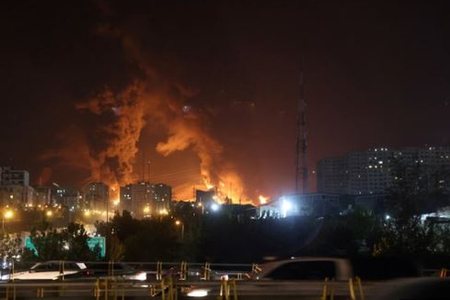
Tensions have risen sharply in recent days after attacks on merchant ships in the Strait of Hormuz. In response, the US military has carried out hundreds of strikes on targets on the Iranian coast and elsewhere in the country. Both sides accuse each other of failing to honor commitments and a lack of will to implement the agreement.
One of the most contentious points of the memorandum remains Article 5, which uses general language. The document stipulates that Iran will make "its best efforts" to ensure the safety of commercial navigation for 60 days, while at the same time tasking Iran and Oman to determine the future administration of the Strait of Hormuz.
For Tehran, this means an active role in managing this strategic sea route.
"The Strait of Hormuz remains under Iran's total supervision and management for the next 30 days. Only after all obstacles are removed will the full capacity of the waterway be restored," Iranian Foreign Minister Abbas Araghchi said.
A regional source quoted by CNN described the memorandum as a mechanism that only works temporarily.
"The Memorandum of Understanding is working like a thermostat. It is regulating the situation, essentially turning it on and off ," the source said.
According to the same source, the wording of the agreement gives both sides room to justify military action. "Under the framework of the Memorandum of Understanding, both sides are claiming the right to attack," the source stated.
European diplomats are also watching the latest developments with concern. "At best, the agreement is in intensive care. But it could also be slipping into a coma ," said one European diplomat.
On the other hand, US President Donald Trump gave conflicting signals. After the attack on a ship in the Gulf of Oman, he declared: "For me, I think it's over. I don't want to deal with them (Iran) anymore."
However, Trump has not ruled out the possibility of new negotiations. The memorandum provides for a 60-day period for discussions on Iran's nuclear program, uranium enrichment, sanctions relief and the unlocking of Iranian assets abroad.
Although 26 days have passed since this negotiation window entered into force, there are still no concrete signs that the parties have begun talks on these key issues, adding to the uncertainty over the future of the agreement.




Lini një Përgjigje