


 Shkruar nga Alessandro Cassanmagnago
But who are these figures really? The Western media narrative continues to portray a politically fragmented Iran: a supreme leader portrayed as incapable of exercising leadership and a ruling class already embroiled in traditional internal wars.
While Western media portrays the Iranian leadership as divided, conflicted, or leaderless, in reality the Islamic Republic’s politicians are preparing for a new round of confrontation with the United States, whether diplomatic or military. Rather than a return to the Cold War, the clash between Iran and the United States takes us back in some ways to the Middle Ages, when feudal lords imposed their jurisdiction over territories, trade routes, and strategic crossing points.
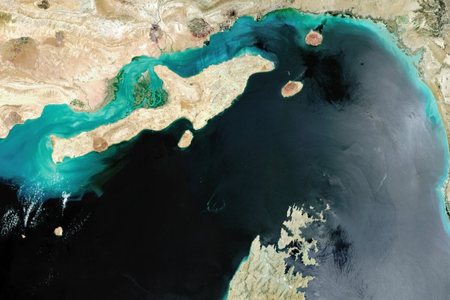
Today, the emblematic case is the Strait of Hormuz, where Tehran has managed to reassert, through a military response that some observers have found surprising compared to the Israeli-American offensive, its coercive capacity in one of the most important waterways on the planet.
Just as they once imposed bounties and taxes, today the Iranian Pasdaran, bolstered by the legitimacy derived from their demonstrated military capabilities on the ground, influence maritime transit through the Strait with a combination of psychological deterrence and a physical blockade.
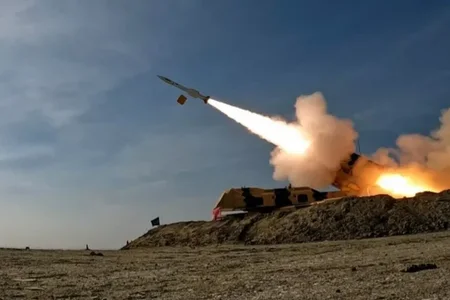
This pressure is exerted through the constant risk of interception, the threat of minefields, the presence of high-speed vessels from the Iranian Revolutionary Guards Navy, and the possibility of attacking energy infrastructure and commercial shipping. This capability was demonstrated concretely recently, when a Japanese oil tanker passed through the strait unharmed after incurring enormous costs related to the security of the route, a sign of how navigation in the area is now de facto subject to the tacit consent of the “Lords of Hormuz.”
But who are these figures really? The Western media narrative continues to portray a politically fragmented Iran: a supreme leader portrayed as incapable of exercising leadership and a ruling class already embroiled in traditional internal wars. In reality, precisely because of the conflictual and competitive nature of internal relations within the Islamic Republic, disagreements in crisis management are nothing new, neither to attentive observers nor, above all, to Iranians themselves, who seem to absorb this dynamic with relative ease.
Some internal rivalries persist, as is natural in a polycentric and complex system like Iran's. But this multiplicity of decision-making centers is structural and organic to the system, not the product of exogenous causes like the war launched by Donald Trump against the country.
According to many Western analyses, two main factions are currently clashing: on the one hand the Pasdaran and on the other the political establishment, especially the Foreign Ministry, divided over the management of the crisis and possible negotiations with Washington. These two poles are said to be embodied by the commander of the Revolutionary Guard, General Hossein Salami, and Foreign Minister Abbas Araghchi. In reality, this interpretation seems largely uncertain. There are no concrete signs of strategic fragmentation, let alone a split.
There are differences in tone, method and political language, but the goal remains common: to protect the survival of the system, preserve the country's deterrent capacity and approach the confrontation with the United States from a position of strength. Another rumor circulating in recent weeks concerned the alleged weakening of one of the figures who, recently, has gained great influence in Iran: Mohammad Bagher Ghalibaf. According to various reports, Ghalibaf was gradually removed from decision-making centers or reduced in status after leading the Iranian delegation in the last round of negotiations held in Islamabad. However, even in this case, the evidence seems extremely fragile. Nothing indicates a real marginalization of his figure, who instead continues to firmly maintain his role in the delicate balance of power of the Islamic Republic.
It should be remembered that Ghalibaf, while playing an important role in the Iranian political hierarchy, does not represent the sole pinnacle of the system nor the entire leadership of the country. However, he is certainly one of the most important figures in the Iranian ruling class, especially given the recent deaths of several prominent figures in Israeli-American attacks.
From this perspective, it can be said that a form of regime change has indeed occurred, but in a very different sense than Washington imagined. The change has not led to the collapse of the system, but rather to its internal transformation, accelerated by the elimination of key figures in the military and political apparatus and the death of Supreme Leader Ali Khamenei. The Iranian political system, however, seems to have stabilized. It is very likely to undergo profound changes, but not in the sense desired by the United States. More likely is that new and difficult-to-predict scenarios will emerge. Even the idea of a simple dictatorship of the Pasdaran seems a very crude simplification. The internal dynamics of Iranian power remain complex, multilayered, and often opaque to outside observers. We do not yet know what shape the corridors of power in Tehran will take, but it is certain that the Pasdaran have strengthened their position thanks to their decisive role in the development of the conflict.
So who are the Lords of Hormuz? No single man, no single faction. Rather, they are a complex network of military personnel, politicians, intelligence officials, technocrats, and business sectors that pull the strings of Iran’s current power structure. A power that, as mentioned at the beginning, manifests itself above all in its control of the Strait of Hormuz and its continued ability to exert pressure on the Persian Gulf countries. Returning to the medieval metaphor, Iran today seems capable of imposing, through persuasion and force, respect for its rules. Recent events and the significant failure of the American naval blockade demonstrate the resilience and strength of this nation, which we have already defined as the fourth power in a globalized world that is now definitively in crisis./ Adapted from “Pamphlet”, from Inside Over”


Lini një Përgjigje