


 Shkruar nga Pamfleti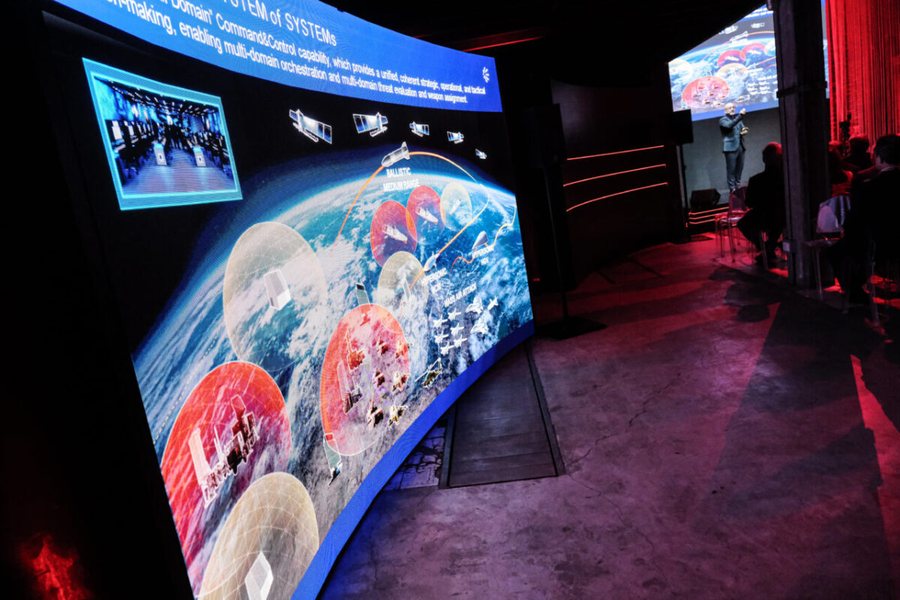
The need to quickly protect the continent from aerial threats, from drones to the most worrisome ballistic missiles, has become urgent...
A European missile defense system, open to all those who wish to participate, using the means at their disposal. This is the essence of Michelangelo Dome: the ambitious project by Leonardo, the leading Italian defense and aerospace group.
The need to quickly protect the continent from aerial threats, from drones to the most worrying ballistic missiles, has become urgent, but it clashes with the reality that each European country is building defense systems that do not communicate with each other. Each has its own radars, command centers and weapons systems. Leonardo's vision is to connect them, creating "the largest integration program ever undertaken in the sector", explained CEO Roberto Cingolani.
Easier said than done, more for political reasons than for the technological know-how that Leonardo believes he already possesses. Michelangelo Dome would develop software based on artificial intelligence, capable of connecting different systems to make them function as a single network.
A catalyst for data from a wide range of sensors and the use of predictive algorithms that would be able to anticipate threats and choose the best response in real time. Today, a hypothetical missile launched against any target in Europe would have different commands trying to decide who should intercept it and how.
This is a significant bottleneck: hypersonic missiles like the Russian Avangard or Kinzhal travel at estimated speeds of between 3.4 kilometers per second and six kilometers per second, and can hit a target in Europe in three to five minutes.
Even a few seconds can be decisive. Leonardo's system promises to significantly automate the process, identifying the most appropriate weapon to stop an attack in real time or near real time, whether from a fighter jet, a ship or a missile battery. The Italian high-tech company believes it is the only one in the world capable of offering this solution, as it already produces all the necessary components: from radars to satellites, from command systems to Eurofighter fighters.
Leonardo has spent heavily on cybersecurity over the past three years and has two thousand engineers specializing in artificial intelligence. Above all, Michelangelo's Dome would be an open project, capable of working with the defense systems of each NATO country, without having to buy separate weapons, but instead integrating those it already possesses.
The project’s name itself speaks volumes about its underlying philosophy: a security dome modeled after Israel’s Iron Dome, which was capable of intercepting hundreds of rockets launched simultaneously toward the country. The Italian dome also recalls the Golden Dome, the space shield commissioned by Donald Trump to protect American space. However, while they may be similar in name, some experts point out, they differ significantly in practice: the American shield is an umbrella program that connects already interconnected systems, while Leonardo’s project aims to connect systems that currently do not communicate with each other. It is multi-domain, meaning that land, sea, air, space and cyberspace are considered a single theater of operations.
The feasibility of Michelangelo's Dome also conflicts with the economic interests of various European players. Three years ago, Germany launched the "European Sky Shield Initiative," a program aimed at the joint procurement of anti-missile systems. The German government quickly announced its intention to purchase Iris-T missiles from domestic manufacturer Diehl Group for medium-range defense, American Patriot missiles for long-range defense, and Israeli Arrow 3 missiles for very long-range defense.
The program currently brings together twenty-four countries, including the United Kingdom, Sweden, Finland and the Baltic States, but not France and Italy, which, surprised, criticized the decision to buy American and Israeli weapons instead of developing European solutions, such as the Samp-T anti-missile system, produced by the MBDA consortium (25% owned by Leonardo) and the French company Thales.
However, the multi-domain defense system could be useful precisely for the European "Sky Shield".
Leonardo plans to make the first products available by 2027, while the Financial Times predicts full operation by 2030./ Adapted from "Pamphlet" by "Linkiesta"






Lini një Përgjigje