


 Shkruar nga Pamfleti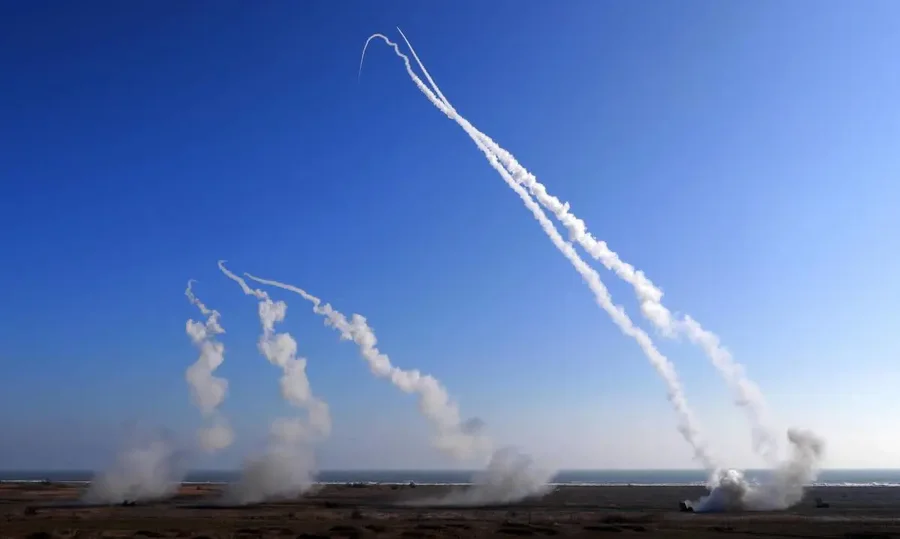
A massive increase in military spending, the purchase of new weapons, and cooperation with Western and regional partners.
And then numerous diplomatic agreements to create a network that can be used when needed. Australia has long been flexing its muscles in response to China’s growing expansionism in the Asia-Pacific and a hypothetical new US strategy that could put the Western Hemisphere at the top of its foreign policy priorities at the expense of the Far East. Thus, Australian Prime Minister Anthony Albanese has put on the table nearly $16 billion to order or build fleets of aircraft, drones, autonomous submarines, Japanese-designed frigates and missiles, launching the country’s biggest military reorganization since World War II.
Australia's strategy
Of course, Australia is no ordinary country. Along with the US, India and Japan, it is part of the Quad, an informal strategic cooperation club aimed at containing Chinese expansionism in the Indo-Pacific region, as well as the Five Eyes, an intelligence and information-sharing alliance that also includes Canada, New Zealand, the UK and the US. Canberra is also an integral part of the Aukus, a trilateral security pact formed with the UK and the US, which aims to equip the Australian armed forces with nuclear-powered submarines. In short, the country has always been a strong US ally, used by Washington to track Beijing’s threats across the region.
There is more to be said for Australia, however. For example, Australia has signed the first new military alliance in the Asia-Pacific since the Cold War: a deal with Papua New Guinea that commits both countries to defending each other and allows up to 10,000 Papuans to join the Australian armed forces. Other, somewhat different but equally strategic, agreements have involved two other small islands: Tuvalu and Nauru. Australia’s dual objective is clear: to protect itself from the ambitions of Beijing, which is interested in gaining access to ports and airstrips in deep waters between the small countries surrounding Australia (a potential military threat in the event of war), and from a possible weakening of the US presence on the Asian continent.
A pro-American enclave in the Pacific
As Politico explained, Australia is transforming from a missile importer to a manufacturer thanks to a new guided weapons deal with the United States, which aims to turn the country into a munitions hub and help its allies deter China. In the coming days, Australia’s Minister of Defense Industry, Pat Conroy, will discuss the initiative with senior Pentagon and State Department officials, as well as congressional leaders.
Australia, under an agreement with the US government and Lockheed Martin, will begin joint development and production of Guided Multiple Launch Rocket Systems (GMS) and then Precision Strike missiles, long-range weapons capable of striking at distances of more than 500 kilometers. The increased power is a way to "strengthen" the Australian armed forces, Conroy explained. The new weapons will significantly extend the range of action of the Australian Army: from the traditional artillery range of 40 kilometers to about 80 kilometers with the GMLRS and, ultimately, beyond 1000 kilometers with advanced versions of the Precision Strike Missile. Recall that Washington recently authorized the sale to Australia of 48 HIMARS systems, which are in addition to the previous Australian order of 42 launchers.





Lini një Përgjigje