


 Shkruar nga Pamfleti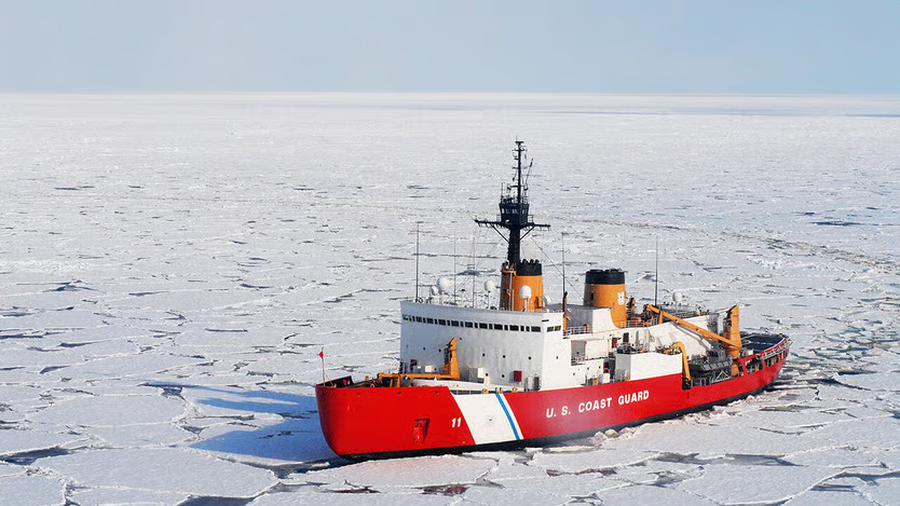
The greatest threat to America's security in the Arctic emanates not from the Atlantic side around Greenland, but from the Pacific side, around the approaches to Alaska. Worse still, his illusions about imperial expansion, whether for land or minerals, distract from this threat...
Since 2020, foreign military aircraft have flown 95 times in North American airspace. Of these intrusions into the "air defense identification zone," 91 were in the northwest, around Alaska.
Russia and China are investigating the Arctic regions near Alaska ever more intensively, with everything from dual-purpose Chinese research vessels (five visits this year) to joint patrols by the Chinese and Russian coast guards, navies, and air forces.
A particular shock was the appearance last year of Chinese and Russian nuclear-capable bombers.
Remote and formidable, the Arctic has been a region of diplomatic calm. Now it is a flashpoint of geopolitical rivalries and, just as in the Cold War, is rapidly becoming a zone for potential confrontation.
The shortest routes for missiles and nuclear bombers from Russia and, increasingly, China, pass mainly over the surface of the world.
Unlike during the Cold War, the race is also economic, as the ice sheet melts. This year's minimum ice cover was 39% smaller than in 1980. Global warming will attract more shipping, mining, fishing and tourism to the Arctic.
President Donald Trump says he is concerned about security there. He says that's why America should take Greenland from Denmark, while mocking Canada, its northern neighbor, by talking about making it America's 51st state.
But Trump is looking the wrong way. The greatest threat to America’s security in the Arctic emanates not from the Atlantic side around Greenland, but from the Pacific side, around the approaches to Alaska. Worse, his illusions about imperial expansion, whether for land or minerals, distract from this threat.
America has a lot to do to secure its northwest flank. Although it has many advanced fighter jets and other forces in Alaska, its surface fleet dares not enter the Arctic.
Its Coast Guard has only two icebreakers in the area, compared with Russia's 40 or more ships. The closest American deepwater port to the Bering Strait, a vital passage, is more than 700 nautical miles (1,296 km) to the south.
Air bases are located far away. To intercept aircraft in the air defense identification zone, American fighter jets often have to fly 1,500 nautical miles or more, constantly refueling in the air. That's like taking off from London to check on a plane over Tenerife.
America needs better infrastructure. It should rebuild its abandoned base at Adak and renovate the current one at Shemya, both in the Aleutian Islands. It should also expand the airport at Deadhorse in the north and accelerate improvements to the port at Nome near the Bering Strait. It benefits from knowledge about the changing Arctic. Mr. Trump’s cuts to climate change research are self-defeating.
Trump has taken some helpful steps. The proposed “Golden Dome” missile defense shield, if nothing else, will improve awareness of future threats. He has just reached a deal with President Alexander Stubb of Finland to buy icebreakers. However, this welcome example of “supporting allies” in defense production is an exception.
Too often, Trump alienates allies instead of working with them. NATO members make up 7 of the 8 countries that border the Arctic, Russia is the eighth.
Allies help defend against growing Russian threats on the Atlantic flank of the Arctic. This makes it easier for America to defend itself against China and Russia on the Pacific flank.
In the Arctic, the point is clear. Allies are an enabler, not a burden. Mr. Trump’s dream of a visible Arctic destination in Greenland and Canada is plain nonsense: it will make allies suspect that the threat in the Arctic comes not just from Russia and China, but from America itself. /Adapted from The Economist/







Lini një Përgjigje