


 Shkruar nga Pamfleti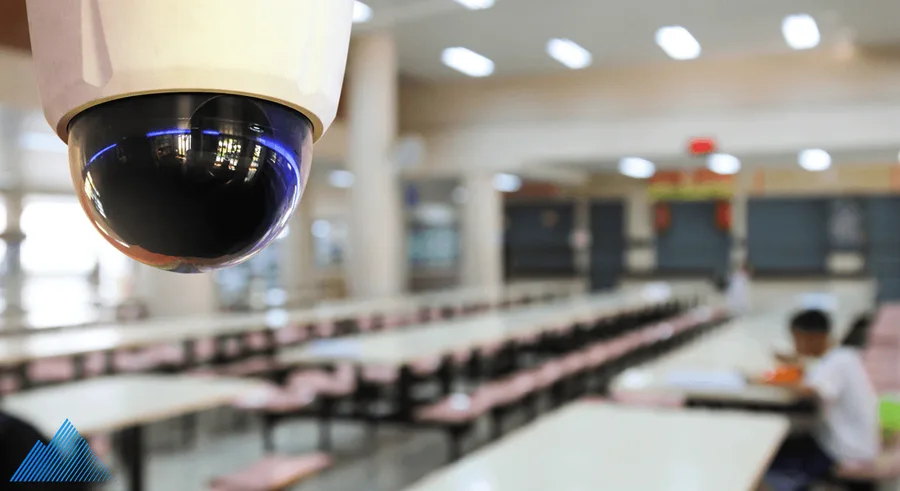
The discussion about Smart City is very interesting, because it can extend to many levels at once, from the concerns of technology experts, security experts, but also the law that stands like a hammer in the middle.
When we were only talking at the city level, always referring to traffic, solving criminal cases, or the help that ambulances could have in arriving at the scene as quickly as possible, there was a tacit multilateral agreement, but the moment schools were included, the situation changed...
"We need to have a regulated and specific legal basis. Regarding this project, I don't know if there are legal changes or requests for legal changes that are mandatory for this project to be implemented ," said Redi Ramaj, a lawyer.
"The schools are still unaware of what will happen. Schools are monitored with cameras, with this project they will be monitored. We are not dealing with normal cameras, but with extra functions. In the absence of information for parents, public information, it means that citizens, parents, have the right to raise questions, or to misunderstand the placement of these cameras ," said Gentian Serjani, a lawyer.
Citizen concern is not without reason. If we refer to the project demo data provided by Inside Story, through Smart City, intelligent cameras will be able to identify people's faces, car license plates, analyze crowds and detect suspicious behavior. So far, everything seems fine as a security criterion. But, the strongest point that experts raise regarding the project is where the data will be stored and who will manage it?
"If a third party accesses the data of citizens of a republic, it has violated digital sovereignty and national sovereignty. Data is the strongest identity of a nation. It is the identity and greatest asset of a state. Then how do we take this data that is managed by third parties that are friends today and enemies tomorrow, this is the biggest question that arises ," said Edmond Licaj, IT expert.
"Albania digitized data and services through e-Albania, without ensuring where we would store this data. We then had this data stolen from us. We still have hackers today and they are extracting data. Since 2021 until today, hackers have not left for a moment. They have cut off communication with some of the infrastructures, but they have not left," said Edmond Licaj, IT expert.
Given these strong dilemmas, this concern increases several times when it comes to monitoring and access to schools.
"Incidents in schools cannot be prevented just by installing cameras. We have had them in educational institutions even when serious criminal incidents among minors occurred. We must have proper structures that deal with the prevention of these cases ," said Gentian Serjani, a lawyer.
"School safety has been addressed several times and if we think that the only solution is camera monitoring, it is insufficient. School safety goes beyond monitoring and how many employees are at the door, but it has more to do with the way citizens, children and teachers who educate these children are educated, it is more a matter of culture ," said Redi Ramaj, lawyer.
The Smart City project will initially be piloted in 20 schools, which have been identified as priorities by security structures, based on the episodes of violence or incidents reported in the past.
The project is in the implementation phase and is expected to last 18 months. Currently, public schools have implemented and are using a monitoring system, which will be integrated into the Smart City platform for very rapid identification and notification of any event that endangers and compromises safety./ InsideStory





Lini një Përgjigje