


 Shkruar nga Pamfleti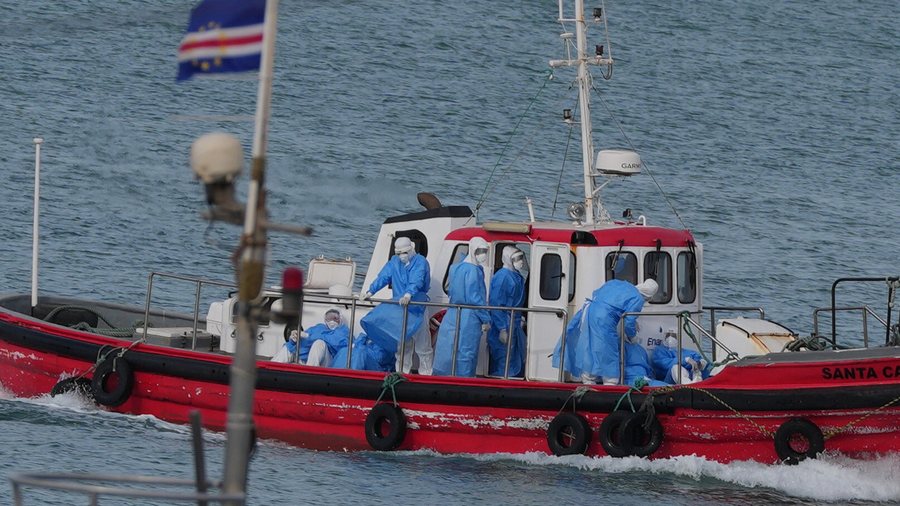
Of the seven suspected cases aboard the MV Hondius, three people have died. Experts are closely monitoring the “Andes” variant, the only hantavirus that can be transmitted between humans.
A suspected outbreak of hantavirus on a cruise ship in the Atlantic Ocean has brought global attention back to a rare but potentially deadly virus. The Dutch ship MV Hondius was allowed to dock in the Canary Islands on Wednesday after three passengers were evacuated earlier to Cape Verde for emergency medical treatment.
According to data reported by the World Health Organization, since the ship departed Ushuaia, Argentina, on April 1, seven people have shown symptoms related to hantavirus. Three of them have died, one is in critical condition, and three others are being monitored for similar symptoms.
Suspicions of international spread
Health authorities are also investigating suspected cases in France, Germany and Switzerland, mainly in people who disembarked the ship at various ports or were in close contact with infected passengers.
The people evacuated to Cape Verde are expected to be transported to the Netherlands for specialized treatment. Two of them are showing severe symptoms, while another is considered a contact case with a passenger who died last week.
What is hantavirus?
Hantaviruses are a group of viruses that are transmitted primarily by rodents and can cause serious illness in humans. The two most common forms are:
Hemorrhagic renal syndrome (HFRS), most common in Europe and Asia;
Hantavirus cardiopulmonary syndrome (HPS), which occurs mainly in the Americas and is considered much more dangerous.
The suspected variant on board the MV Hondius is Andes, a type of hantavirus commonly found in Argentina and Chile. This variant is related to HPS and has a mortality rate that can reach around 40%.
Symptoms caused by the virus
In the early stages, symptoms resemble those of the flu:
high fever,
extreme fatigue,
muscle aches,
nausea and vomiting,
diarrhea,
abdominal pain,
difficulty breathing.
In more severe cases, the disease can progress rapidly, causing fluid buildup in the lungs, serious heart problems, and respiratory failure.
How is it transmitted?
Hantaviruses are usually spread through contact with the urine, feces, or saliva of infected rodents. The “Andean” variant is particularly concerning because it is considered the only hantavirus known to date that can be transmitted from person to person.
According to experts, transmission between people usually occurs through close and prolonged contact, such as within families or between partners.
Doubts about the origin of the infection
According to Argentine officials, it is suspected that a Dutch couple may have been infected during a birdwatching activity near a wasteland in Ushuaia, before the trip began. Investigations are ongoing and authorities have not yet officially confirmed the source of the outbreak.
There are 149 passengers and crew members on board the ship from several countries around the world, including the UK, the US, Spain, Russia and Ukraine.
How dangerous is the explosion?
Although hantaviruses are rare, they are considered very serious due to the high mortality rate in some variants. According to the WHO, between 10,000 and 100,000 cases are reported globally each year.
Experts point out that, although the situation on the MV Hondius has caused international alarm, hantavirus does not spread as easily as COVID-19 and usually requires close contact or exposure to infected rodents.
Memories of previous outbreaks
Hantavirus gained global attention in 1993, when a mysterious outbreak in the Four Corners region of the US caused 33 cases and 17 deaths. It was then that scientists identified that American variants of hantavirus are significantly more aggressive than those in Europe and Asia.
What still remains unclear?
Authorities are investigating several key issues:
whether there was direct transmission between passengers;
how many other people may have been exposed;
whether the virus has spread to other ports where the ship has stopped;
and whether isolation measures on board have been sufficient.
International experts are closely following developments, while the case of the "MV Hondius" is considered an important test for the response to infectious diseases in closed environments such as cruise ships.






Lini një Përgjigje