


 Shkruar nga Pamfleti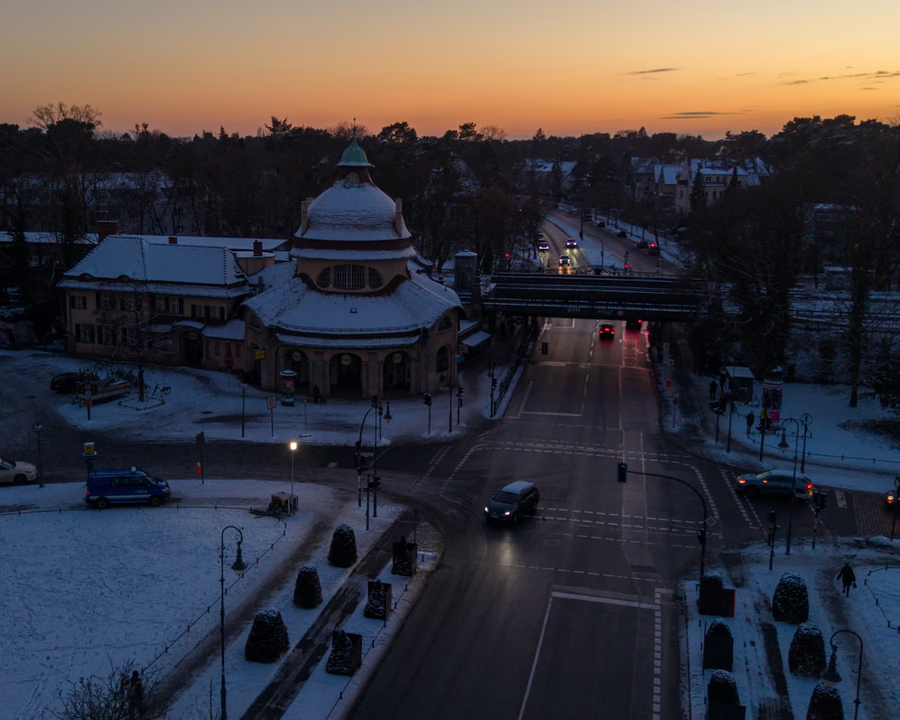
A sabotage that left thousands of homes and hospitals without power in Berlin has reignited fears of domestic terrorism and the vulnerability of critical infrastructure in Europe.
Sebastian Brandt knew immediately that something was wrong. It was the morning of January 3, a cold winter weekend in Berlin, when the head technician at Immanuel Hospital opened the window of his apartment and smelled the strong smell of oil.
A few seconds later, he realized the source: the hospital's emergency generator had kicked in. That could only mean one thing – the hospital had lost power from the electrical grid.
What Brandt didn't know at the time was that a few kilometers away, as yet unidentified individuals had burned five high-voltage cables under a bridge over the Teltow Canal, causing the worst power outage in Berlin since World War II.
The attack left around 45,000 homes, over 2,000 businesses and four hospitals without power in the south of the German capital. In some areas, power was restored only after five days.
At Immanuel Hospital, the situation quickly became critical. Emergency generators kept basic equipment running, but surgeries had to be canceled and no one could guarantee that the system would last for days without interruption.
Brandt had calculated that the 3,000-liter tank of diesel would last for a few days. When the grid operator informed him that the outage could last until next week, he set out to obtain additional fuel from the only stations that still had power.
At another hospital in the area, Hubertus Hospital, director Michael Schmidt was facing another crisis. Although the generator was up and running, the heating system had failed because the pumps that supplied the building with gas were not connected to the emergency power.
Temperatures were below freezing and hospital leaders began planning the evacuation of 150 patients.
“Fortunately, the technicians found a solution in time,” Schmidt recalls. But he admits that the atmosphere in the neighborhood was “dystopian.”
While hospitals regained power after a day, residents of surrounding areas were left in the dark for nearly a week. Elderly people were transferred to emergency centers, while citizens flocked to hospitals to charge phones or basic devices.
It was only after a few hours that authorities realized that the outage was not accidental.
An anonymous statement of nearly 4,500 words was published on far-left platforms, with an organization calling itself the "Volcano Group" claiming responsibility.
The message had radical anti-capitalist and environmentalist overtones. The authors described the sabotage as an “act of self-defense” against the economic system and infrastructure that, according to them, “is destroying the planet.”
The statement called for the sabotage of energy networks, the automotive industry, server centers, and fossil fuel infrastructure.
"We can't afford the rich anymore," the text said.
“Destroy the energy grids, the car, weapons and aviation industries.”
The “Volcano Group” is not an unknown name to German authorities. Since 2011, organizations or individuals using this name have claimed responsibility for several attacks on critical infrastructure in Berlin and its surroundings.
Among the targets was Tesla's giant factory near Berlin, which was left without power for several days after a sabotage in 2024, causing huge financial losses.
Despite a federal investigation spanning more than a decade, no one has been arrested for the attacks.
German authorities treat these cases as terrorism, as they target the normal functioning of the state and vital infrastructure.
Experts say the perpetrators have advanced technical knowledge and operate in very small groups, which makes their identification difficult.
According to extremism researchers in Germany, the internet today offers detailed manuals not only for building incendiary devices, but also for ways to avoid cameras, how to avoid leaving DNA traces, and how to organize autonomous sabotage cells.
This has increased concern that such attacks could easily be repeated in the future.
Meanwhile, the German government has reacted strongly. Interior Minister Alexander Dobrindt announced a reward of 1 million euros for information leading to the arrest of the perpetrators of the Berlin power outage – one of the highest rewards ever offered for a domestic terrorism case in Germany.
The incident has reignited fears about the vulnerability of Europe's critical infrastructure at a time of rising political tensions, radicalization and hybrid threats across the continent. / Adapted from "The Guardian"





Lini një Përgjigje