


 Shkruar nga Pamfleti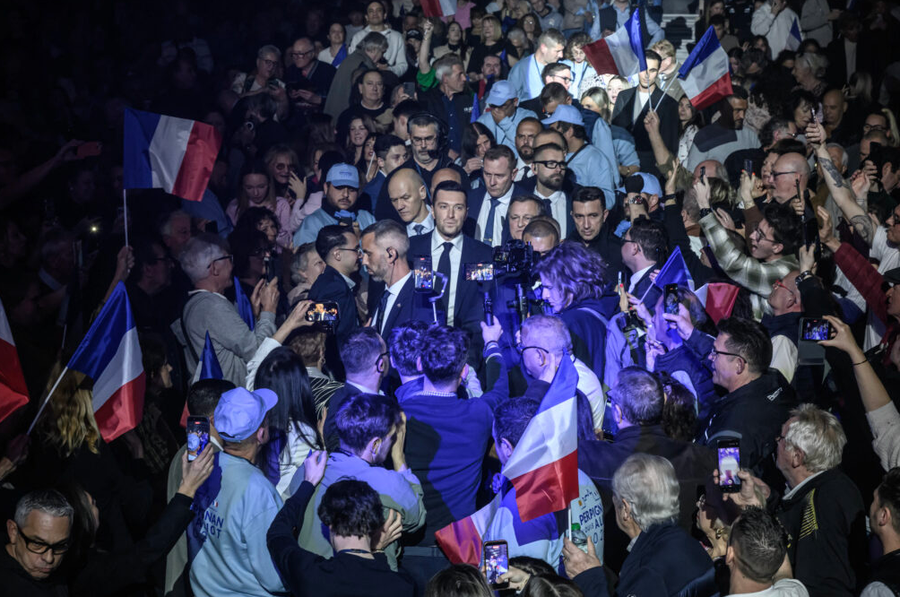
Jordan Bardella has a warning for Brussels: the French far right is softening its stance on NATO, but not on the European Union...
The current favorite for the presidential election in France, Jordan Bardella, during an exclusive interview with Politico, vowed to challenge the EU's long-term budget, reduce France's financial contribution to Brussels and build alliances with nationalist governments to impose a review of the way the European bloc works.
“What the European Union represents, what positive globalization, absolute market power, uncontrolled immigration, economic decline and excessive regulations for the European economy, businesses and industry were founded on, all of this is deeply outdated, all of this is deeply outdated and out of step with the times,” said Bardella, an MEP and president of the far-right National Rally party.
"Therefore we need to change the way the European Union works," he added.
Bardella's words will not reassure France's partners abroad, who may have considered him more moderate and less confrontational than his mentor Marine Le Pen, thinking he would be more inclined to compromise with the EU than to challenge it.
In the interview, conducted before a visit to Poland, Bardella sought to reassure allies about the National Rally's stance on NATO and France's commitments to security on Europe's eastern flank. However, on European issues, he continues to call for a radical transformation of the EU, a warning signal to Europeanists who hope he would govern more like Italian Prime Minister Giorgia Meloni, who has reached agreements with Brussels, than like former Hungarian Prime Minister Viktor Orban, who has often blocked the functioning of European institutions.
“We don’t want to leave the European Union,” Bardella said, adding “we want to change everything without destroying anything.”
The far-right leader identified the EU's next long-term budget as one of the first battlegrounds. While many officials in Brussels hope to wrap up negotiations before the end of the year, Bardella denounced the deadline as an attempt to approve spending plans before a possible political shift in Paris.
"The idea is clearly to approve the budget before a possible change of majority in France," he said, calling this "deeply anti-democratic."
Sipas tij, “ekzekutivi i ardhshëm francez, kushdo që të jetë, duhet të ketë fjalën e tij për këtë buxhet, sepse ai do të angazhojë Francën, dhe rrjedhimisht të ardhmen e popullit francez dhe buxhetin e taksapaguesve tanë, për shumë vite”.
Duke përshkallëzuar qëndrimin e tij të mëparshëm për këtë çështje, Bardella tha se do të kërkonte menjëherë të “përgjysmonte” kontributin e Francës në buxhetin e BE-së, i cili sipas tij “parashikohet të rritet me ritme të çmendura”.
Ai i krahasoi kërkesat e tij me mekanizmat korrigjues financiarë që vende më të pasura të BE-së, si Gjermania dhe Holanda, kanë siguruar për kontributet e tyre në buxhetin e unionit. “Do t’ua kthejmë francezëve paratë e tyre, sepse Franca është e destinuar të respektohet dhe të mbrojë interesat e saj,” tha ai, duke paralajmëruar Komisionin Evropian se, nëse kërkon më shumë fonde, duhet të ulë shpenzimet e veta administrative.
Ky argument kujton retorikën e Nigel Farage gjatë fushatës për Brexit në Mbretërinë e Bashkuar, sipas së cilës shkëputja nga Brukseli ishte mënyra për të rimarrë kontrollin mbi financat kombëtare. Por Bardella po e përdor këtë argument në Francë, një nga vendet themeluese të BE-së, financat publike të së cilës janë tashmë nën presion të madh.
Ofensiva evropiane
Më 7 korrik, Bardella do të mësojë nëse do të jetë kandidati presidencial i partisë së tij për zgjedhjet e vitit të ardhshëm. Atë ditë pritet që gjykata e apelit të vendosë nëse do të lërë në fuqi dënimin e Marine Le Pen për përvetësim fondesh dhe ndalimin pesëvjeçar për të mbajtur poste publike.
Nëse Bardella shpallet kandidat, ai konsiderohet gjerësisht favorit për të fituar raundin e parë të zgjedhjeve. Sondazhet e hershme tregojnë gjithashtu se ai mund të fitojë edhe balotazhin, megjithëse me diferencë të ngushtë ndaj kandidatëve centristë.
Vizita e tij në Poloni është pjesë e një strategjie më të gjerë për të forcuar marrëdhëniet me partnerë të mundshëm dhe aleatë ideologjikë, si Giorgia Meloni, për të cilën ai shpreh hapur admirim.
Ndërsa Bardella ka deklaruar se gjen “pika të përbashkëta” me kancelarin konservator gjerman Friedrich Merz në çështje si ulja e rregulloreve dhe frenimi i emigracionit, ai e bëri të qartë se aleatët e tij të parë janë partitë nacionaliste evropiane.
Në Varshavë ai planifikon të takohet me drejtues të partisë Ligj dhe Drejtësi (PiS), e cila kontrollon presidencën polake dhe renditet e dyta në sondazhe para zgjedhjeve parlamentare të vitit të ardhshëm.
“Ambicia jonë është të mendojmë në përmasa të mëdha dhe të ndërtojmë këtë arkitekturë të re evropiane që imagjinojmë,” tha Bardella. “Shpresoj që nëse francezët na besojnë presidencën e Republikës Franceze, do të mund ta zgjerojmë këtë aleancë me parti dhe qeveri që ndajnë të njëjtin vizion.”
NATO dhe Rusia
France's eastern European allies are closely watching the French far-right's stance on NATO and defense, as Russia's war in Ukraine has sparked a new arms race on the continent. Bardella has softened Marine Le Pen's traditional pledge to pull France out of NATO's integrated military command, a pillar of the party's historically more isolationist policy.
“We do not wish to move away from this integrated command as long as the war continues on Europe’s borders,” he said, adding “treaties are not rewritten in times of war.”
He stressed that France would respect its security commitments to allies on the eastern flank, including Romania and the Baltic states, but added that a National Rally government would focus first and foremost on protecting French interests.
Regarding nuclear deterrence, Bardella referred to Charles de Gaulle, saying that France's vital interests do not end at its borders. He cited the Benelux (Belgium, the Netherlands and Luxembourg) as an example of a region where a threat would be considered a threat to French interests.
Distancing from Le Pen's legacy
Bardella's diplomatic efforts also represent an attempt to reformat the National Rally's political image. On the eve of a possible presidential candidacy, he has attempted to soften some of the foreign policy positions that characterized the party under Marine Le Pen.
Bardella was just 19 when the party took out a multimillion-dollar loan from a Russian bank, a deal that sparked huge controversy. Since the full-scale Russian invasion of Ukraine in 2022, he has tried to distance himself from pro-Kremlin figures within the party.
"President Putin's Russia is a multidimensional threat," he declared, accusing Moscow of "direct aggression" against French and European interests.
On foreign policy issues, Bardella relies on MEPs close to Eastern Europe, including the former director of Frontex, Fabrice Leggeri, and Pierre-Romain Thionnet, a figure of the party's new generation who has visited Ukraine.
However, debate continues within the party over the extent of the transformation Bardella should undertake, both in foreign policy and the economy. He is trying to attract more moderate voters and has set up a team of advisers to draft an economic program for the 2027 presidential elections. /Adapted Pamphlet /



Lini një Përgjigje