


 Shkruar nga Peter Pomerantsev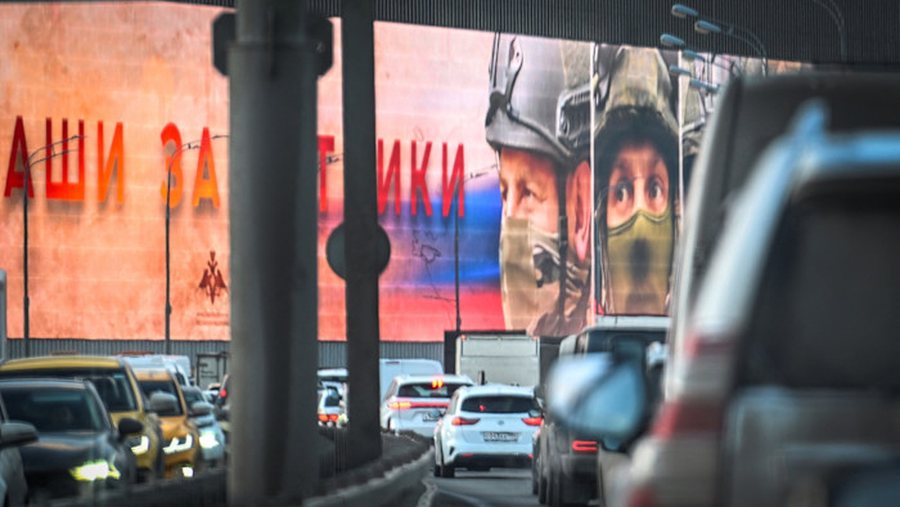
Despite claims of strategic superiority, Russia faces deep domestic and international weaknesses. Europe, analysts say, must build and defend its own narrative.
According to Vladimir Putin's narrative, Russia's victory is so close that it's hard not to notice. The hour of the neo-imperial powers is approaching. Even America, according to this narrative, is joining in. Democracies, and especially European ones, are portrayed as on the losing side of history.
Domestically, Russia's president boasts that he has overcome Western sanctions to guarantee economic and social stability.
On the front lines in Ukraine, he claims to have the “strategic initiative,” as his army advances toward taking over the entire Donbas region.
“Either we liberate these territories by force, or Ukrainian troops leave these territories,” he warns. His weapons factories, according to NATO Secretary General Mark Rutte, produce ammunition four times faster than the alliance can manage.
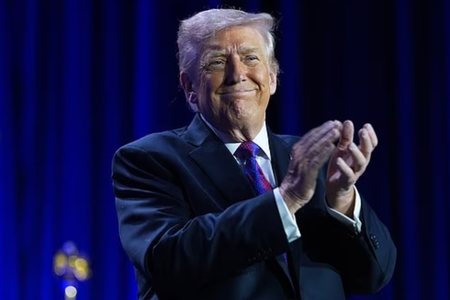
America’s leadership is repeating this story. JD Vance predicts Russia will take Donbas. Donald Trump, describing footage of a military parade in Moscow, reportedly told his aides that Putin’s army looked “invincible.”
The United States has tied the relinquishment of territory from Ukraine to security guarantees. Whether Trump fully believes Putin’s overarching narrative, or is using it to pressure Ukraine into accepting terms, is sometimes difficult to assess. But both Putin and Trump know that we live in a world where the ability to impose your story is what matters.
If Putin succeeds in imposing his narrative that Russian victory is inevitable, he can push for more favorable terms in the negotiations or attribute their failure to Ukraine and Europe.
The war in Ukraine has always had this dual dynamic: an early 20th-century-style conflict, where gains are measured in kilometers, and a war waged in the global information space, where facts can be reframed.
Military theorists talk about the importance of dominating escalation in conflict, but dominating narrative escalation is becoming increasingly essential.
According to the Kremlin’s narrative, the war was never just about Ukraine, but part of a series of interconnected geopolitical dramas, all of which it claims to be winning. This larger story has a hero: a strong and resurgent Russia, facing an aggressive NATO, presented as both a military and a civilizational threat. According to this narrative, NATO’s greed is aimed at dismembering Russia, so it must strike first.
In this context, perception becomes even more essential. The transatlantic alliance rests on an image of American resolve and shared values with Europeans. Both are eroding every day. Trump's threats to annex Greenland have cracked an already fragile facade.
“Start with a clear narrative and then take actions that support it. Narrative is strategy in story form.”
Russian propaganda is fueling this approach. In December, the popular tabloid Komsomolskaya Pravda published an opinion piece claiming that Trump now sees Russia as a “potential partner” and Europe as a “liberal fortress that must be destroyed.”
In this context, Europe embodies a set of values presented as on the verge of extinction, values that protect the rights of small states and even smaller people.
However, despite its apparent strength, Putin's narrative can be undermined. / Taken from "Financial Times, adapted from "Pamphlet"




Lini një Përgjigje