


 Shkruar nga Pamfleti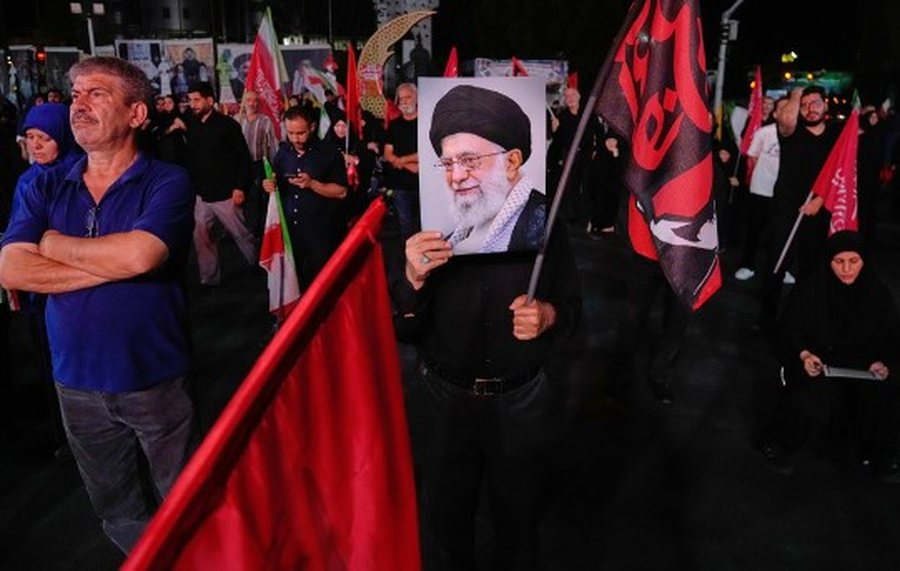
Escalation between the US and Iran reignites crisis in the Persian Gulf, as Trump faces a difficult choice between diplomacy and open war
Donald Trump declared earlier this week that the ceasefire had ended, and just a few days later it seems that all scenarios have been opened up again.
Iran has resumed attacks on Gulf countries, which for weeks seemed to be off target, while American attacks against Iran are becoming increasingly intense.
Meanwhile, the Strait of Hormuz appears to have been closed again, according to statements by Iran's Revolutionary Guard. However, the British Merchant Marine Operations Organization (UKMTO) says one passageway remains open.
"Iran made a wrong choice"
This new phase of escalation began on Saturday evening, when another merchant ship was targeted off the coast of Oman, this time a Cypriot-flagged container ship.
The Revolutionary Guards said it fired a warning shot after the ship took an unauthorized route through the Strait of Hormuz. The crew was forced to evacuate by lifeboat, while an Indian national is missing.
In response to this incident, the United States attacked Iran for the third time this week.
US Central Command released footage of some of the 140 military strikes it said were carried out on the president's orders.
US Secretary of Defense Pete Hegseth wrote on the X platform: "Iran made a wrong choice. Now it will pay."
No one is off target anymore
Iran had warned that any retaliation would be met with a harsh response. And this time, the missiles and drones were not limited to Bahrain, Kuwait and Jordan, which had borne the brunt of the attacks in recent days.
The United Arab Emirates, one of Iran's favorite targets in the past, was attacked for the first time in nearly two months.
Residents in Abu Dhabi woke up to emergency alerts on their phones, while a sense of fear and anxiety spread across WhatsApp groups across the country. There was concern that the wave of attacks that the country had experienced with intensity during the first six weeks of the war could return.
It now seems that no one is off target anymore.
Significantly, Qatar, which is currently playing a key role as a mediator between the two sides, also reported fire attacks entering its territory. Residents in Doha said the explosions shook windows in various areas of the city.
In stark contrast to regional media front pages, which just a day earlier reported on Oman's bilateral talks with the Iranian Foreign Minister, Oman also confirmed drone strikes on its territory.
Iran's new supreme leader, who has yet to appear in public since taking office following the death of his father, did not attend this week's memorial ceremonies but issued a statement vowing that Iranians would avenge his death.
This message also appeared written on a rocket allegedly used in the recent attacks and was later released by the Revolutionary Guard.
Strait of Hormuz under pressure again
It seems that last month's memorandum of understanding is being interpreted in very different ways by both sides.
The agreement was intended to bring about an immediate return of commercial shipping through the Strait of Hormuz, but Iran appears to be attacking ships that avoid the northern route it controls through the strait.
A shipping industry source in the United Arab Emirates said the US military-controlled southern route, which follows the Omani coastline, has made a big difference for ships seeking to safely leave the Gulf.
But most ships, according to the source, were turning off their electronic identification systems to pass through the area. This shows that the situation is far from normal in this critical waterway, which in peacetime is used to transport about a fifth of the world's oil.
Hopes for peace are fading
It now appears that this issue, which continues to be a major problem for Donald Trump, could destroy any hope for a peace agreement.
Almost halfway through the 60-day period of negotiations, during which the complex issue of Iran's nuclear program was expected to be addressed, it appears that no significant discussions have taken place between the two sides.
And now it remains unclear what options the US president has left. In the most optimistic scenario, diplomacy has returned to ground zero. In the worst-case scenario, the situation could escalate into another wave of full-scale military clashes./ Adapted from "Pamphlet" by "Sky News"


Lini një Përgjigje