


 Shkruar nga Pamfleti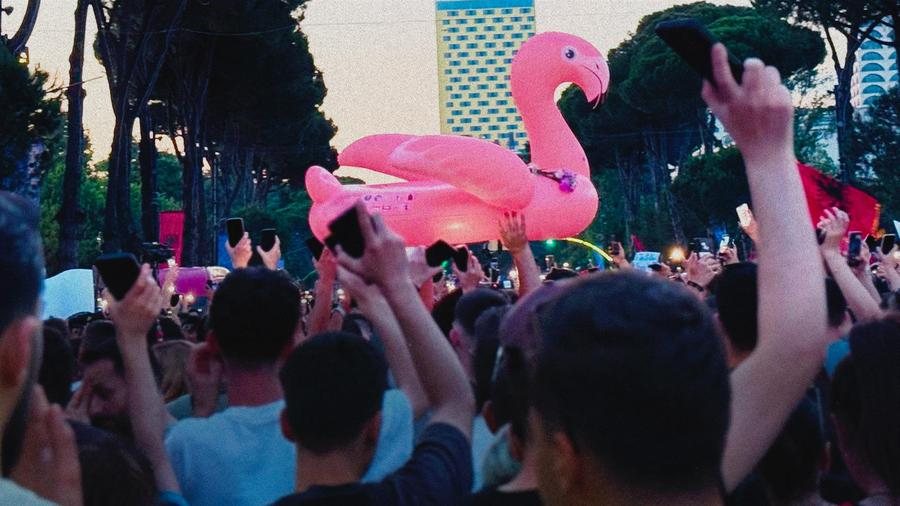
From the resort in Zvërnec to corruption, oligarchy, and the development model, a civic movement is challenging the system.
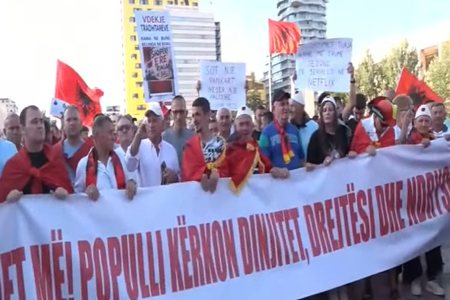
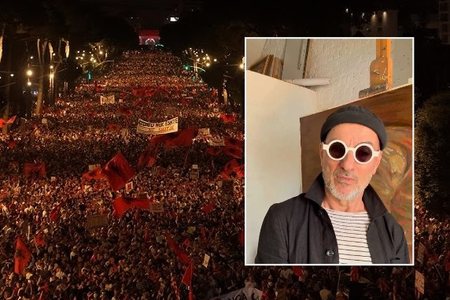
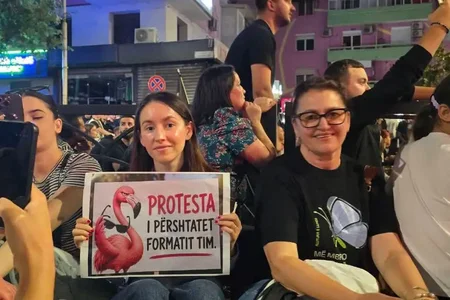
For more than a month, Albania has been experiencing a mobilization that has no precedent in recent years. On June 20, in Tirana, tens of thousands of people took to the streets against the government, systemic corruption, and the growing power of local oligarchs and foreign investors.
A protest that has taken the meaningful name "Flamingo Revolution" and that, like the birds that populate Albanian lagoons, seems to have suddenly taken flight to span the entire country.
The spark was a construction project: a $4 billion luxury resort planned in Zvërnec, a protected area and one of the last untouched in the Mediterranean. A project linked to international interests, perceived by many citizens as another sale of national territory. But, as Debora Angeli, an activist and collaborator of COSPE, present in Albania for thirty years, points out, this is only the last straw.
In recent decades, Albania has undergone a radical transformation: from the fall of the communist regime to a development model characterized by "predatory capitalism" and strong individualism. This process has favored the concentration of economic power in a few hands, with oligarchies able to influence the media, the construction sector and strategic sectors, often intertwined with the illegal economy. The result is a system that is perceived as deeply unequal, where the welfare state is weak and opportunities are limited, to the extent that emigration continues to empty the country.
Environmental protection was the spark, but the protest quickly took on a broader character. The slogan "Albania is not for sale" sums up the widespread sentiment: a reaction against the giving away of natural resources, territories and infrastructure to foreign interests, often without visible benefits for the local population. It is no coincidence that the mobilization also includes other opposed projects, from hydroelectric power plants to invasive tourist developments.
Tourism itself represents one of the most visible contradictions. On the one hand, it has brought economic growth and international visibility, on the other hand, it has favored exclusive and unsustainable development models. Luxury resorts and coastal privatization limit citizens' access and put pressure on vital resources, such as water, creating new social tensions.
However, what makes this mobilization particularly significant is its very nature. It has no recognized leaders and no traditional political structure. It is a horizontal movement, uniting different generations and categories: families, young people, old people and the diaspora. A protest that rejects the classic divisions between right and left to focus on a common objective: the dismantling of a system perceived as corrupt.
The demands are clear: repeal of laws that favor speculation and the concentration of power, halting major opposed projects, the resignation of the government, and holding new elections.
But beyond the immediate demands, the "Flamingo Revolution" seems to represent something deeper: a cultural shift. An attempt to break away from hierarchical and clientelistic models to build more democratic and inclusive forms of participation.
For Debora Angeli, it is a "historical event of unexpected proportions," a definition that encapsulates the essence of a movement still in development, without a certain conclusion, but with a clear transformative potential. As is often the case in such cases, time will tell whether this collective energy will translate into concrete political change or be absorbed by the system it currently opposes.
Meanwhile, Albanian squares continue to fill up. And the flamingos, a symbol of a fragile balance between nature and development, remain there to remind us of what is at stake. /Adapted from "Pamphlet" by " RSI "



Nuk eshte kjo, sic thoni ju o media te mjera, "lufte me kapitalizmin grabitçar". Kjo eshte lufte me qeveritar pushtues qe nuk ka te zeze qe nuk kane bere Shqiperise dhe shqiptarve. Kjo eshte lufte e shqiptarve ne Salehun e sgrekoshkijeve dhe Ramutin grekoshkja kucovlleh, te dy antishqiptar ne qëndrime dhe vepra. Perse po relativizoni keto, o media?! Nese qeveritaret 36 vjet tallen me popullin, perse ju mediate vazhdoni kete loje?
A thua po kërkojnë Rnverin????????