


 Shkruar nga Pamfleti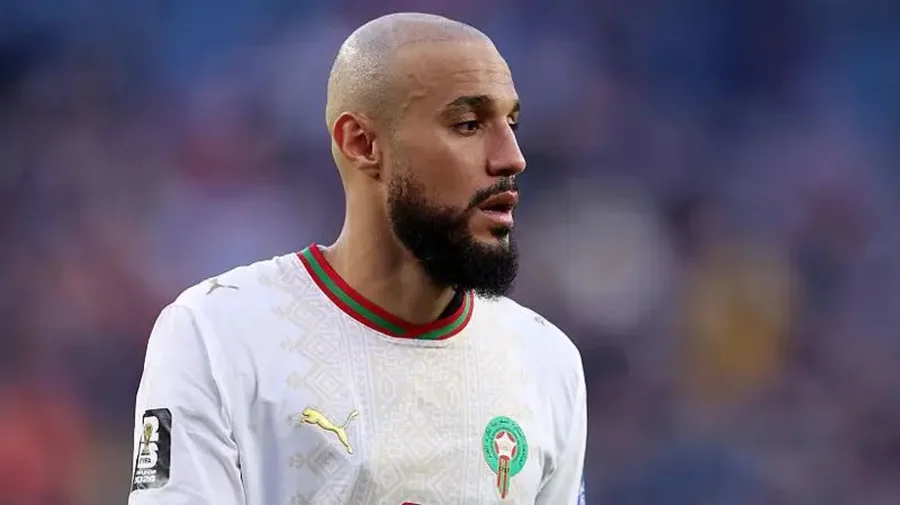
The 2026 World Cup clash reflects a history of migration, identity and the shifting balance between the two federations in the race for footballers with dual citizenship...
The World Cup has always been more than just a football tournament. Every four years, it becomes a meeting point of history, migration and identity, where national teams tell stories that go far beyond the playing field. Some countries export ideas, others players, and increasingly, both. Few matches at the 2026 World Cup reflect this combination better than the Netherlands against Morocco.
In terms of sport, it is one of the toughest challenges of the round of 16. The Netherlands arrive in Monterrey as the leaders of Group F, undefeated with 7 points and 10 goals scored, equaling their best record in the group stage of a World Cup. Morocco also went through without defeat, finishing behind Brazil only on goal difference, in a group that also included Scotland and Haiti. However, the importance of this match goes beyond the result.
From a single choice to two alternatives
For decades, Dutch-born footballers of Moroccan descent were automatically considered part of the future of the Dutch national team. If they were good enough for the Oranje, they were expected to make it. Today, that assumption no longer exists.
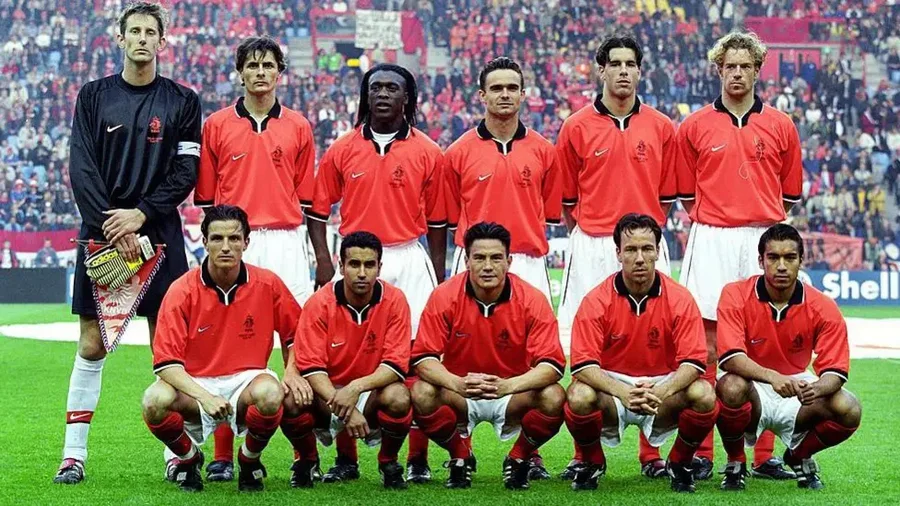
The story began with Amsterdam-born Dries Boussatta, who in 1998 became the first Dutch-born Moroccan footballer to make his debut for the Dutch national team. He later also played for Morocco, as FIFA regulations at the time allowed a change of national team if the first matches had only been friendly.
According to the analysis, the decision of footballers with dual citizenship is not only related to politics. For many of them, the choice is influenced by family, culture, sense of belonging and sporting perspective.
The strategy that changed Morocco
The Royal Moroccan Football Federation launched a well-organized strategy more than a decade ago to identify and convince talents with dual citizenship in Europe.
Scouts were deployed in France, Belgium, Spain and the Netherlands not only to follow the young players, but also to establish early relationships with them and their families.
Former Morocco technical director Pim Verbeek explained that family often had as much influence as the sporting aspect in the players' final decision.
The results were quick to show. At the 2018 World Cup, five Moroccan players were born in the Netherlands. Four years later, when Morocco became the first African nation to reach the World Cup semi-finals, 14 of the team's 26 players were born abroad.
At the 2026 World Cup, 19 of the 26 players in Mohamed Ouahbi's team were born outside Morocco. In their group stage match against Brazil, Morocco became the first team in World Cup history to field a starting lineup made up entirely of foreign-born players.
Globally, nearly one in four players at the 2026 World Cup represents a country other than the one they were born in, while eight of the 48 national teams have as many or more foreign-born players than domestically-born players.
The decision that changed perception
According to BBC analysis, the symbolic moment of this change was the selection of Hakim Ziyech.
Born in Dronten and fully formed in Dutch football, he had represented the Netherlands at youth levels and was even called up to the first team in 2015. An injury prevented his debut.
Ziyech then decided to represent Morocco.
"I have always felt that I am Moroccan. I choose with my heart," he declared at the time.
His decision changed perceptions in both countries. After him, footballers such as Noussair Mazraoui, Sofyan Amrabat, Anass Salah-Eddine and Ismael Saibari also chose Morocco, despite having mainly developed in Dutch academies.
According to the analysis, the issue is not whether all of these players would have a place in the Netherlands' top lineup, but the fact that they are products of the Dutch system and today reinforce a direct rival in the international arena.
A story that goes beyond football
Moroccan migration to the Netherlands accelerated in the late 1960s through migrant worker agreements. Family reunification then created permanent communities, and today hundreds of thousands of Dutch citizens have Moroccan origins.
This has created generations who feel connected to both countries. However, international football requires only one choice.
For some players, the answer is the Netherlands. For others, Morocco. In most cases, this is not a rejection of one country, but an expression of where they feel most at home.
Thirty-two years after Dennis Bergkamp led the Netherlands to victory over Morocco at the World Cup in the United States, the footballing relationship between the two countries has changed significantly.
The Netherlands remains one of the biggest exporters of talent and ideas in world football. Morocco, meanwhile, has become one of the most successful federations in identifying and bringing together footballers with dual citizenship.
For this reason, their match in Monterrey is not just a duel for a place in the quarter-finals. It represents the latest chapter in a story where identity, heritage and migration have taken on a role as important as football itself. /Adapted from BBC/


Lini një Përgjigje