


 Shkruar nga Pamfleti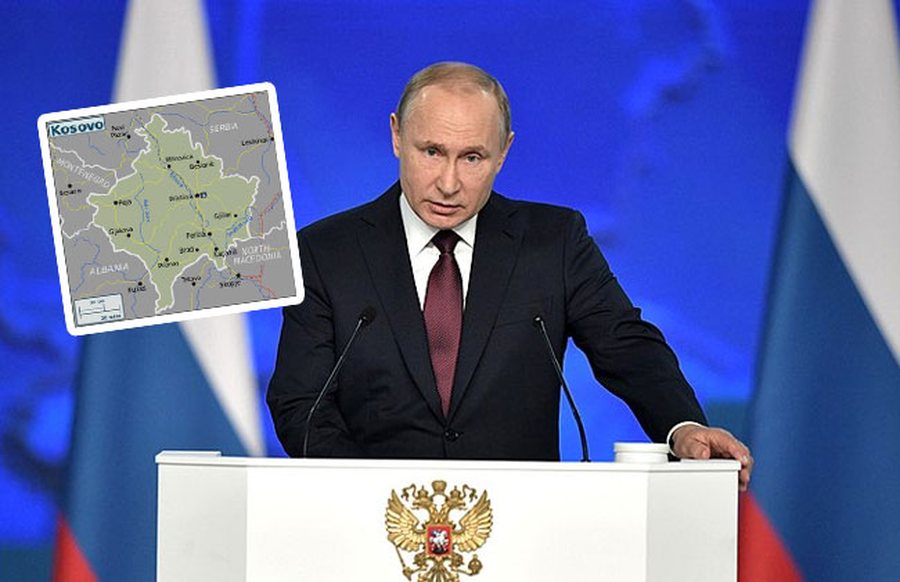
As has often happened, Moscow continues to spread disinformation about NATO's intervention in 1999 to stop the crimes of Slobodan Milosevic's regime in Kosovo, in order to justify its own crimes in some areas of Ukraine...
Russian Foreign Ministry spokeswoman Maria Zakharova has drawn attention back to NATO's bombing of Yugoslavia in 1999, in an attempt to criticize UN Secretary-General Antonio Guterres' stance on Russia's attacks on civilian objects.
As has often happened, Moscow continues to spread disinformation about NATO's intervention in 1999 to stop the crimes of Slobodan Milosevic's regime in Kosovo, in order to justify its own crimes in some areas of Ukraine.
In her statements, Zakharova said that the international community is applying double standards in dealing with conflicts, citing the situations in Gaza and Libya as comparative examples. However, these statements come at a time when Ukraine continues to face the consequences of the war, while Russian forces have been accused by international organizations of serious violations against civilians.
"This doesn't just apply to the US and Iran, right? This also applies to Zelensky, who, from the point of view of the UN Secretary-General, cannot justify terrorist attacks on civilians with any military objective, have we understood this correctly? And does this also apply to the suffering of the inhabitants of Gaza? And to all NATO attacks in recent decades, from the bombing of Belgrade to the destruction of Libya ," she said.
But the historical reality is quite different from the propaganda and disinformation that Russia tries to sell on the international stage. Various reports, including those from the UN, have documented attacks on civilian infrastructure, widespread destruction, and killings of civilians in cities like Bucha and Mariupol, which have become symbols of suffering during the conflict.
Authorities in Moscow have consistently denied responsibility for these accusations, promoting narratives aimed at relativizing their actions and shifting the focus towards other international conflicts.
On the other hand, Guterres' office has repeatedly stressed that the protection of civilians must be universal and that any violation of international humanitarian law must be investigated, regardless of who is responsible.
In a previous reaction in the Bundestag, German MP Adis Ahmetovic recalled that NATO's intervention in 1999 was decisive in stopping the crimes of Slobodan Milosevic's regime in Kosovo.
He stressed that the continued use of the narrative that NATO bombings have set a precedent is being used to justify violations of international law, including Russia's war against Ukraine.
"Every time you use this narrative, you forget the victims of the Srebrenica Massacre, because there was no humanitarian intervention then. Every time you use this narrative, you forget above all the victims in Kosovo. Thousands of people became victims of Milosevic's massacres," Ahmetovic declared.
He added that the 1999 humanitarian intervention, also supported by the German Bundestag, was essential to prevent the recurrence of a genocide in the Western Balkans.
Ahmetovic also criticized the spread of narratives that, according to him, contradict democratic values and human rights, warning of the risk of relativizing war crimes and justifying international aggression. / Adapted "Pamphlet" from "The Geopost"


Lini një Përgjigje