


 Shkruar nga Pamfleti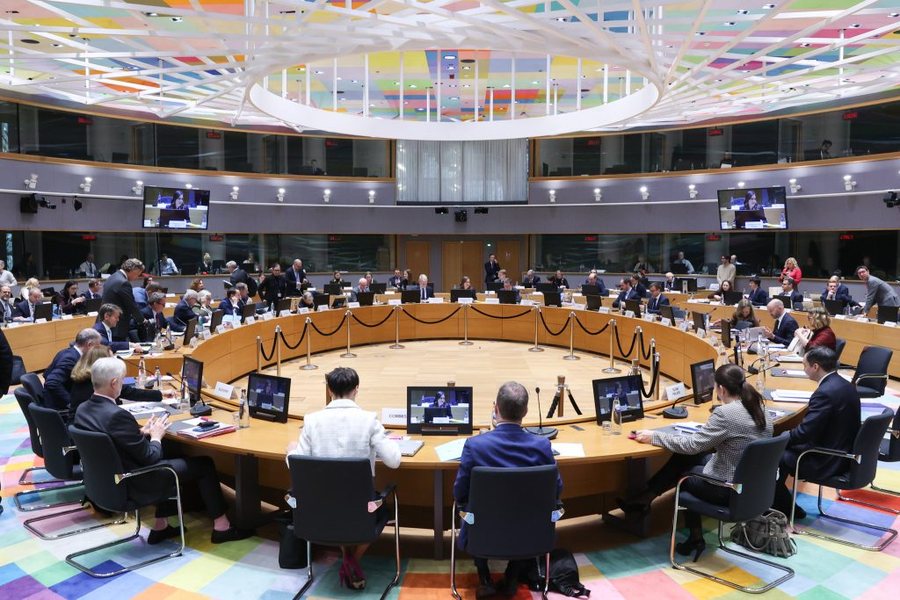
Germany, France, the Netherlands, Belgium and Luxembourg are calling for new safeguards for the rule of law, as well as temporary restrictions on voting rights for new members…
A new non-paper, signed by five EU member states, calls for the establishment of a “general model for future accession treaties” with the current candidate countries, with the aim of ensuring that future enlargements strengthen the European Union. The document proposes further strengthening of the safeguards and transitional provisions that have been applied in previous enlargement rounds, as well as the creation of additional mechanisms, particularly in the area of the rule of law. It also proposes the introduction of temporary and transitional restrictions on voting rights.
According to Reuters, the document was signed by Germany, France, the Netherlands, Belgium and Luxembourg.
The document, which was obtained by the European Western Balkans portal, assesses that "copying previous accession treaties will not be enough" for new enlargements and that the opportunity should be used to draft the necessary improvements.
" This will be essential to maintain and increase political and public support for enlargement, which in turn is crucial for the ratification of the accession treaties in all member states ," the document states.
It is further emphasized that "what is needed is a general model for future accession treaties and a catalogue of options from which to choose, flexibly adapt and complement each other according to the challenges that each accession may bring."
The document proposes that the European Union rely on sectoral safeguard measures and transitional provisions used in previous enlargements.
"These safeguards (in the field of Justice and Home Affairs, the internal market or the economic situation) should be included again in future accession treaties, but we need to assess whether they are still sufficiently broad in scope to respond to current challenges ," the document states.
According to the proposal, new safeguards may be needed in areas such as economic security and resilience to foreign interference.
The transitional provisions included in previous accession treaties, which covered areas such as financial provisions and free movement of workers, should also be included in future treaties and it should be discussed whether they should be further strengthened.
Protecting the rule of law
The document adds that the EU needs appropriate instruments to act in the event of a possible regression in respect for EU values, such as the rule of law. For this reason, it is proposed that new safeguard mechanisms be included in future accession treaties, in addition to the current rule of law instruments.
Among the proposed solutions is a "non-regression clause", codified as a binding norm, which prohibits going back on respecting the values of the European Union.
"In the event of a violation (or potential violation), the investigation and use of financial instruments related to the rule of law, procedures for violation of legislation and a new safeguard clause, according to the concrete situation, should automatically follow," the document states.
Another solution is to create a safeguard clause that extends beyond the areas covered by the previous accession treaties. Its duration should be longer than the three-year period previously used and it should be activated in the event of “ serious deficiencies or regression in the protection of EU values by the Member State concerned, including respect for the rule of law, democratic principles and freedom of the media”.
The document also proposes that the Rule of Law Report, which already applies to several candidate countries, be further developed and that participation in the European Public Prosecutor's Office (EPPO) be made a condition for the membership of new states.
Restrictions on voting rights
According to the document, the accession of new states should not affect the European Union's ability to act. This issue should be addressed primarily through internal EU reforms, which should be developed in parallel with the enlargement process. The European Commission is also required to publish policy reviews before enlargement.
"The EU should conduct an in-depth discussion on the possibility of temporary and transitional restrictions on voting rights for new member states, especially in those parts of the EU acquis where unanimity is required (for example, in some aspects of enlargement, the Common Foreign and Security Policy, as well as the Multiannual Financial Framework), taking into account legal and political sensitivities ," the document states.
According to the authors, the coming period will be crucial for the drafting of a new model for accession treaties, which will help maintain and strengthen the positive trend of enlargement after the admission of new members. /Adapted Pamphlet /







Lini një Përgjigje