


 Shkruar nga Pamfleti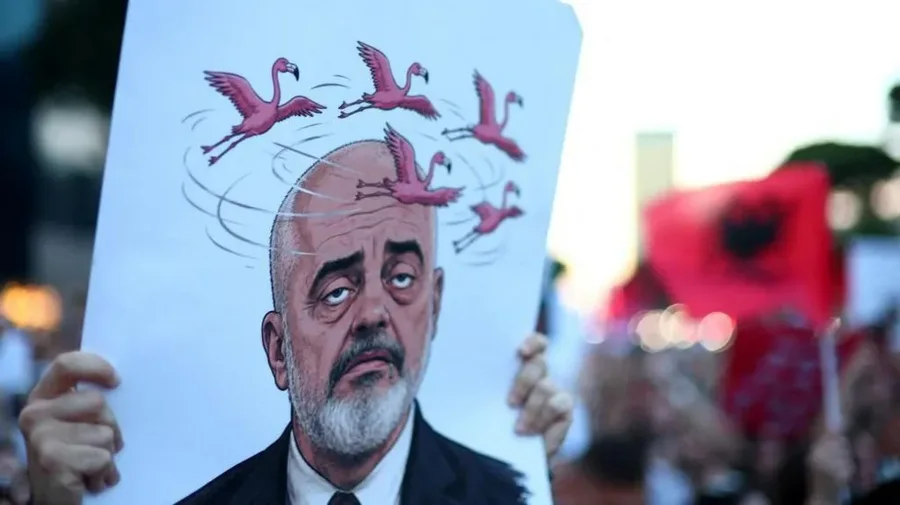
From a protest to protect the Narta Lagoon, the demonstrations have transformed into a broader movement against the government, with citizens raising concerns about education, healthcare, the economy, and governance.
Protests that initially began to oppose the construction of a luxury resort near the Narta Lagoon have transformed into a national movement demanding the resignation of Prime Minister Edi Rama.
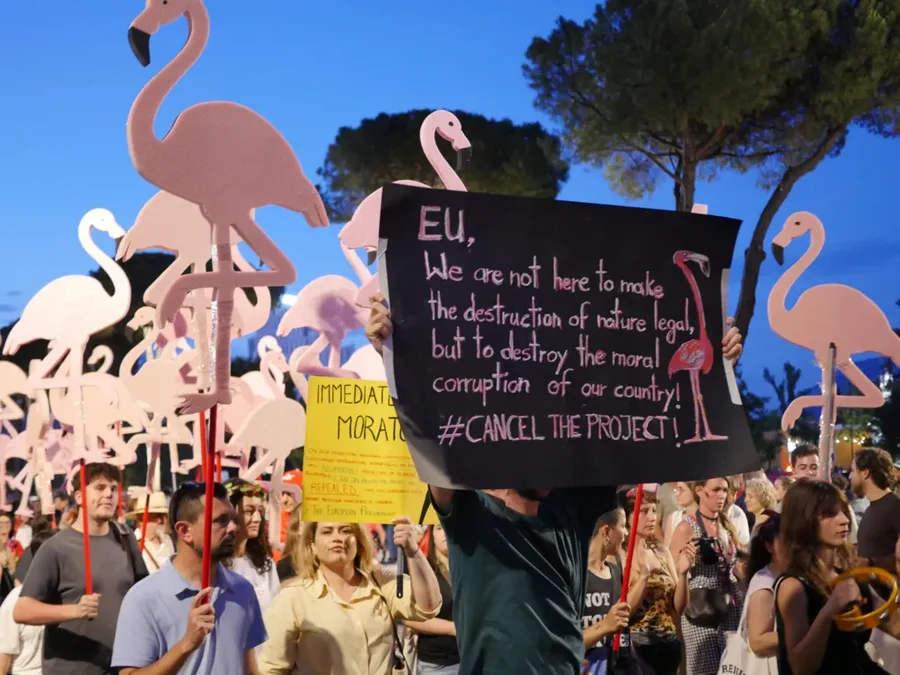
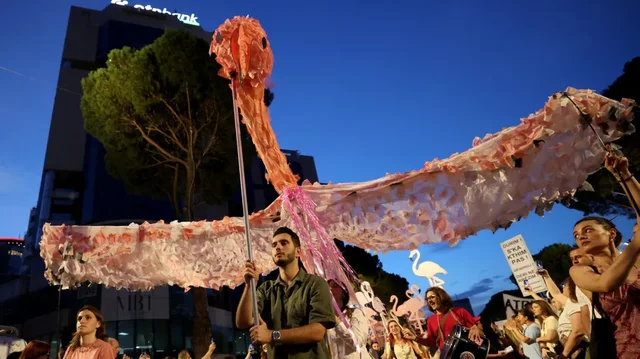
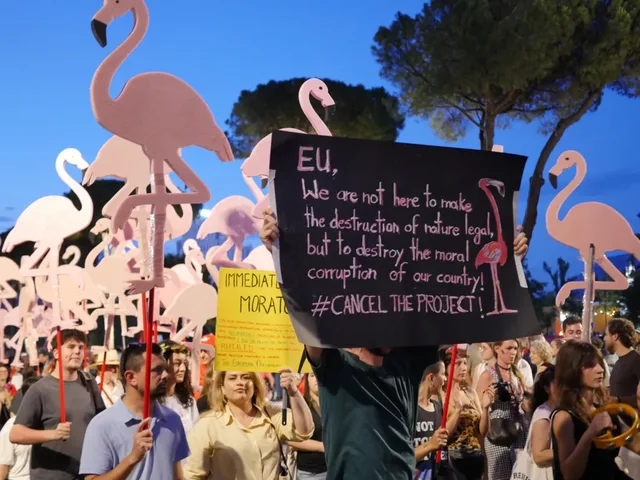
Flamingos, migratory birds that populate the Narta Lagoon near Vlora, have become the symbol of nightly protests in front of the Prime Minister's Office building in Tirana.
The objections relate to plans for a luxury resort development by a group of international investors, including Jared Kushner, the son-in-law of US President Donald Trump. The Albanian government has granted the investors "strategic investor" status, although a building permit has not yet been approved and the environmental impact assessment process has not yet begun, according to the government. However, fencing and heavy construction equipment have been seen in the area.
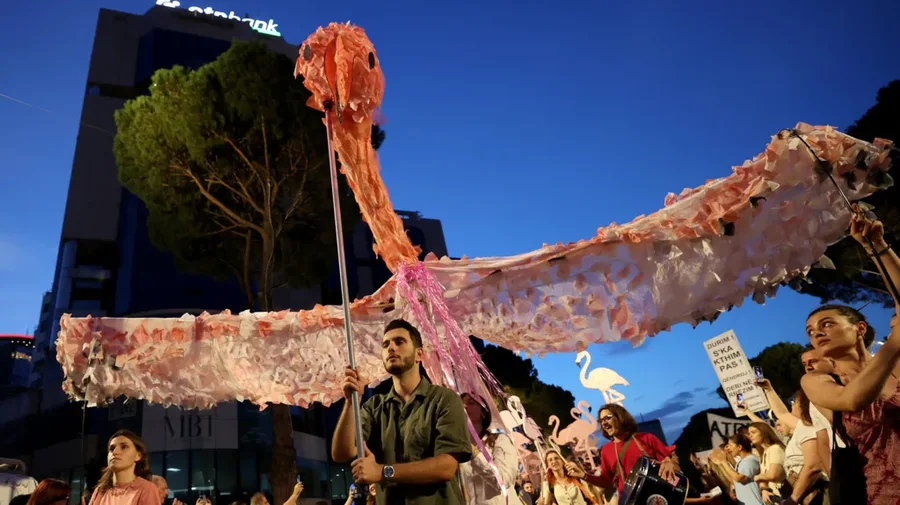
Local protests took on national proportions after a video was posted on social media showing private security guards assaulting a protester. Prime Minister Rama has confirmed that the incident took place.
Since then, the discontent has expanded beyond environmental issues. Protesters are demanding improvements in education, healthcare, infrastructure, jobs and living standards.
" I am here for our schools, for our hospitals, for the infrastructure and for my family who live outside Albania. Above all, I am here because I want to live in my country and I don't want to leave, " protester Helena told the BBC.
The Socialist Party and Edi Rama have been in power for 13 years. During this period, Tirana has changed significantly with the construction of many towers designed by international architects, while tourism has become one of the main sectors of the economy, contributing over a fifth of the Gross Domestic Product.
Another important development is Albania's progress in the European integration process. Membership negotiations with the European Union, opened in 2022, are progressing at a rapid pace and the country aims to complete them by the end of next year.
However, these achievements do not convince everyone.
Writer and human rights activist Fatos Lubonja claims that the government is supported by "oligarchs, organized crime, corrupt media and international actors," while attributing the construction boom in Tirana to money laundering.
"We want justice to investigate. When you see all these skyscrapers, it gives the impression that this is a plan by organized crime, oligarchs and state officials," he told the BBC.
For his part, Prime Minister Edi Rama describes the protests as a sign of the functioning of a democratic society.
Regarding the investigations by the Special Prosecution Office against Corruption and Organized Crime (SPAK) against several of his close associates, Rama stressed that he supports an independent justice system.
"From day one, I have demanded justice that does not look left or right, but only straight. Justice that is not bought, not blackmailed, and not controlled by anyone," he said.
Meanwhile, the youngest member of Parliament, Majana Koçeku, who was selected by Rama himself as a candidate after her commitment to environmental issues, has decided to leave the Socialist Party.

She said she could not continue to "applaud the government while pretending nothing is happening" and assessed that the prime minister "no longer inspires people," adding that this has led to a crisis of legitimacy.
According to the BBC, the parties currently remain in a political impasse. Protesters declare that they will continue the demonstrations, while Prime Minister Rama has not given any signals of withdrawal. As a result, flamingos are expected to remain the symbol of the protests on the streets of Tirana. /Adapted from the BBC Pamphlet /






Shqiperia ka mberritur ne ate gjendje, 'bir Selman i Nenes c'te te qaj me pare'.