


 Shkruar nga Katharina Hofmann De Maura
The head of the office of the 'Friedrich Ebert' foundation in Tirana, Katharina Hofmann De Maura, has written a very striking article regarding the situation in Albania. According to her, all the bad things are abundant in Albania, but only the EU does not see them. She writes that Brussels is turning a blind eye because of Rama's pact with Giorgia Meloni on refugees.
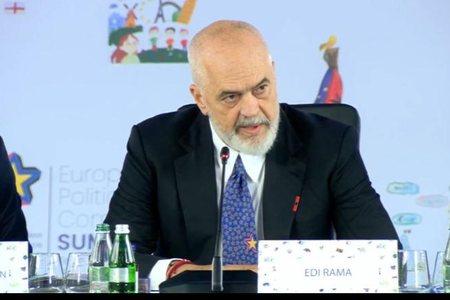
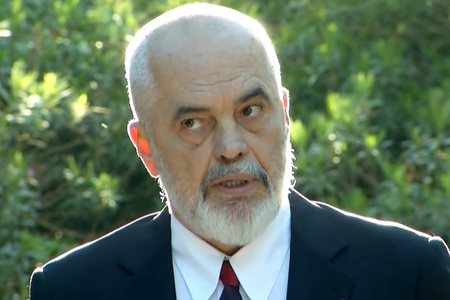
Edi Rama is not only the newly elected Prime Minister of Albania, but also an artist, former Minister of Culture and one-time mayor of Tirana. He knows how to stage politics psychologically and visually – and he uses this talent with purpose. He is a master at presenting Albania as a progressive country and in line with EU standards.
At the recent European Political Community Summit in Tirana, he knelt on the red carpet in front of Giorgia Meloni, currently the most powerful woman in Europe. Rama knew why – it was a calculated gesture: Albania wants to join the European Union at all costs and is currently considered the most promising candidate.
The opening of the first EU enlargement cluster in October 2024 and the promise of membership by 2030 sparked enthusiasm. Four more clusters are expected to open this year – a kind of “high-speed integration”. The Albanian population supports membership and sees itself as part of the Western alliance; Albania is a member of NATO. This is very important at a time when Europe’s geopolitical and economic power is waning, especially in the context of the war in Ukraine.
Shortly before the summit, on May 11, parliamentary elections were held in Albania – which received little attention from European public opinion. But the result was extraordinary: Edi Rama and the Socialist Party won the elections with 53% of the vote, securing 83 out of 140 seats in the Assembly. Rama thus consolidated power more than ever in the small country of only two million inhabitants.
The next four years will reveal whether the EU wants to accept a “soft autocratic” leader or a Balkan “stabilocrat” into its fold. There are arguments for and against. But Edi Rama has a strong card: a possible solution to the European migration dilemma. The extraterritorial deportation centers that Italy has built in Albania set a precedent for transferring asylum procedures to an EU partner country. Italy and Albania have a long history of migratory cooperation. In the 1990s, post-communist Albania experienced a massive exodus to Italy. Italy helped poor Albanians, and thus a relationship was built that Rama calls “historical friendship.” On this basis, Italy aims to transfer asylum procedures to Albania.
The bilateral agreement allows Italy to transfer up to 36,000 people a year to two Italian-run centers in Albania. The agreement was hailed by supporters as an “unconventional” solution to the problem of irregular migration, but it carries serious legal and human rights risks.
Despite concerns that hosting migrants from third countries could violate Albania’s constitution and international law, the agreement was ratified in both countries. The right-wing Italian government hailed it as a “historic step.” EU institutions were informed but did not participate.
The first transfers took place in October 2024: an Italian navy ship brought 16 migrants to Albania. Under Italian law, any detention of asylum seekers must be confirmed by a judge; the judge refused the authorization. Italy had declared the countries of origin – Bangladesh and Egypt – as “safe,” which allowed for an expedited procedure. But two weeks earlier, the European Court of Justice had ruled that a country cannot be considered “safe” if there are exceptions. Based on that ruling, a court in Rome declared the expedited procedure illegal. The asylum seekers were transferred to the regular Italian asylum procedure – a blow to Meloni and Rama.
The Italian government immediately appealed the decision and tried to adapt the legal framework. But in subsequent transfers – at the end of 2024 and January 2025 – Italian courts also refused to detain 73 asylum seekers in Albania. They were returned to Italy within a few days. At the end of March 2025, Meloni announced that Albanian facilities would be used as detention centers for people who had been definitively refused protection in Italy. With this change, 40 men of various nationalities arrived in Albania in April – all with rejected applications. Under Italian law, they can be held for up to 18 months, until they are deported. For the first time, an EU member state is transferring rejected asylum seekers to a third country that is neither a country of origin nor a country of transit. European Commission President Ursula von der Leyen hailed the agreement as an example of “fair sharing of responsibilities” between the EU and partner countries.
Qëndrueshmëria e pushtetit të Melonit varet nga menaxhimi i migracionit. Ajo fitoi zgjedhjet me premtimin për të ndalur imigrimin e paligjshëm në bregdetin italian – por deri më tani nuk ka arritur rezultate të dukshme. Edi Rama mund ta ndihmojë të fitojë sërish – dhe ajo, në këmbim, mund t’i ndihmojë të realizojë premtimin për anëtarësim në BE. Kjo do të ishte e pazakontë në rrethanat aktuale të Shqipërisë, sepse mangësitë institucionale janë të mëdha. Arrestimi i kryebashkiakut të Tiranës në shkurt ishte një moment i errët për Partinë Socialiste në pushtet. Erion Veliaj – anëtar i kryesisë së PS dhe i afërt me Ramën – u arrestua nga SPAK për korrupsion dhe krim të organizuar. Ai akuzohet për marrje ryshfeti në nëntë raste, pastrim parash dhe fshehje të të ardhurave. Raporte nga organizata të njohura ndërkombëtare tregojnë se Shqipëria është një “qendër” e krimit të organizuar ndërkombëtar – dhe pozita gjeografike luan rol kyç.
Qasja e Shqipërisë në Adriatik dhe rrjetin global të tregtisë detare krijon mundësi për trafik të paligjshëm. Veçanërisht kokaina nga Ekuadori identifikohet si burim parash për rrjetet kriminale shqiptare. Paratë pastrohen në ndërtim – gjë që shfaqet në formën e ndërtesave moderne, por të pabanuara, me çmime të papërballueshme për popullatën. Edhe karburantet dhe ushqimet janë të shtrenjta, ndërsa pagat të ulëta. Turizmi në lulëzim ka ndikim pozitiv ekonomik, por çon në rritje çmimesh dhe nuk krijon vende pune lokale. Mbrojtja sociale mbetet e dobët – një tregues kyç për zgjerimin e BE-së që Shqipëria nuk e përmbush. Po ashtu, po ndodh një “braindrain” dramatik. Të rinjtë e arsimuar po largohen në masë – një humbje kapitali njerëzor që vetëpërkeqësohet: pa mjekë, infermierë dhe profesionistë, cilësia e jetës bie më tej. Shqipëria mund të jetë politikisht në rrugë drejt Evropës, por ekonomikisht, shoqërisht dhe juridikisht gjendet në një krizë – duke e bërë të lëkundur rrugën për një anëtarësim të besueshëm.
**But in times of political agreements “ala Trump”, internal credibility and legal standards lose weight. Even in Europe, the “hand-in-hand” logic dominates: the agreement between Giorgia Meloni and Edi Rama follows exactly this model. Migration is transformed into political currency, international norms are interpreted flexibly. Even the new German government in the coalition agreement for EU enlargement only formulated that the reform of the consensus principle should have priority. But how this reform will be implemented is not stated. Albania only has to offer itself as a willing partner in migration policy to enter the EU. Since this is about people and international law is distorted, it seems acceptable. The greatest irony of the Albanian course: a country that suffers from mass emigration, now accepts other migrants – not for humanitarian reasons, but for geopolitical calculation. The formula is: Others must leave the EU, so that we can enter. /Adapted by “Pamphlet” from “ Ipg-journal ”


Lini një Përgjigje