


 Shkruar nga Sara Gilardi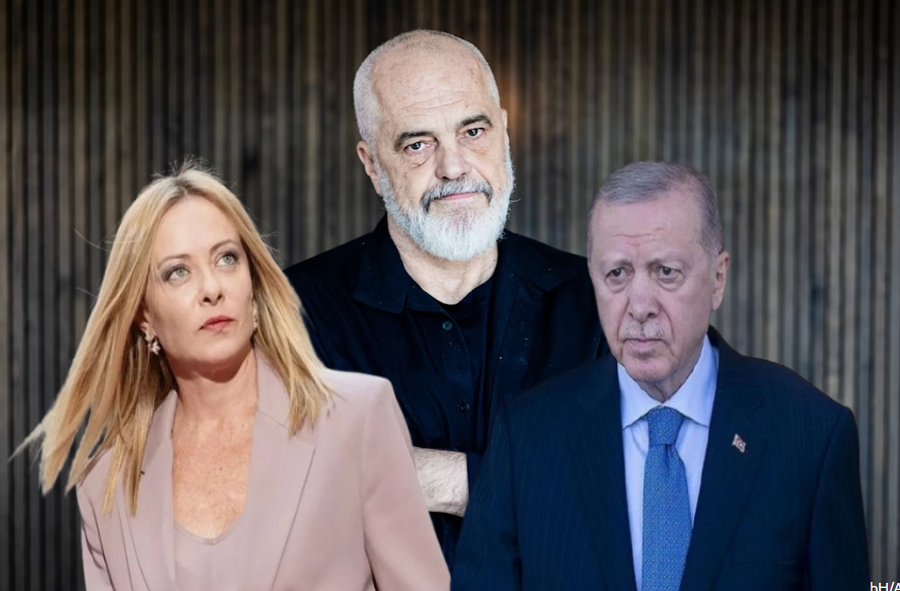
On the eve of the NATO summit, Albania is presented by Italian media as a point of strategic rivalry between Italy and Turkey, while Ankara is expanding its influence through the economy, defense, and religious soft power.
On the eve of the upcoming NATO summit, a silent but ongoing debate is taking place on the southern flank of the Alliance. At its center is the country of the double-headed eagle, where these "two heads" could be Italy and Turkey. If Italy has long considered Albania as its "backyard" and natural extension to the Adriatic, for Recep Tayyip Erdoğan's Turkey the country represents the neo-Ottoman projection of a process of influence that has its roots many years ago.
Let's go back to the 15th century, when the Albanian hero Gjergj Kastrioti Skanderbeg, described by Pope Callistus III as "Athlete of Christ and Defender of the Faith," led the resistance for decades that delayed Albania's subjugation to the Ottoman Empire. However, after the death of the national hero, Albania fell under Ottoman rule for almost four centuries.
Ottoman rule during these four centuries was primarily economic. In the Ottoman Empire, non-Muslims were given the status of dhimmi. Although part of the Empire, they were considered second-class citizens and were subject to the payment of the jizya tax, a very heavy personal tax.
It was during Ottoman rule that Bektashism, a mystical Sufi brotherhood with a tolerant and syncretic faith, began to spread in Albania. By incorporating some elements of Christianity, the Bektashi faith contributed to a smoother transition of Albanians from Christianity to Islam.
Even after the end of Ottoman rule, Turkey continued to exert its influence through soft power, religious and economic strategies. It remains one of Albania’s main economic partners and also exerts influence in the health and telecommunications sectors. Tirana has also purchased the popular Bayraktar TB2 drones, while dozens of Albanian specialists, including pilots and technicians, are trained directly by Turkish instructors.
Ankara's strategy is to present Turkey as a "benevolent benefactor" through the export of Sunni Islam and the construction of magnificent mosques, among them the Namazgja Mosque in the heart of Tirana.

For Italy, on the other hand, Albania has always been its natural extension in the Adriatic, its "big brother" since the crisis of the 1990s until the signing of the protocol on immigrants with the Meloni government, the results of which have been defended even by Prime Minister Edi Rama himself, although they have been few and not special.
At the next NATO summit, Albania will sit as a loyal ally, but at the same time contested between the "two heads", the West and the East. Italy will have the task of offering its Albanian ally a strategic vision that goes beyond the management of migratory flows. Otherwise, it will be Erdoğan's Turkey that will fill the geopolitical and identity spaces neglected by the West. /Adapted from " Il Riformista "




Lini një Përgjigje