


 Shkruar nga Ilir Çumani
Today, in the absence of his physical presence, the artistic legacy he leaves behind remains an important reference for the study of interpretive practices in Albanian theater and film.
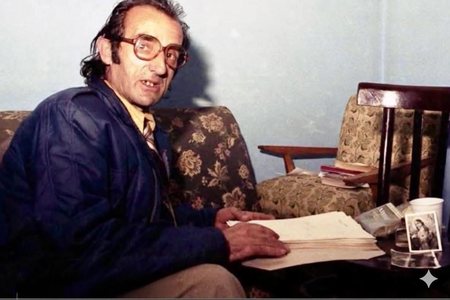
The passing of the well-known Albanian stage and cinematographic actor, Zhani Ziçishti, constitutes not only a significant loss on a human level for his family, friends and all those who had the privilege of knowing him closely, but also a considerable absence for the artistic corpus of Albanian interpretation, to which he contributed over the decades with dedication, passion, professional integrity and high aesthetic awareness.
In his artistic profile, Zhani Ziçishti represented that typology of actor who built the relationship with the role on the basis of a serious, broad and deep work process, through psychological identification and an interpretative discipline that avoided any form of external expressiveness or unnecessary rhetoric, always aiming for an internal rationality of the expressive means and a conscious emotional content. His stage play was characterized by a measured use of expressive means, by a conscious control of body language and by a restrained articulation of the emotional dimension of the character, which enabled him to create credible dramatic figures, with high psychological and human density, where every nuance of interpretation was built on an authentic internal experience.
In theater, as well as in cinema, his artistic presence testified to a professional methodological approach to interpretation, where the analysis of the psychological structure of the role and the internal experience were put into the function of a direct and authentic communication with the spectator. He did not aim to impose the character through effect, but gradually built it into a relationship of empathy and reflection, making the audience a fellow traveler in the process of dramatic experience. From an anthropological and social perspective, the characters he embodied on stage and on screen conveyed the tensions, dilemmas and contradictions of man in different historical contexts, reflecting a strong sense of artistic responsibility towards social reality, which made his interpretation not only an aesthetic act, but also an act of communication with cognitive and human values.
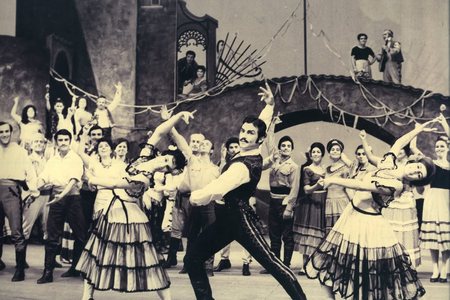
Zhani Petro (Ziçishti) was born in Korça, on May 31, 1940. He began his studies at the acting school, at the “Aleksandër Moisiu” Academy of Arts, in 1964, and immediately after graduating he began working as an actor at the Korça Theater, “Andon Zako Çajupi”, where he served until 1994, and then emigrated to Greece. On the stage of this theater he performed over 70 roles, many of them leading roles with particular artistic weight, bringing with him a new way of interpretation, where the truth of acting, naturalness, soft psychological tones and the accuracy of the character’s intentions were distinguished, in contrast to external theatricality and the singing of words. These qualities were displayed in pieces such as “The Dowryless Girl”, “The White Siege”, “The House in the Alley”, “The Literature Teacher”, “The Accused City”, “Hell's Angels”, “The Threepenny Opera”, “The Miser” and “Othello”, where he created a gallery of characters with inner intensity and interpretative finesse.
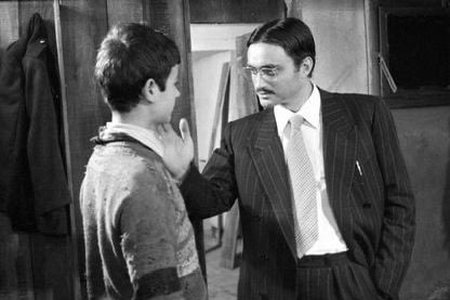
In Albanian cinema, his journey began in the mid-1970s, appearing in the 1975 film "Beni ecën vete", in the role of Beni's father, as well as in "Lumë drite", where he played teacher Agron. In 1976 came the roles of Genci in "Fije qe priten" and Kopi in the film "Përballimi". The year 1977 marks a more prominent presence with Gregori Graf in "Flagur në dalgë" and with the role of a Gestapo spy in the film "Monument". In 1978 he played the quaestor Jani in the Albanian feature film "Nga mesi i errësirës" and Resuli in "Vajzat me kordele të kuqe", while in 1979 he played Sadik Bezhora in the film "Mysafiri".
In 1980, he appeared as Kristofori in “Dëshmorët e monumenteve”, while in 1981 he played the director in “Kur jihirohej një film” and the lawyer Hamdi Caka in the television film “Agimet e stinaës së madhe”. In 1985, he appeared as Xha Kozi, the retired teacher, in the film “Asgjë nuk cherohet”. The year 1986 was one of the busiest for him, where he played the lawyer in the film “Një jetë më më tër”, directed by Gëzim Erebara, Gjini in “Dhe vjenj një ditë” and the German officer in the film “Tre dëtë nga një jetë”. In 1987, he played the role of the Chief Agronomist in the film “Pësseri praveshë”, while in 1988 he played Koli in the television series “Rikonstruksioni”. His filmography ends with the role of the photographer in the film “Kronikë e një nate”.
On a personal level, Zhani Ziçishti remains for me a precious, very close friend, a valuable interlocutor, with a broad artistic and admirable civic culture. Beyond the stage, he modestly and wisely manifested a natural simplicity and a prominent professional ethic, which he coherently reflected in his relationship with art and life.
Today, in the absence of his physical presence, the artistic legacy he leaves behind remains an important reference for the study of interpretive practices in Albanian theater and film. His passing from life marks not only the end of an individual biography, but the transition into cultural memory of an artistic profile that will continue to live in the collective memory through his roles and influence on future generations. With his departure, family, friends, the stage, art in general and Albanian cinematography in particular lost a beloved and significant figure, who left an indelible mark on the heritage of our culture.
Farewell, my unforgettable friend.
Rest in the peace you deserve!



Lini një Përgjigje