


 Shkruar nga Walter Lapini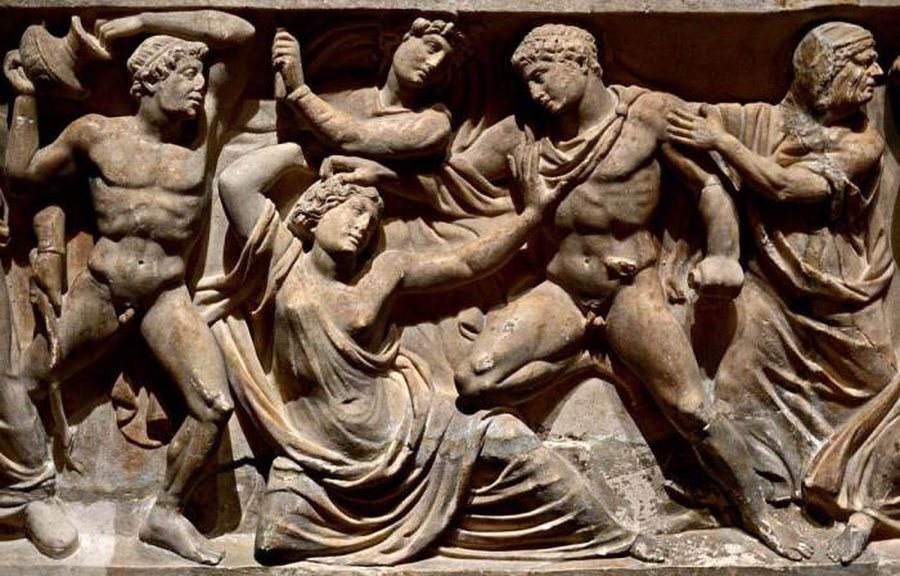
From primitive justice to institutional justice...
Aeschylus' Oresteia, staged in 458 BC, is not a single tragedy, but a trilogy, that is, a series of three tragedies, Agamemnon, Coephorus, and Eumenides, which continue each other and have as their theme the myth of the Tantalids, or Pelopides, then the Atreides, a tribe where crimes of extreme cruelty were committed in every generation: from rape to incest, from infanticide to cannibalism.
The prehistory of the Oresteia is that the king of Mycenae, Agamemnon, sacrifices his daughter Iphigenia to the gods. This is the price they demand in order to allow the Achaean army, led by Agamemnon, to reach Troy unharmed.
Agamemnon essentially contains two events: (1) Agamemnon's return from Troy; (2) Agamemnon's murder by his wife Clytemnestra, aided by her lover Aegisthus, a dark and despicable figure.
Clytemnestra acts for several reasons: to avenge Iphigenia, to punish Agamemnon for his infidelities with other women, and to rule Mycenae together with Aegisthus. Her wrath also strikes at the princess Cassandra, daughter of Priam, whom Agamemnon has brought from Troy as a spoil of war and concubine. Thanks to her prophetic abilities, which she does not want, Cassandra sees the approach of death without being able to resist or escape, in a series of scenes of unparalleled horror.
In Coephorus, which in the fictional chronology takes place several years after Agamemnon, Orestes, the son of Agamemnon and Clytemnestra, enters the action. Now an adult, he has decided to avenge his father, which means, simply and directly, to kill his mother. Aided by his sister Electra, Orestes enters the palace of Mycenae in disguise and kills the two usurping lovers, first Aegisthus and then Clytemnestra. After committing the crime, the half-animal Erinyes, very ancient deities of revenge and pursuers of blood crimes, appear around the mother's murderer, visible only to him. Orestes escapes and the Erinyes pursue him. Here ends Coephorus.
In the Eumenides, imagined as set in another time period, the pursuit continues. At the direction of Apollo, Orestes goes to Athens to place himself under the protection of the goddess Athena. The Erinyes also arrive there, demanding his death sentence. Athena does not want to make the decision herself and demands that the dispute be resolved by the people. For this reason, she creates a court, the first in the history of the world and the model of all those that will come after: the Areopagus.
Përpara Areopagut zhvillohet një proces i vërtetë gjyqësor. Nga njëra anë janë Eriniet, që akuzojnë Orestin; nga ana tjetër Apoloni, që e mbron. Numërimi i votave, mes të cilave edhe ajo e Atenës, përfundon në barazim, dhe barazimi sjell pafajësinë. Ky është parimi që sot njihet si in dubio pro reo.
Eriniet nuk e pranojnë vendimin. Të privuara nga hakmarrja, e cila përbën arsyen e ekzistencës së tyre, ato kërcënojnë me vdekje dhe shkatërrim tokën e Atikës, pra njerëzimin. Përplasja duket e pashmangshme, por shmanget në momentin e fundit, sepse Atena, përmes taktit dhe bindjes, arrin ta shndërrojë zemërimin e Erinieve në mirësi. Ato pranojnë një rol të ri dhe bëhen Eumenidet (“Mirëdashëset”), mbrojtëse të qytetit dhe garante të rendit dhe drejtësisë.
-Nga drejtësia primitive te drejtësia e institucioneve
Orestea është një vepër madhore poetike, por edhe një reflektim i thellë mbi drejtësinë, dike. Për grekët e lashtë, drejtësia përmblidhej zakonisht në formulën: “T’i japësh secilit atë që i takon”. Kjo nuk është gjë tjetër veçse ligji i hakmarrjes së barabartë. Miqve u kthehet miqësi; armiqve u kthehet armiqësi në të njëjtën masë dhe në të njëjtën mënyrë.
Sot drejtësia përqendrohet kryesisht te autori i krimit dhe përpiqet të dallojë mes veprimit të pavullnetshëm, neglizhencës, paramendimit dhe kategorive të tjera. Në botën antike vëmendja drejtohej para së gjithash te viktima. Nëse dikush të plagoste pa dashje apo vriste vëllanë tënd për arsye të ligjshme, dëmi i shkaktuar mbetej elementi kryesor dhe kërkonte kompensim përmes një veprimi të kundërt e simetrik.
Kjo nuk ishte bindja e një pakice, por e të gjithëve, përfshirë Eskilin dhe publikun e tij. Korët e Orestesë përsërisin vazhdimisht se çdo faj duhet të pasohet nga një riparim dhe se asgjë nuk duhet të mbetet pa ndëshkim.
Kur, gjatë procesit para Areopagut, Eriniet e pyesin Orestin nëse e ka vrarë nënën dhe ai përgjigjet po, ato mendojnë se kanë fituar menjëherë. Nëse ekziston një fakt i provuar dhe një fajtor që e pranon krimin, përse duhet diskutuar më tej? Ashtu si Oresti nuk mori parasysh rrethanat lehtësuese të Klitemnestrës, as Eriniet nuk marrin parasysh ato të Orestit.
Por Atena dhe Apoloni e shohin çështjen ndryshe. Ata nuk ndalen vetëm te fakti, por shqyrtojnë edhe kontekstin: a kishte Oresti arsye për të vepruar? A veproi me iniciativën e vet apo u shty nga të tjerët?
Një ide tjetër që shfaqet vazhdimisht në Eumenidet është se Oresti, para se të dilte në gjyq, kishte filluar tashmë të shlyente fajin e tij. Koha, arratisja dhe vetë jeta e kishin zbehur gradualisht njollën e krimit. Para statujës së Atenës ai thotë se dikur ishte i ndotur nga faji, por se me kalimin e kohës, duke kaluar nëpër shumë vende dhe duke takuar shumë njerëz, kjo ndotje është shuar pak nga pak.
Pyetja që lind prej kësaj ideje mbetet aktuale edhe sot: nëse autori i krimit nuk është më, në thelb, i njëjti njeri që e kreu atë, kë po ndëshkojmë në të vërtetë?
Compensatory justice has another problem: it never fully compensates. If someone kills my brother and forces me to take revenge, he not only deprives me of a loved one, he also turns me into a murderer. Thus, guilt produces multiple consequences, and the punishment, to be such, must exceed the initial harm.
This creates a paradox: the law of revenge is the only model of justice that seems fair according to its logic, but at the same time it is incompatible with social life, because it endlessly prolongs the chain of crimes and punishments.
How can this situation be resolved? Athena's answer is clear: crime and punishment must be taken out of the hands of the parties involved and entrusted to the community, that is, to the court. Only the judicial institution can break the logic of "an eye for an eye, a tooth for a tooth" that has dominated until then.
The Erinyes object. They believe that pardoning Orestes will make people lose their fear of punishment and encourage criminality. At this point, Athena agrees with them on one point: society needs prevention.
The new order cannot exist without phobos, the external fear created by laws, and without aidos, the internal fear born of respect, self-restraint and a sense of proportion. Thus, by each side taking a step back, the final agreement is reached, which creates a strong link between institutional justice and prevention./ Adapted from “Pamphlet” by “Corriere della Sera”








Lini një Përgjigje