


 Shkruar nga Pamfleti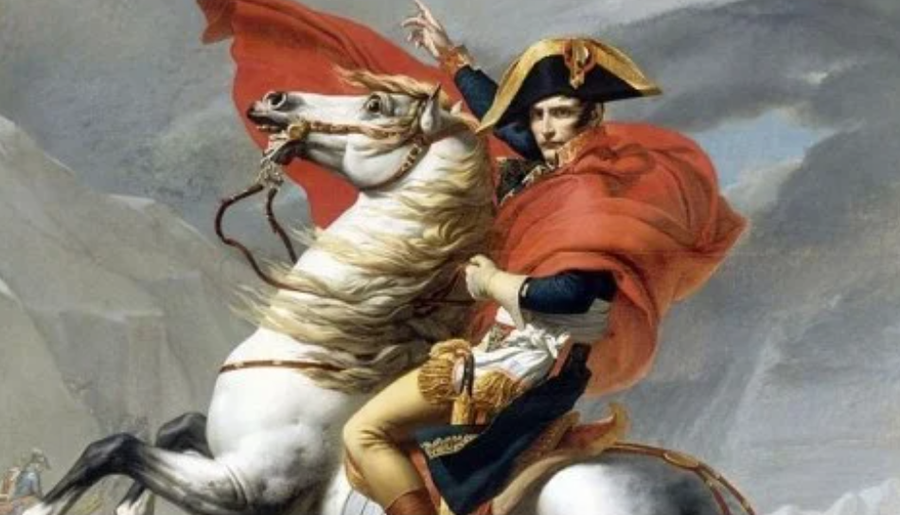
Napoleon, the man of modern times
Rarely has history known a man who, at the age of just 27, rose in four years from a young and little-known general to the political leader of his country. And that country was France, one of the greatest powers in Europe. It is equally rare for a historical figure to be both a military genius and a statesman, capable of building institutions that would endure for centuries. Many of today's French institutions have their origins precisely in the Napoleonic era.
What is hidden behind this extraordinary adventure?
First, a major historical change. The French Revolution overthrew the old order, the privileges of the aristocracy, and the absolute power of the monarchy, paving the way for a new society. But a new world also needed new people. And who could better represent this era than youth itself? It is no coincidence that many of the leaders of the Revolution were young people, convinced that they could build a completely different France.
Napoleon was one of them. Born in Corsica, an island recently annexed to France, he came from a modest noble family. His ambition was clear from the start: to rise as high as possible in the army. He first became a lieutenant, then a captain and, thanks to his skills in artillery, was appointed general at a very young age. His loyalty to the Republic and his talent on the battlefield quickly made him stand out.
When he arrived in Paris, the Revolution had entered a new phase. The Jacobins had lost power and the country was ruled by the Directorate. It was a more pragmatic regime, where politics intertwined with economic interests, with former revolutionaries, military men, and powerful figures of the time.
Napoleon did not remain in the shadows. He quickly adapted to the new reality and gained the trust of Paul Barras, one of the most influential people in the Directorate. Barras realized that he had a capable commander in front of him, a man who knew how to lead soldiers and make quick decisions.
The opportunity to prove this came in 1795, when the monarchists attempted to overthrow the republican government. Napoleon did not hesitate. He used artillery against the insurgents and crushed the revolt decisively. It was a harsh action, but one that paved the way for his political and military career.
Shortly thereafter, he married Joséphine de Beauharnais, an elegant widow well-known in Parisian high society. Although their marriage would endure many trials, Napoleon would always maintain a strong emotional bond with her.
The general who changed the fate of Italy
The Directorate entrusted Napoleon with the command of the Army of Italy. In Paris this was considered a secondary task, since the main front was in Germany. The army he took over was poor, hungry, and poorly equipped. Few believed it could achieve any success.
But Napoleon thought differently.
Within a few weeks he transformed that army into a disciplined and extremely mobile force. He defeated the Piedmontese and Austrian troops one after the other, entered Milan victoriously, and changed the entire political balance of Northern Italy.
What made him different from other commanders was the way he conceived of war. He moved troops quickly, used artillery as the main weapon of attack, and maintained constant coordination between army units. His victories were not accidental, but the result of a carefully thought-out strategy.
At the same time, he sent to France vast fortunes, money, and hundreds of works of art taken from Italian territories. His prestige grew so much that many French people began to see him as the man who could give the country stability and greatness.
From Egypt to power
After his success in Italy, Napoleon took on a new mission: the expedition to Egypt. The objective was to strike Britain by cutting off its trade routes with India.
On land, the French army won several important battles. But at sea, the situation was very different. British Admiral Horatio Nelson destroyed the French fleet at the Battle of the Nile, leaving Napoleon isolated in Egypt.
Meanwhile, in France, the political situation was deteriorating. The Directorate was losing authority and the country needed a strong leader. Napoleon decided to return to Paris, leaving the army in Egypt.
He realized that his moment had come.
In 1799, in the coup d'état known as the 18th Brumaire, he overthrew the Directorate and became First Consul. On paper, power was divided between three consuls, but it soon became clear that only one decided everything.
Napoleon had become the most powerful man in France. / Adapted from Corriere Della Sera






Lini një Përgjigje