


 Shkruar nga Evarist Beqiri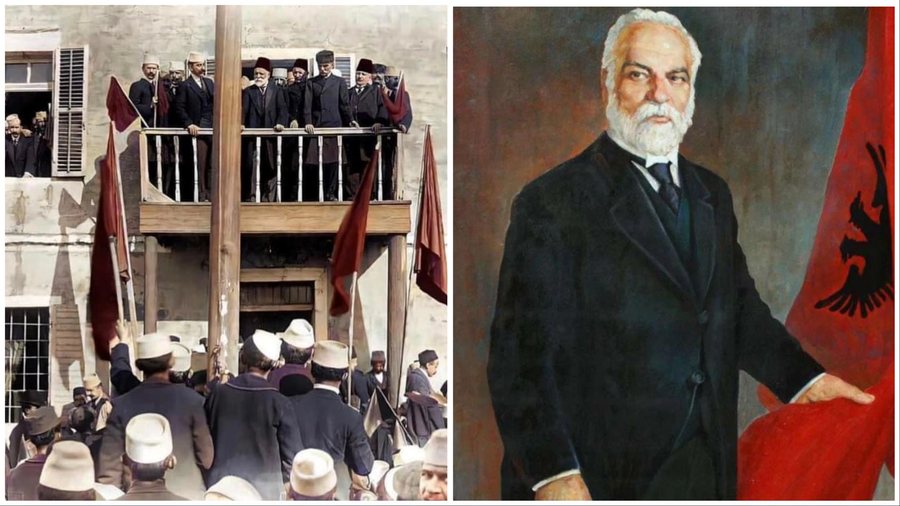
On November 28, 1912, immediately after the Declaration of Independence in Vlora, Ismail Qemali, in the capacity of the President of the Provisional Government of Albania, informed the Great Powers of the creation of the new Albanian state by means of a telegram.
His telegram is written in fine diplomatic language and is worth analyzing for its own importance. It was published on November 29-30, 1912, by some of the main European newspapers and beyond, such as "Corriere della Sera", "La Stampa", "La Tribuna", "La Nazione", "Le Figaro", "Le Temps", "Le Petit Niçois", "The Times", etc. Below is the full text of the telegram:
"The National Assembly, composed of delegates from all parts of Albania, regardless of religion, who gathered today in the city of Vlora, have declared the political independence of Albania and formed a Provisional Government, charged with the task of protecting the rights of the Albanian people, endangered by the extermination of the Serbian armies and the liberation of our national lands, occupied by foreign forces.
Presenting these facts, informing your Excellency, I have the honor to ask the Government of his British Majesty to recognize this change in the political life of the Albanian nation.
The Albanians, who have entered the family of peoples of Eastern Europe, of which they think they are the oldest, are pursuing a single goal, to live in peace with all the Balkan states and thus become an element of new balance. They are convinced that His Majesty's Government, as well as the whole civilized world, will give the Albanians a friendly welcome, protecting them from all attacks that endanger their national existence and against any division of their territory.".
This neatly written telegram reveals the diplomatic dexterity and virtuosity of the leadership of Ismail Qemal Vlora. He would assume tremendous importance in the further course of events. Ismail Qemali emphasizes there from the beginning the secular nature of his government, thus preventing the possibility of rejection by the Great Powers for reasons that could be camouflaged under the guise of caring for the Albanian Christian population. At the same time, it touches upon the concern of the Great Powers regarding the massive militarization of the Balkans. In the following, he refers to the European concept of the law of nations and seeks protection for the rights of the Albanian nation. And what is most important, he writes about the concept of the balance of forces in the Balkans. He refers to the brutality of the Serbian army, to provoke the anxiety of Great Britain about the expansion of Russian influence in the region. Knowing the political interest of Great Britain, he conceives the new Albanian state as a balancing force against Pan-Slavism.
The same text, also requesting the official recognition of the new Albanian state, was sent to the Ministers of Foreign Affairs of Great Britain, Italy, Austria-Hungary, France, Germany, Russia and Evarist Beqiri the High Gate.
The accomplished fact of the Declaration of Independence of Albania, as well as the official request of Ismail Qemal Vlora, addressed to the British foreign secretary Sir Edward Grey, led to the organization of an international conference with the participation of Britain, France, Germany, Austria-Hungary, Russia and Italy . The Peace Conference in London began its work on December 17, 1912. During the years 1912-1913, 54 meetings were held, where both Albania's administrative relationship with the Ottoman Empire and the determination of its borders were debated. On July 29, 1913, Albania was formally recognized as an independent state, but nearly 50% of the territory and 40% of the Albanian population remained outside the borders of the new state. Their ethnic territories were divided to satisfy the appetites of Serbia, Montenegro and Greece.
Among the articles published by European newspapers during those days, a description dated November 30, 1912, of the well-known Italian newspaper "La Tribuna", which also describes the moment of Ismail Qemali's descent to Durrës, on November 21, 1912, stands out:
"Ismail Qemali came down to Durrës with, among other things, 10 well-preserved and sealed boxes, which were too small to hold weapons and ammunition, they contained gold..."
This was the treasury of the state he had come to found. This is the most significant evidence and example of the sublime sacrifices of the revivalists. Our natives gave everything they had either spiritually or materially for the motherland.
Artikulli vijon më tej duke theksuar se, “pas takimit me parinë e Durrësit dhe sqarimit të arsyeve të zbarkimit të tij, Ismail Qemali shtoi se do të shkonte në Vlorë të shpallte Pavarësinë e Shqipërisë.” Një mendimtar i shquar francez ka shkruar: “Njerëzit e të gjitha epokave ngjasojnë: historia nuk është e dobishme sepse në të lexojmë të shkuarën, por, sepse aty lexojmë të ardhmen.”
Nëse ka diçka që historia njerëzore na mëson (që nga Magna Carta deri te Deklarata e Pavarësisë së SHBA-së), është fakti që çdo betejë për lirinë njerëzore është fituar me anë të forcës. Forca e popullit shqiptarë i dha jetë Deklaratës së Pavarësisë. Ndërkohë, lidershipi virtuoz i Ismail Qemalit mëshironte më së miri frymën e kombit dhe gatishmërinë e tij për të luftuar për liri. Ai është shembulli më i mirë i lidershipit të kulluar. Në momentin që Ismail Qemali po udhëhiqte shqiptarët në këtë rrugëtim të shenjtë, ai nuk mbante asnjë pozicion zyrtar, duke dëshmuar faktin që lidershipi nuk lidhet me pozicionet dhe titujt, por me aftësinë për të ndikuar njerëzit.
“Gazeta e Korçës” e përshkruante në këtë mënyrë veprën e Ismail Qemalit: “Ky burrë preferoj më mirë një mëmë të vogël e të vobegtë se sa njerkën e madhe e të pasur. Ai mbyllte në kraharor të tij prej kohësh, bashkë me të tjerët shqiptarë fisnikë, fuqinë e pamposhtur të idesë dhe vendimin e patundur, dhe besën e një populli që të fitojë lirinë e tij ose të vdesë duke treguar gjallërinë e patundur të fisit shqiptarë, duke ngritur flamurin e lirisë, duke i çfaqur botës së qytetëruar se Shqipëria deshi të rronte dhe po rron.”.
Ndërsa tensionet gjeopolitike vijojnë të rriten në botë, lidershipi fisnik i Ismail Qemalit na shpjegon pse figurat historike mund të na shërbejnë si frymëzim për të lundruar nëpër labirintet e diplomacisë së sotme. Sakrificat sublime për idealin kombëtar, janë në themelet e udhëheqësisë virtuoze të Ismail Qemalit. Ai është njëkohësisht themeluesi i Shqipërisë moderne dhe dorëheqësi i parë nga pushteti…
“E shpallëm Pavarësinë, por mbrojeni kombin shqiptar”
“Asambleja Kombëtare, e përbërë nga delegatë prej të gjitha anëve të Shqipërisë, pa dallim feje, të cilët sot janë mbledhur në qytetin Vlorës, kanë shpallur pavarësinë politike të Shqipërisë dhe kanë formuar një Qeveri të Përkohshme, të ngarkuar me detyrën e mbrojtjes së të drejtave të popullit shqiptar, të rrezikuar nga shfarosja e ushtrive serbe dhe të çlirimit të tokave tona kombëtare, të pushtuara nga forcat e huaja.
Rilindësit tanë shkrinë gjithçka kishin për Shqipërinë. Ata u larguan nga kjo botë të varfër materialisht, por jashtëzakonisht të pasur shpirtërisht. Presidenti John F. Kennedy shkruante: “Unë jam i sigurtë se mbasi pluhuri i shekujve të ketë mbuluar qytetet tona, ne, gjithashtu, do të kujtohemi jo për fitoret apo humbjet në beteja apo në politikë, por për kontributin tonë në shpirtin njerëzor.”
People, like nations, need common reference points and models. It is precisely their extraordinary spiritual heritage that makes us Albanians proud every November 28. Meanwhile, on the other hand, there is the Essadist model.
The model of those who have betrayed the ideal of Skenderbeu and Ismail Qemali. The model of greed and insatiability with power and wealth. The model of those who, by stealing and being corrupt, have misgoverned Albania, under the shadow of Ismail Qemali's noble gaze on top. The model of those who turn power into an end in itself...
"There is no richer inheritance than honesty," wrote William Shakespeare. The ignoble example of these ordinary mortals shames us and makes us reflect every November 28. But in the end, if there's anything else history teaches us, it's that their evil model will receive the worst punishment it knows: shame and oblivion.
Ismail Qemal Vlora's last bequest was: "My sons, I did not make a fortune to bequeath to Albania. I'm leaving you a homeland as a trust." The legacy of his leadership is our most sublime treasure: devout and humble service to the motherland. Therefore, the cultivation of Albanianism, the pure sense of national belonging, especially among young people, is the only guarantee for preserving our national identity, but also the system of liberal democracy. Patriotism, the connection to our roots through love for the Albanian country, language and culture, makes us aware of our values and at the same time makes us more open to the values of others.



Lini një Përgjigje