


 Shkruar nga Pamfleti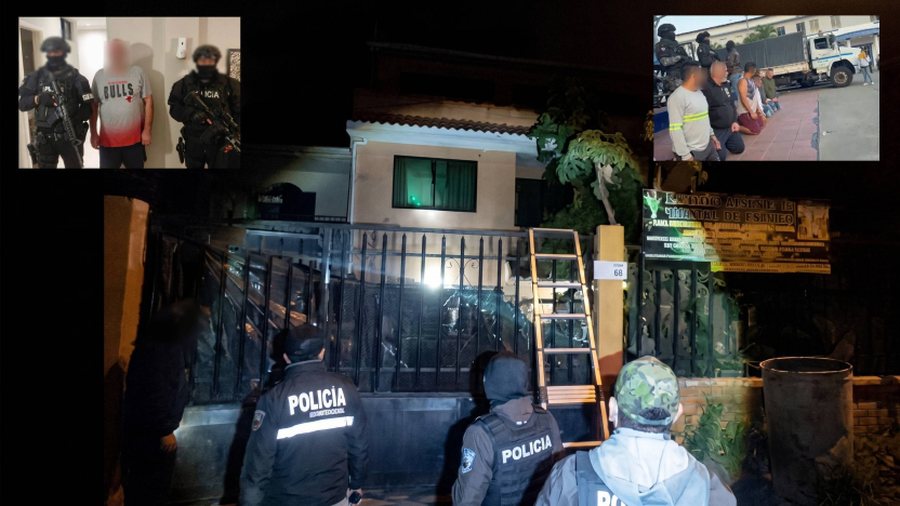
The investigations of Operation "Great Phoenix 43 – Azkaban" reveal the scheme of the criminal organization, linked to the seizure of at least 7.5 tons of cocaine since 2019.
An extensive investigation by Ecuadorian authorities, supported by Europol, has revealed the operation of a suspected Polish-Albanian criminal network, accused of international cocaine trafficking to Europe.
According to the file of the operation "Great Phoenix 43 – Azkaban", the organization is suspected of buying cocaine near the border with Colombia, storing it in Ecuador and then transporting it by ship to the Netherlands and other European countries. Authorities link the network to the seizure of at least 7.5 tons of cocaine since 2019, writes "Primicias".
Cocaine was hidden in shipments of bananas, coffee and food
According to investigations, the drugs were hidden in containers with legitimate export goods, such as bananas, coffee, seafood, wood and canned goods, using a method known as "blind hook", where packages of cocaine were secretly inserted into containers without the knowledge of the exporters.
The operation led to the arrest of 18 people, suspected of being part of the criminal organization.
Albanian suspected of being the leader of the network
According to authorities, one of the leaders of the organization is an Albanian citizen with the initials Daci P., also equipped with Ecuadorian identity documents.
Investigators suspect that he acted as a middleman for the Balkan mafia in Ecuador, receiving instructions from Europe and coordinating the logistics of drug trafficking.
To justify his economic activity, the Albanian had registered a business in the gastronomy and food service sector. However, according to tax documents, he declared an average of around $18,630 in monthly sales, while paying less than 50 cents in VAT per month, which has raised suspicions of tax evasion.
Front companies and verbal lease agreements
The investigation also reveals the use of companies that allegedly served as fronts for criminal activity.
Another key figure in the organization, Polish citizen Jakimiec T., turns out to be a shareholder in the Techpolska company, which also had the object of wholesale trade in bananas, a sector that, according to investigators, was used to contaminate containers with drugs.
According to authorities, the company had no registered employees, reported no income, and only owned about $1,400 in assets.
The file also mentions a verbal rental agreement for an apartment in the Casa Laguna urbanization, in the La Aurora area. The owner stated that she had only formalized the agreement through a notarial declaration, a few hours after the Albanian was arrested.
Licensed weapons and coded equipment
During the search of the Polish citizen's apartment, police seized computers, mobile phones, tablets and communication devices that were allegedly used to coordinate criminal activity.
Two firearms were also found. One of them had a permit valid until 2027, while the other weapon lacked authorization, leading to a separate proceeding being initiated against the suspect for illegal possession of weapons.
Link to a 2020 file
The "Azkaban" investigation has also highlighted links to a 2020 case, when two tons of cocaine hidden in a truck were seized at the port of Guayaquil.
Several local operators and security guards were arrested at the time, but they were later released for lack of evidence.
According to Ecuadorian authorities, six years later the same people have been arrested again, this time as part of a network that allegedly provided logistical support to the Polish-Albanian mafia in the ports of Guayaquil and Puerto Bolívar.
Investigations continue to fully document the organization's activities and its connections to international cocaine trafficking networks.





Lini një Përgjigje