


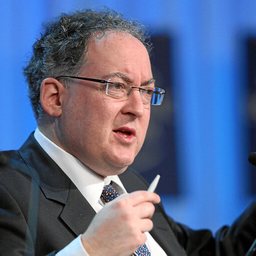
 Shkruar nga Gideon Rachman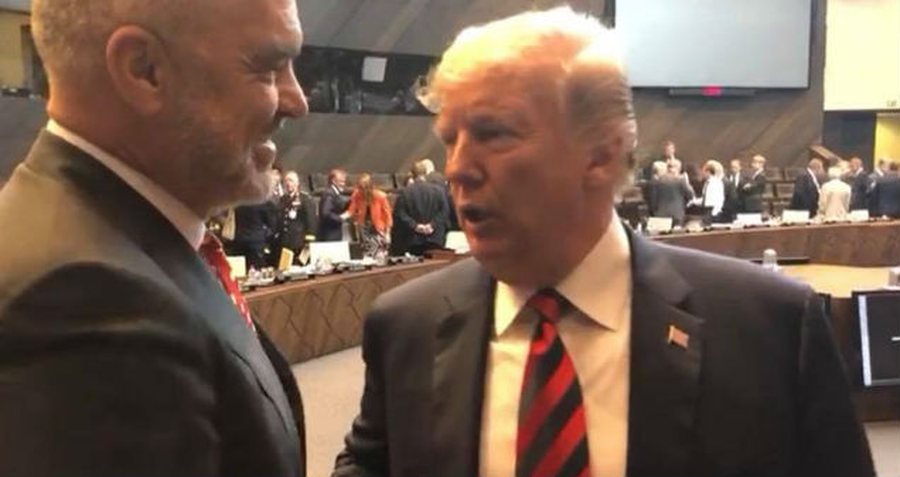
Strong leaders, regardless of the system in which they operate, often share the same instincts and methods...
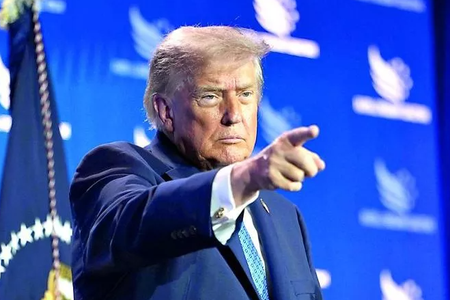
The “Save America Act” seems hard to oppose. But, much to the chagrin of US President Donald Trump, the legislation has stalled in Congress. Opponents of the bill see it as an attempt to rig the electoral system, removing Democrats from the voter rolls ahead of this year’s crucial midterm elections.
Trying to change electoral law in your favor, and stay in power by fair and unfair means, is a classic tactic of strongmen. The good news is that it doesn’t always work. In Brazil, Hungary, and the Philippines, recent attempts by strongmen to take decisive control of their countries’ institutions have failed, leading to the ousting of Jair Bolsonaro, Viktor Orbán, and Rodrigo Duterte.
When I wrote a book titled “The Age of the Strongman” a few years ago, I had to confront the question of whether it was fair to group leaders like Xi Jinping or Vladimir Putin, who operate in truly authoritarian systems, with figures like Trump or Orbán, who are legitimately elected.
My conclusion was that strong leaders, regardless of the system in which they operate, often share the same instincts and methods. They foster a cult of personality, concentrate power around themselves, and fight against independent institutions they cannot control, whether they are the courts, the media, or an election commission. Strong leaders also often lift constitutional term limits to extend their stay in power. Xi, Putin, and Recep Tayyip Erdogan in Turkey have done so, while Trump’s most ardent supporters continue to fuel speculation about a third term, in violation of the Constitution. Strong leaders are also almost always male, nationalist, and populist. Their personalized style of governance encourages nepotism and the corruption that flows from it. All of this, as they say in car dealerships, “comes as standard.”
The difference lies not in the instincts of strong leaders, but in the stability of the systems in which they operate. If a strong leader already rules in a largely authoritarian system, like Xi or Mohammed bin Salman in Saudi Arabia, it is almost impossible to leave power. It may take a coup or an extremely effective conspiracy within the ruling elite to bring about change at the top.
But if the strong leader has come to power in a system that still has free elections, as well as courts that maintain some independence and a military that will not implement unconstitutional orders, then it is still possible for him to be removed from office.
You can expect a strong leader to use a number of familiar maneuvers to tilt a democratic system in his favor. Wealthy friends can buy the media. Judges and generals who show too much independence can be replaced. Electoral boundaries can be redrawn. The constitution can be rewritten or ignored. The end result is often a free but not fair election, because the conditions are at the opposition’s disadvantage. However, if a strong leader becomes sufficiently unpopular, he can still lose the election.
This is what happened to Orbán in Hungary. Despite highly biased television coverage that ignored his opponent, Péter Magyar, he suffered a crushing defeat in the April elections.
When Bolsonaro narrowly lost Brazil’s presidential election in October 2022, he refused to accept the result and pressured military leaders to launch a coup. When they refused, he urged his supporters to attack Congress, the Supreme Court, and the presidential palace. But Brazil’s legal system was strong enough to try him and sentence him to many years in prison. His best hope now lies in his son, Flávio, winning the presidency in October.
As president of the Philippines from 2016 to 2022, Rodrigo Duterte arrested and imprisoned political opponents, forced the head of the Supreme Court to resign, and targeted independent media. But he failed to secure a constitutional amendment that would have allowed him to run for a second term. After losing power, he was extradited to the International Criminal Court in The Hague, where he is awaiting trial for crimes against humanity.
Meanwhile, in Israel, Benjamin Netanyahu has made great efforts to limit the independence of the courts and marginalize critical media. But he has been unable to stop his trial on corruption charges and could lose power in elections later this year.
But not all democratic systems have proven strong enough to withstand an entrenched autocracy. Recep Tayyip Erdogan has been in power in Turkey since 2003, first as prime minister and now as president. His political opponents have made repeated attempts to defeat him by operating within the system. But Erdogan's autocratic methods may have given him a nearly unbreakable grip on power.
Ekrem İmamoğlu, the popular mayor of Istanbul, was widely seen as the most credible challenger in the election. But he is currently in prison, accused of everything from corruption to terrorism and espionage. His fate mirrors that of the charismatic opposition leader, Selahattin Demirtaş, who has been in prison for nearly a decade, despite repeated calls from the European Court of Human Rights for his release.
Trump is a known admirer of Erdogan and recently called him a “great leader.” But, fortunately for the US, the American courts, media and electoral system currently appear stronger than Turkey’s. A healthy country needs strong institutions, not a strong leader./ Adapted from “Pamphlet” by “Financial Times”






Lini një Përgjigje