


 Shkruar nga Pamfleti
The study published in Nature Communications confirms that the celestial object struck the North Sea around 43–46 million years ago, causing a giant tsunami.
A scientific debate that lasted more than two decades has come to an end, after geologists confirmed that the mysterious Silverpit crater, hidden beneath the North Sea bed, was created by an asteroid impact.
The study, led by Dr. Uisdean Nicholson and funded by the UK's Natural Environment Research Council (NERC), relied on advanced seismic imaging technology and laboratory analysis. The findings are published in the scientific journal Nature Communications.
According to researchers, the asteroid had a diameter of about 160 meters and hit the area 43 to 46 million years ago, causing one of the most powerful natural events the region has ever experienced.
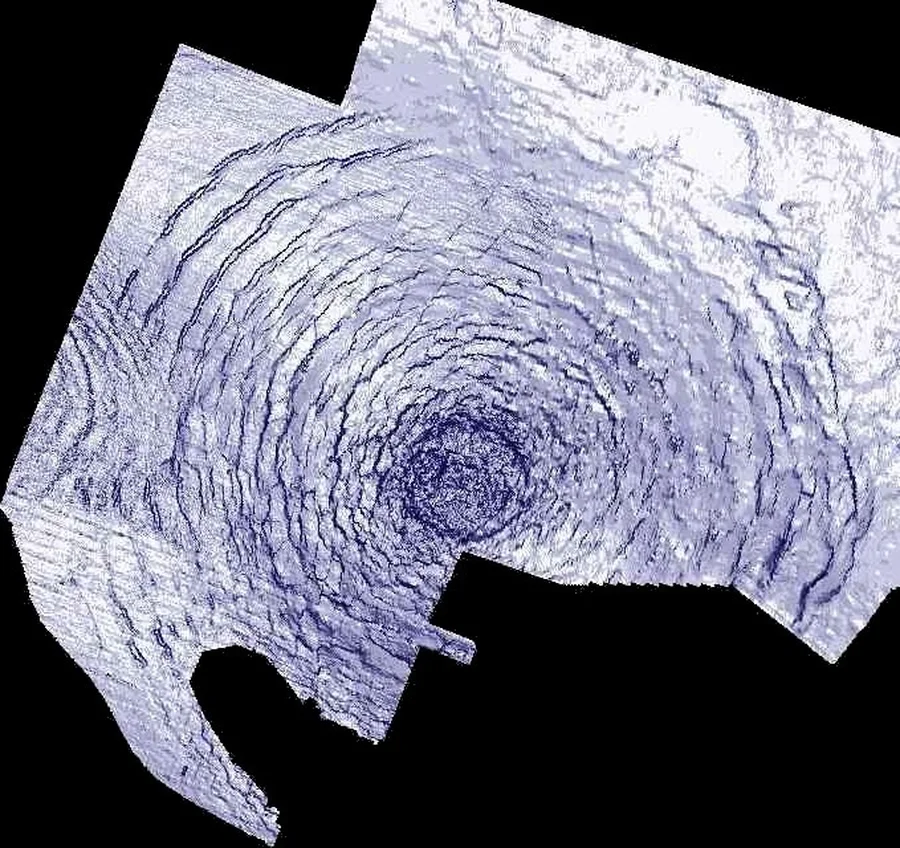
The Silverpit crater was first discovered in 2002 during oil exploration, about 130 kilometers off the coast of Yorkshire, England. It lies about 700 meters below the seabed. The central part of the crater has a diameter of about 3 kilometers, while the structure is surrounded by concentric rings that extend up to 20 kilometers.
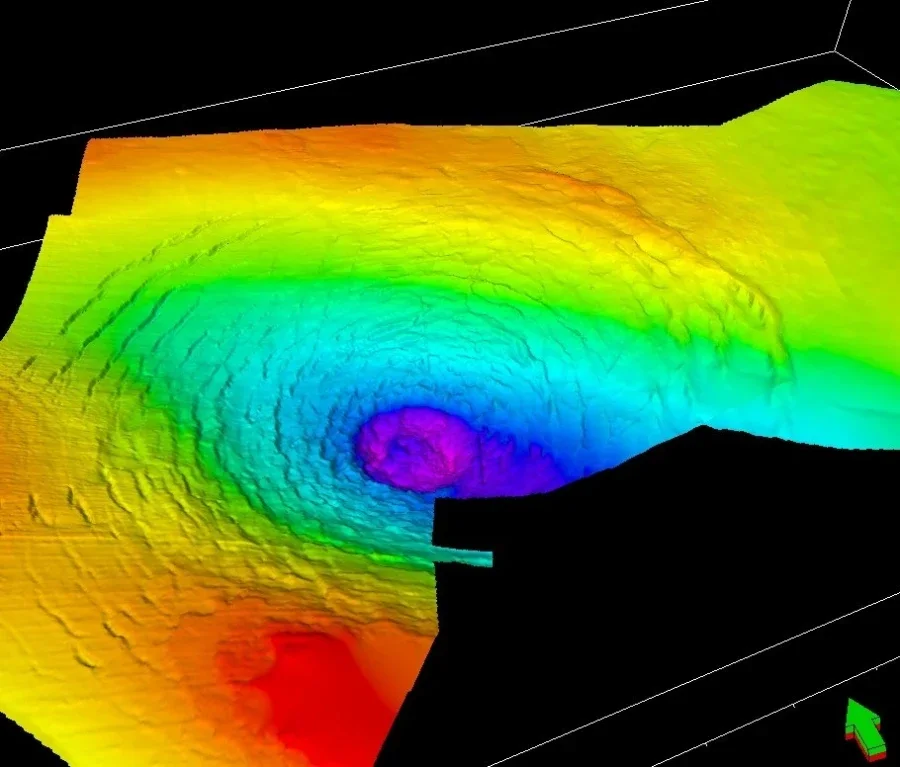
For years, the scientific community was divided over its origin. Some researchers argued that the crater's shape was typical of a very high-speed impact, while others believed it was created by the subsidence of salt layers or volcanic activity. In 2009, most geologists rejected the asteroid hypothesis.
However, new three-dimensional seismic data has definitively changed this assessment. Analyses of rock samples taken from a nearby oil well revealed so-called "shocked" quartz and feldspar crystals, minerals that form only under extremely high pressures, such as those created by a meteorite impact.
Computer models developed by Professor Gareth Collins of Imperial College London show that the asteroid approached Earth from the west at a low angle of impact. The impact released enormous energy, raising a column of water and rock up to 1.5 kilometers high. Its collapse created a tsunami with waves that, according to simulations, exceeded 100 meters high and would have destroyed any coastline of the time.
According to the study authors, the discovery has great significance for planetary geology. Only about 200 impact craters have been identified on Earth on land and only 33 under the oceans, as tectonic movements and erosion erase their traces over time.
The Silverpit crater is now considered one of the best-preserved structures of its kind, joining a list of the world's most important craters, such as Chicxulub in Mexico, linked to the extinction of the dinosaurs, and the Nadir crater off the coast of West Africa. Researchers believe the discovery will help better understand the impact of cosmic collisions on the evolution of planets and assess future risks from space objects.








Lini një Përgjigje