


 Shkruar nga Erl Murati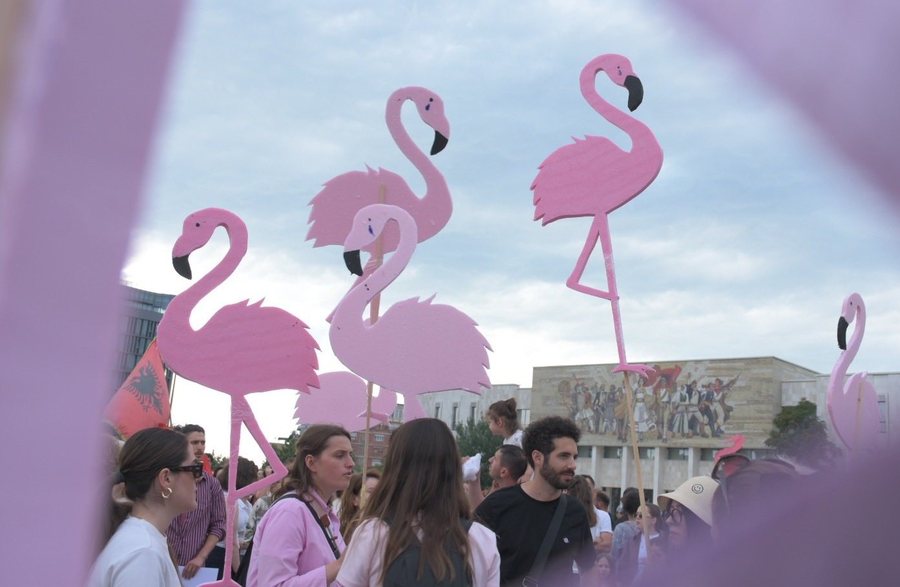
The protest has given the prime minister a chance to listen to the voice of the youth and make history by doing something no one has done before. To step down peacefully, as an inner conviction and a call to conscience, without force, but by listening to the voice of the citizens he serves.
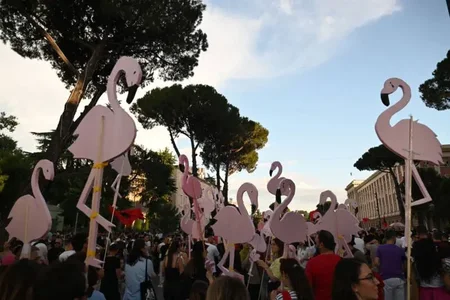
The popular protest that was sparked by Zvërnec and continues as a resistance in front of the prime minister's office has reached its 26th day, so it can no longer be treated as a passing episode or emotional outburst of the moment. It cannot be treated as the government will present it: as a misunderstanding or as a game of invisible actors operating from outside Albania.
Despite uniting people with different beliefs, attitudes, and ideologies, the "Flamingo Revolution" has entered a new political phase, articulating five concrete demands or objectives.
Maybe it's time for everyone, or at least someone, to reflect.
For weeks, the prime minister chose a strategy that aimed not at dialogue, but at delegitimizing the "revolution."
Protesters were called “crows” and “ravens.” There was talk of hybrid warfare, of Iranian influences, of digital hysteria, of the mobilization of Greek media, of dark forces seeking to destabilize the country.
Albanians from Kosovo and North Macedonia were mentioned in a negative light, as if national solidarity were a threat rather than a value.
Now, the protesters have spoken clearly. And they have given everyone a chance.
The protest has given the prime minister a chance to listen to the voice of the youth and make history by doing something no one has done before. To step down peacefully, as an inner conviction and a call to conscience, without force, but by listening to the voice of the citizens he serves.
Resignations and departures have occurred several times in the history of pluralism, but they have been provoked by trauma and violence such as '97, '98, 'January 21', Gërdeci and so on.
Peaceful protests are a wonderful chance for peaceful resignation, a chance that not every politician has had in the violent Albania of transition.
The protest has also given the opposition a chance to change, to reform, to finally become competitive in the elections. To become the voice of youth and hope for change.
But this reform goes beyond Berisha's departure and not just because the people are demanding it in the streets. Berisha's voluntary departure from the leadership of the DP would release new energy in the opposition camp and would give it the chance not to miss the train of history. Not only that, it would give Berisha himself the chance to leave politics after winning his small battle with the removal of the 'non grata'. A chance to be remembered as the politician who finally paved the way for young people and gave them the opportunity to make real change.
Third, the protest has given a chance to the new parties. It has given them a lesson, not to drown in vain in the sea of sophisms with 'system change', 'constitutional reform', change of the Electoral Code', etc., but to speak in the language of the people. The new parties have the chance to translate the demands of the protesters into political actions and in the absence of political representation of the "flamingos" to be the biggest beneficiaries of the revolution.
The protest gave intellectuals a chance to earn this word, but I fear they missed it.
It gave the media a chance to side with the people and not with the government: most of them ignored this chance.
In the end, the protest gave the youth a historic chance to wake up and deserve to be considered the hope and future of the nation.
They rose to the task that this era called them to fulfill. So far, only they have seized the opportunity that the “Flamingo Revolution” presented.




Lini një Përgjigje