


 Shkruar nga Ylli Pata
Hungarians, like Albanians, are two of the biggest victims of the fragmentation of lands at the beginning of the 20th century. After the First World War, when the Habsburg Empire collapsed, Hungary was given a very large territory...
It was expected that the most important event of this week on the continent would receive all the attention of the Albanian public, but unfortunately, most of this attention was treated in a flippant manner.
Hungary, a relatively small country in Europe, with a distinct language and ethnic characteristics, as often in its history, became a protagonist of Europe.
Almost all the media on the continent and even around the world have talked about Hungary and its historic choices, the causes, consequences and results. Although a landlocked country, Hungary, especially its iconic capital - Budapest, is permanently a tourist destination visited by people from all over the world.
A small part of them are also Albanians, who are among the constant travelers of this country. which, in addition to having given Albania a Queen-Geraldine, is in many historical factors and more broadly connected to Albania.
A connection that begins with the famous alliance in the Middle Ages of John Hunyadi and George Kastrioti, who were at that time the two strongest opponents of the Ottoman sultans in Europe, stopping their advance in the West.
Links that continued during later periods. Austria-Hungary, led by the Habsburg Crown, was one of the supporters of the creation of the National Renaissance and the Albanian nation at the turn of the 19th century. While it often advocated for it in the fearsome summits of the Great European Powers that at that time often gathered to divide the lands of the "Sick Man of the Bosphorus".
Hungarians, like Albanians, are two of the biggest victims of the fragmentation of the lands at the beginning of the 20th century. After the First World War, when the Habsburg Empire collapsed, Hungary was given a very large territory. Nearly three million Hungarians live in neighboring countries: Serbia, Romania, Slovakia and Ukraine.
Even during the communist period, relations between Hungary and Albania were better than with all the Eastern countries, which Enver Hoxha cursed day after day.
The iconic airline, Malev, was one of the few lines connecting Albania with all other parts of the world, while patients from Albania who could not be treated here were sent to Hungarian hospitals and clinics.
After the fall of communism, Hungary has been one of Albania's supporters, of course with the weight it has had in European politics and diplomacy. After entering NATO and the EU, official Budapest has always voted in favor of Albania, but also of the Albanians. Although it has had not bad relations with Belgrade, Hungary has been in favor of the military intervention of the Antantic Alliance on Milosevic's Yugoslavia, which liberated Kosovo. Hungary becomes a member of NATO only 12 days after the bombing of Belgrade, while it is one of the first countries to recognize Kosovo after its declaration of independence.
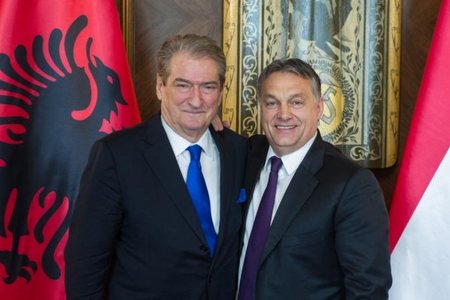
On the other hand, Budapest politicians have had good relations with all Albanian governments, and have especially expressed sympathy for the Democratic Party from the beginning. The well-known intellectual Árpad Goncz, the country's first post-communist president, had close relations with the first Sali Berisha. Meanwhile, all governments, whether right-wing or left-wing, have had good relations with politicians in Tirana. It is no coincidence that Orban has had good relations, whether with Sali Berisha, Fatos Nano, and later with Edi Rama.
Meanwhile, Hungary can truly serve as a model in its political developments, which have always had predecessors and have become world headlines, since the October Revolution of 1956 until yesterday when the great political change took place.
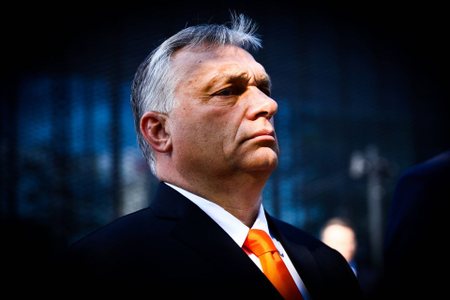
A change turned into a myth by the skill of an invincible politician and a true political chameleon during his long career. Orban, who became the anxiety of the West at the end of his career, did not come from above as a leader, but was neither more nor less than the leader of the student movement in 1989. who immediately became the head of the parliamentary group of the first center-right opposition party. After becoming a model with Orban, for better or for worse, yesterday Hungary became a model of how a trained politician can win elections.
45-year-old lawyer Peter Magyar, led one of the political dynasties for two years, receiving 2/3 of the votes in Parliament, even though in the popular vote there is no more than half. In a spectacular way, he managed to take advantage of the political system with bonuses that Orban built for political gain. Two are the most important keys to Peter Magyar's political engineering.
First; without complaining that most public and private media are considered close to Fidesz, he attacked Hungary crosswise, meeting communities live, and thus managed to break Orban's bastions, which are the rural regions.
His second important move was the selection of candidates for deputies, since Hungary elects the majority of the Parliament in majoritarian terms. He managed to find the most well-known personalities in the territory and conducted a model primary process where 3 candidates competed for each area. In reality, Magyar won since last November when he conducted the primaries. Is there any comparison with our political landscape, where we have to get a prime minister to defeat Rama, from the banks of the Danube? We had a Queen, and we didn't give her a chance!



Lini një Përgjigje