


 Shkruar nga Pamfleti
The increase in oil prices in international markets was inevitable and would also be transmitted to Albania.
In a small, open economy deeply dependent on energy imports, any global fluctuations translate almost mechanically into the bill that citizens pay at the gas pump.
However, the public debate that followed this increase highlighted a much deeper reality than the dynamics of international markets themselves: the way in which turnover tax is structured and collected in Albania.
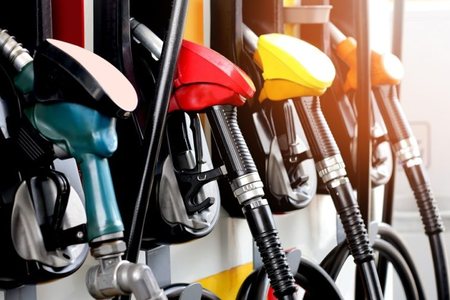
Unlike the classic model, where this tax is paid periodically for each vehicle, in our country it is included – and in a way “disguised” – in the price of fuel, being paid for each liter consumed. This solution, at first glance pragmatic for the fiscal administration, essentially creates a significant economic and social deformation.
Because this very addition – far from being negligible – is one of the reasons why the price of fuel in Albania ranks among the highest, not only in absolute terms, but especially in relation to per capita income. And herein lies the crux of the problem: the fiscal burden should not be judged only by its nominal size, but by the real weight it exerts on the citizen.
The government has justified this model with a simple logic: “the one who uses the road the most pays more.” In theory, this seems like a fair principle. In practice, the reality is much more complex.
The circulation tax, as historically conceived in Western countries – from where it was also borrowed in Albania – is not simply a fiscal instrument, but also a mechanism with a social function. It is built on differentiation: on engine power, on the level of emissions, on the luxury class of the vehicle. A high-segment vehicle, with large cylinders and luxurious features, pays significantly more than a small city car. Likewise, work tools are treated in a special way, reflecting their economic function and not luxury.
This differentiation is not accidental; it is an expression of a principle of fiscal justice: whoever has more, contributes more.
Albania has not only recognized this model, but has implemented it until 2012. The institutions still exist, the registers are accurate, the classifications are clear. So, the administrative infrastructure for a fairer system is already present.
In this context, the insistence on keeping the sales tax hidden within the price of fuel – and at current levels – no longer seems like a technical choice, but rather a deviation from basic principles of fiscal justice.
Because this model has a clear regressive effect: it hits hardest precisely those who have the least.
For a significant portion of Albanian citizens, a vehicle is not a luxury, but a necessity. The lack of functional public transportation, especially outside of Tirana, makes personal vehicles a means of livelihood. Employees who commute to work every day, small entrepreneurs who transport goods, families in suburban areas – all of them pay proportionally more, not because they have more, but because they have no alternative.
In this way, the tax that in theory should have been neutral, in practice becomes social – but in the wrong direction: from the weak towards the system.
The government, of course, has the right to build fiscal policies according to its vision. But it does not have a monopoly on justice. Every fiscal decision produces measurable consequences: it creates winners and losers. And when these consequences are predictable – as in this case – then insisting on an unjust model raises questions not only about economic rationality, but also about social sensitivity.
Because a fiscal policy may be legal, but that does not necessarily make it right.
And finally, a paradox that deserves attention: Albania has chosen, rightly, to favor electric vehicles, by exempting them from VAT. But these vehicles – which also use the roads – do not consume fuel and, consequently, do not contribute to this form of circulation tax.
The question is simple: have we built a system that is not only unfair to some, but also incomplete for all?
Because sometimes, what doesn't appear on the bill is exactly what weighs the most./ Monitor


Lini një Përgjigje