


 Shkruar nga Pamfleti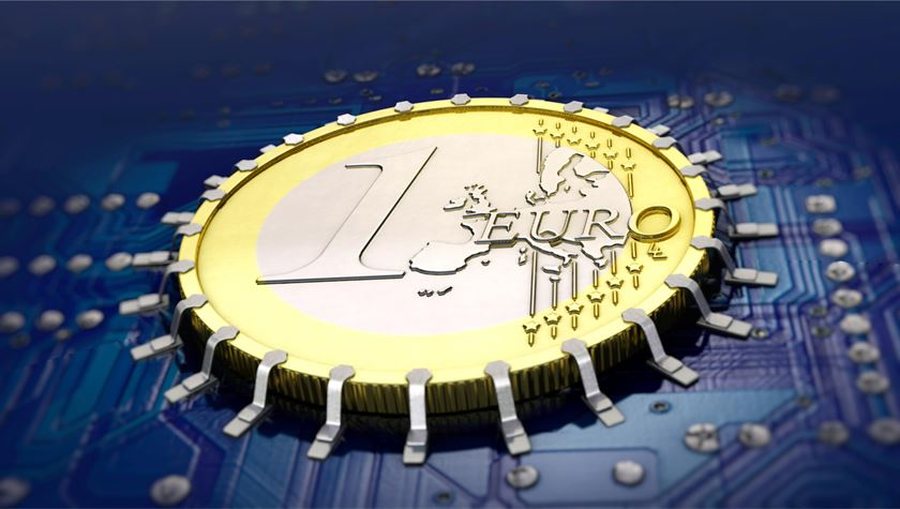
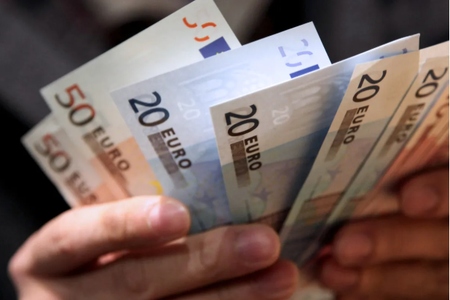
The digital euro will not come tomorrow. Between legislative negotiations, the adaptation of the banking infrastructure and a possible testing phase, it will take at least two to four years.
Thirty-seven-year-old Vice-Chair of the European Parliament's Committee on Economic and Monetary Affairs and co-founder of Volt, Damian Boeselager is currently negotiating one of the most sensitive issues of the legislative session: the digital euro law, the European Central Bank's project to create a public, guaranteed and universally spendable electronic currency.
"The idea is simple: a digital version of cash. I have five euros on my phone, I spend it and I don't have it anymore. Just like banknotes, but without a wallet," he explains.
However, behind this simplicity lies a strategic objective: freeing Europe from dependence on American payment systems such as Visa and Mastercard, which currently handle approximately two-thirds of card transactions in the eurozone.
According to Damian Boeselager, the digital euro would also reduce fees for merchants, who are currently often forced to accept high-cost electronic payments. And it would be a legal tender: those who already accept payments via Visa or Mastercard would also have to accept the digital euro.
The most difficult technical issue concerns the management of funds. The European Central Bank proposes that every citizen should have a separate digital euro wallet alongside their traditional current account: for example, two thousand “traditional” euros and two hundred and fifty “digital” euros. This dual balance would facilitate offline payments and ensure the system’s status as a legal tender. However, Damian Boeselager fears that the system will become too complex.
"The risk is creating a mechanism that people don't understand and don't use. That's why I'm working on a way to make it efficient ," he says.
Unlike cryptocurrencies, the digital euro is not a speculative asset: it will always have the same value as the euro, will be guaranteed by the European Central Bank and, at least in offline transactions, will be able to guarantee greater privacy than current payments.
"Today, every payment is traceable. With the digital euro, offline transfers can be private, invisible to anyone. But for large amounts, anti-money laundering controls will remain in place ," he emphasizes.
The digital euro dossier is in line with Damian Boeselager's political journey. A graduate in philosophy and economics, in 2016, between Brexit and Trump, he decided to found Volt together with the Italian Andrea Venzon and the Frenchwoman Colombe Cahen-Salvador: a pan-European, progressive, ecological and federalist party, now present in the EU and beyond (from Switzerland to Ukraine to the United Kingdom), with a single manifesto and a single identity.
"Traditional parties have become self-referential systems, more interested in survival than renewal. Volt is an invitation to return to being the protagonists of democracy. Either we improve the parties, or we will have a problem with democracy itself ," he says.
Volt has attracted around thirty-five thousand members, mostly young, with a straightforward message: " We are not trying to look like old-fashioned politicians. Let's say: this is our life, our country, the European Union we grew up in. Let's try to fix it."
The digital euro will not come tomorrow. Between legislative negotiations, the adaptation of the banking infrastructure and a possible testing phase, it will take at least two to four years. Even after the law is passed, the European Central Bank could introduce it gradually, to test its security and usability.
The path to a digital euro is complex and challenging, but Damian Boeselager remains convinced that this initiative is essential for Europe's financial independence and future innovation.
"It's about building a payments system that protects our sovereignty. We need to start now, so that Europe can take charge of its destiny in the digital age," he concludes./ Adapted from "Pamphlet" by "Linkiesta"



Lini një Përgjigje