


 Shkruar nga Pamfleti
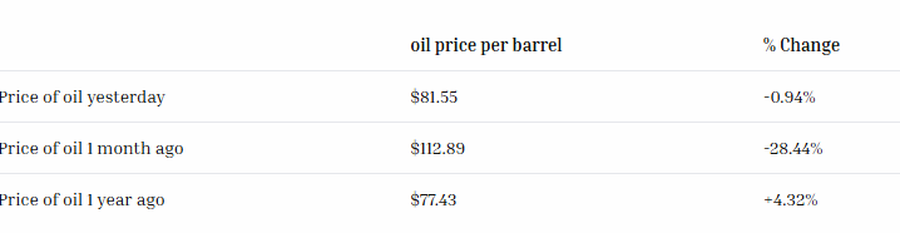
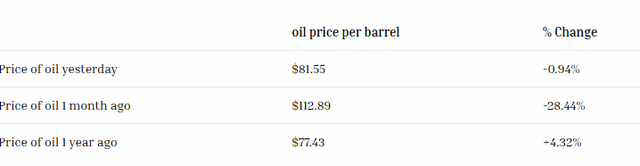
Brent is trading at $80.78 per barrel, while the market remains influenced by supply, demand and global developments.
The price of Brent crude, which serves as the main global market benchmark, is at $80.78 a barrel. That represents a drop of 77 cents compared to 24 hours ago, but remains about $3.35 higher than in the same period last year.
No one can predict the future course of oil prices with certainty. A number of factors influence the market, but supply and demand remain the main determinants. Fears of an economic slowdown, geopolitical conflicts or other unexpected shocks can cause sharp price fluctuations.
The price that consumers pay at gas stations does not only include the cost of crude oil. It also includes refining, transportation and distribution costs, various taxes, and the operators' profit margin.
However, crude oil remains the main factor in determining the final price, typically accounting for more than half the cost of a gallon of fuel. When oil prices rise, fuel prices tend to react quickly. In contrast, when oil prices fall, the price reduction at the pump often occurs more gradually, a phenomenon known in the market as “rockets and feathers.”
The United States maintains a strategic reserve of crude oil for emergencies. Its main purpose is to ensure energy security in situations such as sanctions, major damage from natural disasters, or military conflicts.
This reserve can also help to cushion sudden price increases when supplies are disrupted. However, it is not considered a long-term solution, but rather a support mechanism for consumers and critical sectors of the economy, such as emergency services, public transport and strategic industries.
Oil and natural gas are major energy sources, and their prices often influence each other. A significant increase in the price of oil could increase demand for natural gas, as some industries may partially switch to using it to reduce operating costs.
The international oil market is mainly measured through two standards:
Brent, the main global oil standard
West Texas Intermediate (WTI), the leading North American benchmark
Brent is considered the most representative indicator of the world market, as it is used to price a large portion of the oil traded internationally. For this reason, the US Energy Information Administration (EIA) also uses Brent as the main reference in its long-term analyses.
History shows that oil prices have been highly volatile. They have been affected by wars, production restrictions, economic recessions, and supply overhangs.
Some of the most important moments include:
In the early 1970s, the oil embargo by Middle Eastern countries during the Yom Kippur War caused the first major energy crisis.
In the mid-1980s, prices fell due to weakening demand and increased production from countries outside OPEC.
In 2008, prices rose sharply on rising global demand, but then fell with the outbreak of the international financial crisis.
During the COVID-19 pandemic lockdowns in 2020, global demand for oil shrank to unprecedented levels, driving prices below $20 per barrel.
The historical performance of oil has been far from stable. Prices continue to be affected by geopolitical conflicts, economic cycles, OPEC policies, the energy transition and other factors that shape global energy markets. /Pamphlet/







Lini një Përgjigje