


 Shkruar nga Gjergj Zefi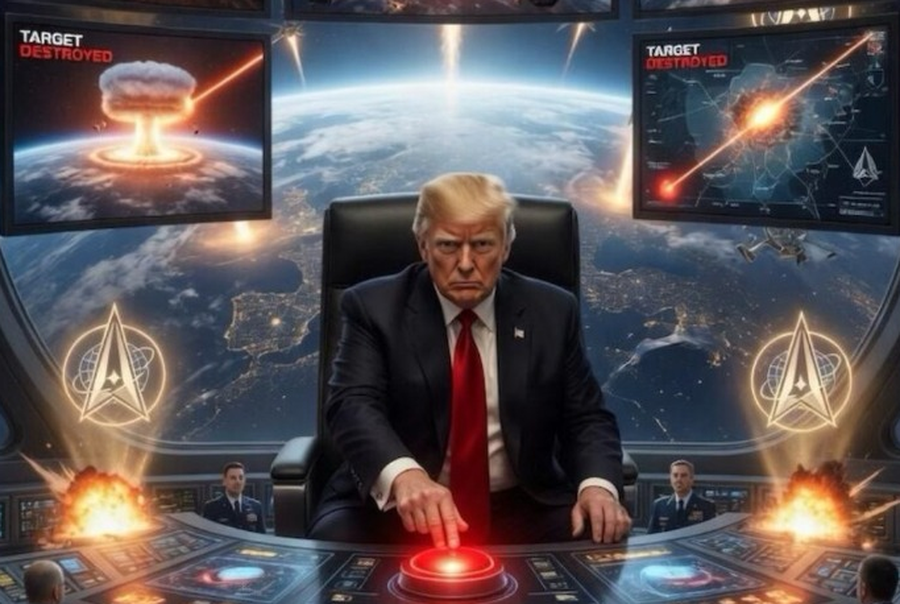
After more than two months of conflict and a ceasefire that is barely holding, Donald Trump's repeated threats against Iran are restoring a climate of fear and uncertainty in a Middle East that is still on the verge of an explosion...
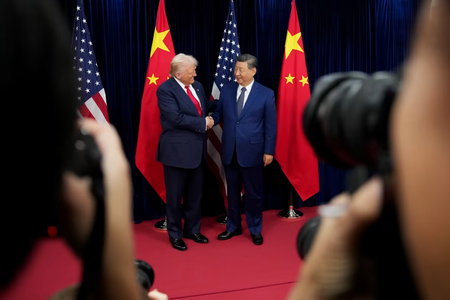
After more than two months of bloody confrontation in the Middle East, with a fragile ceasefire held more by fear of total explosion than by real will for peace, Donald Trump has chosen to bring back the language of threat as a political instrument.
Every one of his public appearances in recent weeks has come in ultimatum tones towards Iran, with warnings of "decisive strikes," "catastrophic consequences," and "unprecedented American force."
But so far, these statements have produced more media noise than concrete action. And therein lies the dangerous paradox: even when threats prove empty, they continue to fuel the climate of war.
The region today lives in a state of nervous tension. Iran and Israel have, for the first time in decades, gone into direct conflict, no longer through traditional intermediaries. Attacks, counterattacks, drones and missiles have created a new security reality in the Middle East, where a single incident can ignite the entire region.
In this atmosphere, Donald Trump's impulsive statements are not read as American electoral rhetoric, but as signals that could change military calculations on the ground.
Tehran has understood this game and is responding with forceful propaganda. Nighttime rallies in Iranian streets, television footage of rockets, and nationalist messages are not signs of self-confidence, but indicators of the regime's anxiety.
The Islamic Republic is struggling to convince its people and external rivals that it has control over the situation, while the Iranian economy is being choked by sanctions and internal tension remains high.
But political theater is also taking place in Washington. Trump is using the crisis as an instrument to restore the profile of a strong global leader. The problem is that diplomacy based solely on threats has a dangerous limit: at some point, the other side may decide to test the seriousness of the threat. And then a political “bluff” can turn into a real conflict.
This is why the current situation remains more dangerous than open war itself. Because we have a ceasefire that no one trusts, a region armed to the teeth, and leaders who talk more about force than solutions. Each new statement from Trump produces tremors in global markets, tension in regional diplomacy, and propaganda mobilization in Iran. Even when the threats do not materialize, they keep the region on the verge of explosion.
In the end, the specter of war does not return only from missiles or armies. It returns from politics that feeds on fear, from leaders who use tension as electoral capital, and from diplomacy that has lost the ability to produce compromises. The Middle East today does not need new ultimatums, but real de-escalation mechanisms. Because the history of this region has shown that the biggest wars have often started precisely from threats that at first seemed like propaganda. / Pamphlet



Lini një Përgjigje