


 Shkruar nga Gjergj Zefi
While talking about European integration, the Albanian prime minister is opening Albania's doors to figures and capital linked to oligarchic regimes that Europe is trying to remove...

As Orbán's regime collapses in Hungary, his closest associates are transferring business, capital, and political influence to Albania.
Prime Minister Edi Rama has mastered the art of European rhetoric for years. At international summits he speaks of liberal democracy, integration, transparency and “modern Albania”, while in the corridors of power he builds an entirely different model: a state where political and economic capital is concentrated in the hands of a privileged elite, a fearsome oligarchy.
And now, it seems clear that this scheme is no longer limited to domestic clients of power. Albania is increasingly being projected as a host territory for foreign oligarchs seeking to survive politically and financially after the collapse of the regimes that created them.
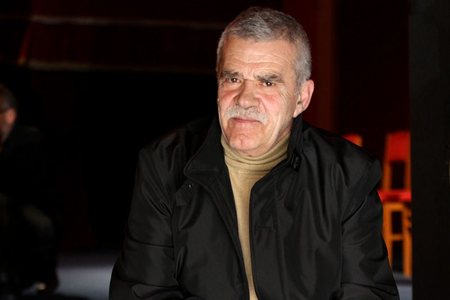
Edi Rama's meeting with Gellért Jászai was not a technical business meeting. It was not even a routine investor visit. It was a political signal. It was a picture of a silent alliance between a government that seeks money and influence and an oligarch who seeks safe territory.
In Budapest, Jászai was not simply perceived as an entrepreneur. He was one of the symbolic figures of the economic system built by Viktor Orbán: a system where private business was fed by public funds, where strategic companies enjoyed political privileges, and where the boundary between the state and private interest had almost completely disappeared.
Today, after the historic defeat of the Orbán camp and the arrival of a new political climate in Hungary, many of the names associated with that regime are seeking emergency exits. And Albania is emerging as one of them.
It is no coincidence that Tirana is becoming the preferred destination of dubious capital and "strategic" investments without full transparency.
Albania offers exactly what oligarchs shaken by political changes seek most: weak institutions, a lack of real control over the source of capital, still fragile justice, and a government that sees investors not as subjects to be vetted, but as political partners to be protected.
This is why Rama will not care about the origin of Jászai's influence, his connections to the Orbán system, or the Hungarian public funds that fueled the rise of his economic empire. On the contrary, he opens the doors to Tirana, offers him strategic platforms, and guarantees him the climate that any post-autocratic oligarch would want: a welcoming state and a government ready to negotiate anything.
This is no longer about foreign investment. It's about exporting a corrupt model of power from one country to another.
If the Hungarian model of the "oligarchic state" was politically punished in Budapest, why is it finding new ground on Albanian shores?
The answer is bitter but clear: because Albania is being used as a transit zone for interests that have begun to be investigated in Central Europe. The closer the moment approaches when the new Hungarian authorities will open the financial files of recent years, the more urgent it becomes for the people of the old regime to shift capital, influence and assets to countries where institutional control does not exist. Albania is perfect for this operation.
The irony is that Rama continues to appear in Brussels as a champion of reforms and European standards, while on the ground he is building a model that increasingly resembles the Balkan version of the Orbán system. A model where politics controls the economy, where oligarchs become part of the architecture of power, and where strategic investments are used to consolidate networks of influence that survive any democratic debate. This is not the path to Europe; this is the path to a hybrid republic where democracy is used as decorum and political capital as the currency of rule.
And here arises the most serious question for today's Albania: what reputation are we building? A candidate country for the European Union or a "free harbor" for oligarchs fleeing countries where the political climate is changing?
Because every photo between Rama and figures linked to systems accused of institutional corruption is no longer interpreted as economic diplomacy. It is interpreted as a political guarantee. As a message that Albania is ready to shelter not only capital, but also the political shadows that that capital carries behind it.
The time of ambiguity is over. In today's Europe, no one can claim democratic standards by building alliances with symbolic figures of the overthrown oligarchs. Every handshake with an oligarch who escapes the shadow of political investigations in his country is a direct blow to Albania's credibility as a European state. And every diplomatic silence in the face of this reality is no longer neutrality. It is political complicity./ Pamphlet



Lini një Përgjigje