


 Shkruar nga Gjergj Zefi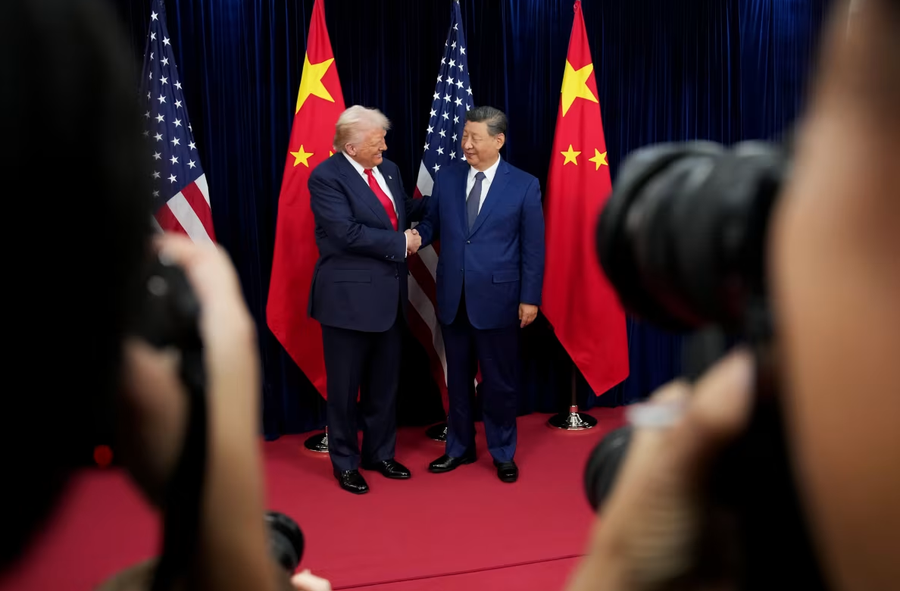
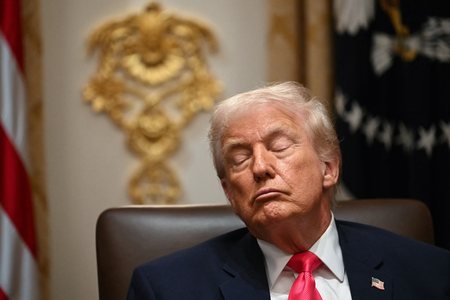
Xi Jinping enters the summit with the strategy of a rising superpower, while Donald Trump negotiates under the pressure of global crises and the anger of American voters...
In the most important US-China summit in recent years, the real difference between Xi Jinping and Donald Trump lies not in economic power or military arsenals. What is determining the balance of this meeting is the very different nature of the priorities each leader brings to the table.
Xi Jinping enters this summit with long-term state objectives, while Donald Trump enters with an urgent need for political survival. This is where Beijing's silent advantage begins.
China is not negotiating for headlines. It is not negotiating for the next election cycle. Xi is thinking about the next decade, about China's strategic position in the global order, and about how Beijing can emerge from this period of transition as the planet's most enduring superpower.
Trump, by contrast, needs immediate results that can be sold to American voters as political and economic victories. He needs calm markets, lower inflation, more controlled prices, and a public perception that America is “winning” against China. In this duel, Xi negotiates with time in his favor, while Trump negotiates against the clock.
That's why Beijing is appearing remarkably calm. China understands that the US is in a moment of strategic fatigue. The war in the Middle East, tensions with Iran, pressure on the US economy and domestic political polarization have limited Washington's room for maneuver.
Beijing knows that the Trump administration does not want a new crisis in Asia, especially on the Taiwan issue. For Xi Jinping, this is the ideal moment to gradually strengthen China's position without the need for direct confrontation.
Xi’s top priority is strategic stability, which gives China time to continue its economic, technological, and military expansion. He wants to avoid open conflict with the United States, but without making any major concessions. China does not want an uncontrolled trade war, as the Chinese economy is currently grappling with a domestic slowdown, a real estate crisis, and pressure on exports. However, Beijing believes that time is working in China’s favor. With each passing year, China becomes less dependent on the West, and the United States becomes more dependent on Chinese manufacturing, minerals, and supply chains.
Xi also has another major goal: to portray China as a power of stability in a world where America seems increasingly politically turbulent. This is a historic shift in the global narrative. For decades, the US projected an image of institutional stability, while China was seen as an authoritarian power with internal insecurity. Today, Beijing is trying to exploit American political chaos to build the opposite image: a disciplined, long-term, and controlled China in the face of an impulsive and polarized America.
In this regard, Xi does not need to gain more media hype. He only needs to avoid losing and continue the gradual erosion of American influence. The Chinese strategy is patience. Trump's strategy is urgency.
This is where the American president's main weakness lies. Trump cannot go to the US while at odds with Beijing. His electorate is built on economic anger towards China. Millions of Americans believe that globalization and trade relations with Beijing have destroyed American industry and its working class. For this reason, Trump is forced to maintain tough rhetoric even when economic reality pushes him towards compromise. He needs to appear belligerent, but at the same time he needs economic stability. This is the paradox that Beijing is reading very carefully.
China knows that Trump needs de-escalation more than Xi. And when one side needs a deal more, the negotiating balance automatically tilts. This does not mean that China is without problems. On the contrary, Beijing is facing serious economic and demographic challenges. But the Chinese political system gives President Xi the luxury of time, while American democracy forces Trump to live under the dictates of polls, markets, and elections.
The backdrop to this summit is the battle for a new world order. China is no longer challenging America just economically; it is challenging the American model of global dominance. Xi is gradually building an alternative architecture in which Beijing presents itself as the new economic and diplomatic center for many countries around the world. From BRICS to Eurasian trade routes and infrastructure investments, China is building a parallel order that aims to reduce American influence without the need for direct military confrontation.
Trump, on the other hand, is trying to maintain American supremacy at a time when America itself is entering a phase of strong internal fragmentation. And that is why this summit has historic significance. It is not just a meeting between two leaders. It is a confrontation between two systems, two political rhythms, and two visions for the 21st century.
Xi enters the summit as a leader seeking to manage China's rise. Trump enters as a president seeking to manage America's anger. And in global diplomacy, the leader who thinks further usually comes in with an advantage./ Pamphlet




Sa fallso qe eshte trampi
Trump nuk eshte politikan, thjesht eshte nje biznesmen qe ka perfituar nga politika,eshte larg te qenit strateg. Nje president amerikan ka qene gjithmone superior ndaj kujdo lideri tjeter global, Nuk e di ça kerkon ne Kine ky. Sot eshte dhene njoftimi qe do shkoje per vizite ne Kine edhe Putini. Kaq te dobet jane Trump dhe Putin.,perballe Xi Jinping.