


 Shkruar nga Gjergj Zefi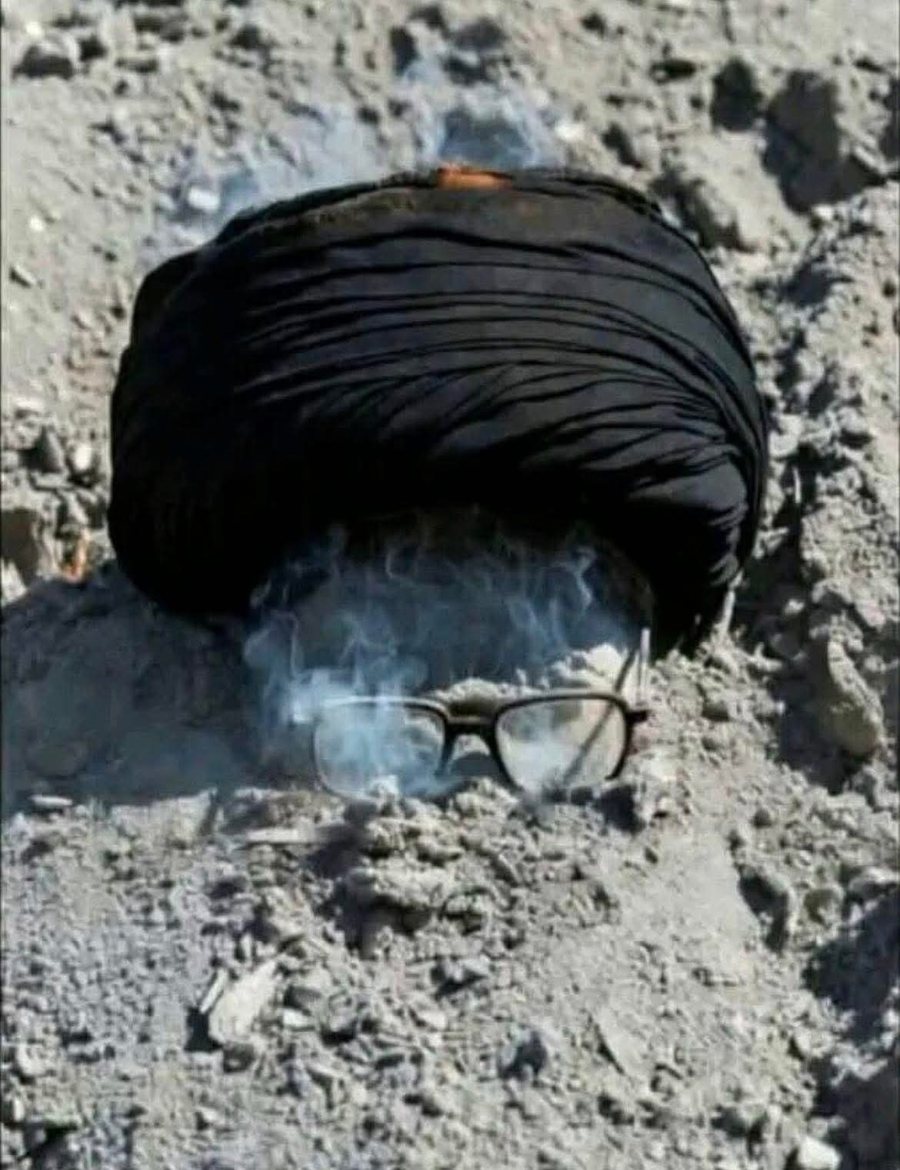
Khamenei's death does not guarantee the end of the system; it could lead to internal destabilization rather than a controlled transition...
The idea of an easy victory against Iran is no longer just a flawed academic thesis; after yesterday's events it sounds like a dangerous strategic illusion.
The coordinated attacks by the United States and Israel on targets on Iranian territory were presented as a decisive operation to bring military capabilities to their knees and pave the way for regime change.
But within hours it became clear that the "surgical strike" narrative did not match the reality on the ground.
Although Ali Khamenei's death has been confirmed, this does not guarantee the end of the system. The structure of the Islamic Republic is not built around a single individual, but on institutions that function collectively; with the Revolutionary Guard and the religious elite as key pillars.
A vacuum at the top can produce internal rivalries and short-term destabilization, but it can just as easily lead to the consolidation of hardliners. The history of ideological regimes shows that external pressure often serves as internal glue.
Tehran is not reacting like a regime in agony, but like a state that had prepared scenarios for escalation. Missiles towards Israel, threatening signals towards regional energy infrastructure, and the activation of its allies on several fronts prove that Iran is not a passive object of history, but an actor with full capacity to expand the conflict.
Here the myth of a quick victory collapses. Even if a central figure is eliminated, the power structure in Iran is not a pyramid that collapses with a blow at the top. It is a layered system, with the Revolutionary Guard intertwined in the economy, security, and politics. Beheading is not synonymous with capitulation. On the contrary, it can produce internal consolidation in the face of an external enemy, strengthening the nationalist narrative.
The international reaction makes the “easy victory” thesis even more fragile. Russia has described the offensive as an act of aggression and has signaled a willingness to enter the diplomatic game, but also to increase its political capital in the region.
The European Union has called for restraint, aware that an open conflict would directly hit the energy markets and the economic stability of the continent. Any escalation in the Strait of Hormuz immediately translates into global financial stock market shocks. This is not a peripheral war; it is a node in the international system.
Moreover, the assumption that a powerful offensive will automatically produce a pro-Western regime is politically naive.
The history of interventions in the Middle East has shown that the overthrow of a power structure does not guarantee stability, much less a functioning democracy. The vacuum is as dangerous as the regime it is intended to replace.
In the case of Iran, the vacuum could be filled by an even harsher, more militarized, and more confrontational configuration.
Yesterday's events proved a fundamental thing: Iran is not a target that falls with a spectacular operation. It is a state with a response capacity, a regional network and an instinct for survival. To think that a chapter can be closed with a few waves of bombing is to ignore history and strategic reality. Easy victory is not a plan; it is a slogan. And slogans, in the Middle East, usually come at a high price.
In this sense, the narrative of “easy victory” is not simply excessive optimism; it is a misreading of strategic reality. The conflict with Iran, if it enters an open phase, will not be a military sprint, but a political, economic, and geopolitical marathon; with consequences that will transcend the borders of the Middle East. Triumphant headlines may last a day; new balances of power take shape over years./ Pamphlet




Lini një Përgjigje