


 Shkruar nga Diplomatico | Pamfleti.net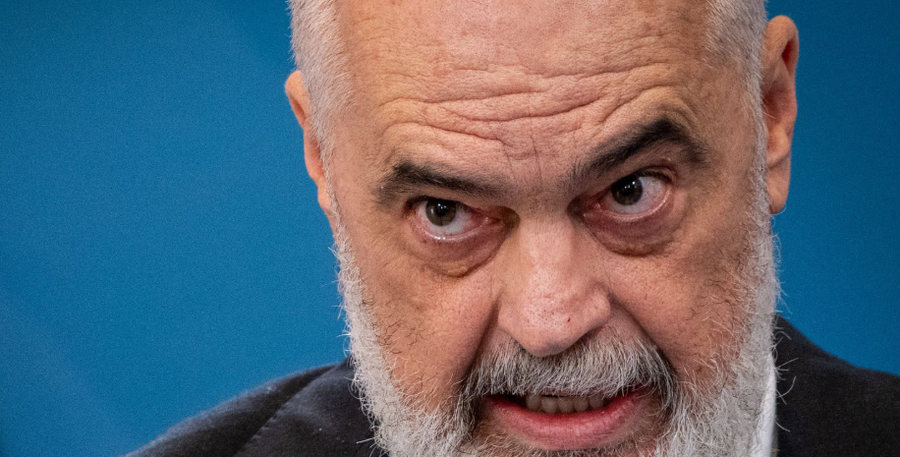
The dangerous parallel between Tirana and Belgrade: When power is personalized and diplomacy becomes a means of political survival...
Today, the Serbian daily 'Danas' used the metaphor "Posle mene, potop" (After me, the flood), referring to the politics of President Vučić. In Tirana, this philosophy is taking a quieter, but no less dangerous form: "After me, the flood". Not in the sense of physical destruction, but in the gradual degradation of standards, institutional trust and international credibility.
The model is familiar in the Balkans. In Belgrade, under Aleksandar Vučić, power has been personalized to the point where foreign policy serves as an instrument of domestic survival. Serbia plays with two gates: Brussels and Moscow. The result? Protracted negotiations with the EU and a double reputation that keeps the country in a state of strategic suspense.
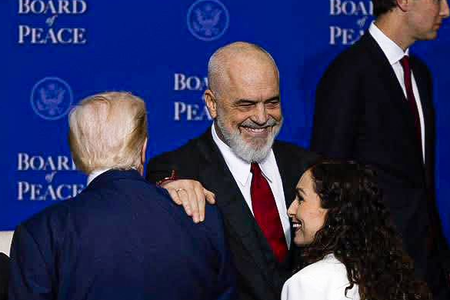
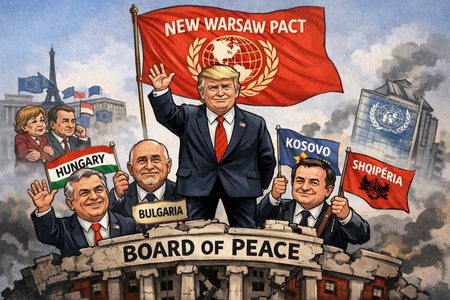
In Tirana, under the leadership of Edi Rama, the narrative is different: Albania is 100% aligned with the West, a member of NATO and formally on an integration trajectory. But the problem is not the official declaration; it is the consistency of the message. Any move that creates a perception of ambiguity, whether participation in forums with unclear political architecture, or rhetoric that relativizes partnerships, places Albania in a gray area that does not suit a candidate country.
The parallel between Tirana and Belgrade lies not in formal orientation, but in the style of governance: concentration of power, weakening of institutional balances, internal polarization and use of diplomacy for internal political consumption. In Serbia, this strategy has become a doctrine. In Albania, it risks becoming a habit.
“After me, the flood” does not necessarily mean immediate economic collapse. It means slow erosion: continued emigration, distrust of institutions, administrative capture, weakening of parliamentary debate. It means the European project being used as a rhetorical shield, while European standards are being selectively applied.
The essential difference is that Serbia has the geopolitical luxury of balancing due to its weight and the Kosovo issue. Albania does not. Tirana cannot play with strategic equivocation, because its main international capital is precisely its credibility as a steadfast Western partner.
If Belgrade uses ambiguity as a pressure card, Tirana risks using it as a tool for improvisation. And improvisation in diplomacy is paid for with lost time in negotiations, with skepticism in European capitals, and with a weakening of the regional role.
In the end, the question is simple: are we building a state that will function even after the current leader leaves, or a system that is sustained by his figure? Balkan history shows that the second model produces a vacuum, not stability.
If Serbia risks staying put because of its perpetual balancing act, Albania risks slipping because of complacency. And in both cases, the cost is not personal to the leaders; it is national./ Pamphlet
Note: *Après moi, le deluge (After me, the Flood) is a French expression attributed to King Louis XV.



Se shpejti... "A horse, a horse...My kingdom for a horse.."