


 Shkruar nga Gjergj Zefi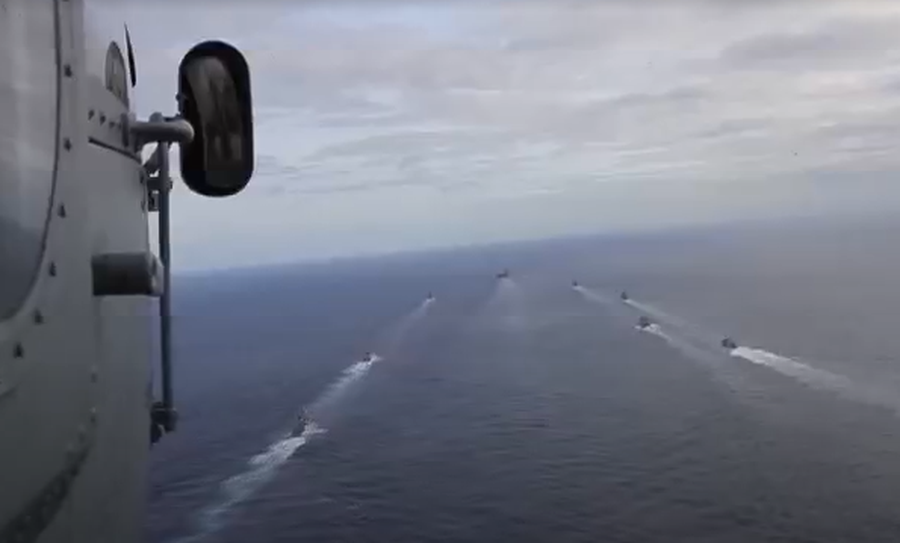
Aircraft carrier diplomacy: Is peace being negotiated or are the seconds until a collision being counted?
The talks between the United States and Iran, which are taking place in Geneva under the mediation of Oman, are a classic paradox of modern diplomacy: dialogue at the table, a demonstration of force on the ground.
While delegations communicate indirectly about the nuclear program, American aircraft carriers and Iranian missile exercises in the Strait of Hormuz loom on the horizon.
Peace, in this context, is not negotiated in an environment of trust, but in a climate of mutual pressure.
The administration led by Donald Trump has chosen the classic strategy of “maximum pressure plus diplomacy.” The message is clear: either an agreement that significantly limits Iran’s nuclear program, or increased strategic costs for Tehran.
On the other hand, Iran is not negotiating from a position of capitulation. It is demanding the lifting of sanctions and recognition of the right to enrich uranium for civilian purposes. The gap between the parties is not technical, but political and psychological.
What are the real chances for peace?
In diplomacy, peace is not an ideal, but the result of a balance of interests. Today, neither Washington nor Tehran has any interest in open war.
The US faces a tense global architecture; from Ukraine to Asia, and a direct conflict with Iran would destabilize energy markets and widen the regional crisis.
Iran, on the other hand, faces domestic economic pressure and social discontent; a military escalation would further aggravate the situation.
But a lack of interest in war does not automatically translate into agreement.
The fundamental problem is trust. The previous nuclear deal was eroded by US policy in recent years, making Tehran skeptical of any new guarantees.
At the same time, Washington is unwilling to accept an agreement that is seen as weak or temporary. So both sides seek a strategic victory without making concessions that are perceived as weakness.
In cold diplomatic terms, the probability of a minimal agreement is higher than that of an immediate conflict.
An “interim deal”; freezing enrichment at certain levels in exchange for partial sanctions relief, is the most realistic scenario. But a full agreement, addressing Iran’s missile program and regional influence, currently remains off the horizon.
Peace in this case will not be the product of ideological rapprochement, but of strategic fatigue. It is a cold, conditional, fragile peace. If negotiations fail, escalation will not necessarily come in the form of a classic war, but through controlled incidents, indirect attacks, and increased economic pressure.
In the end, the Geneva table is not where enthusiasm for peace is born. It is where the fear of war is measured. And for the moment, fear seems stronger than the will to clash. That is why diplomacy still has a chance; not because the parties trust each other, but because the cost of failure is too high for both./ Pamphlet


Lini një Përgjigje